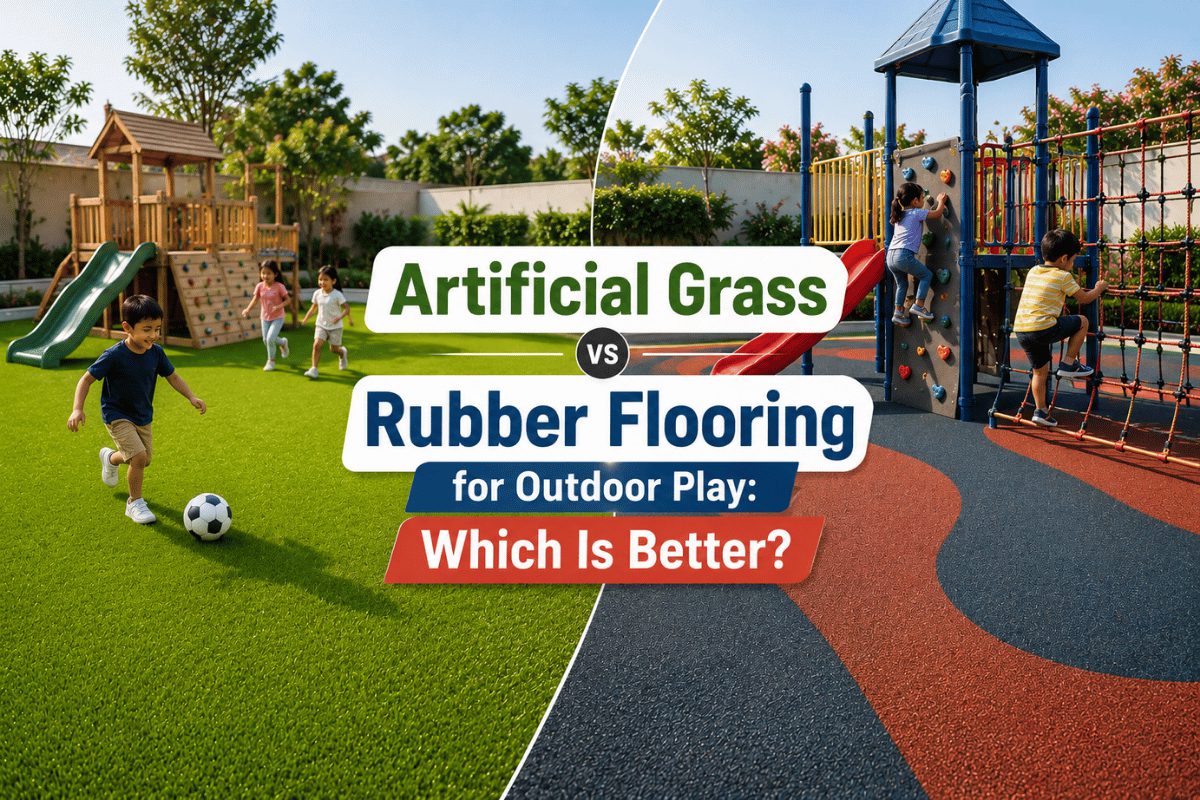
Artificial Grass vs Rubber Flooring for Outdoor Play is a common consideration when designing a safe, attractive, and practical outdoor area for children. Both surfaces can create a more comfortable play environment than plain concrete or hard ground, but they offer different benefits in terms of cushioning, maintenance, appearance, drainage, durability, and installation.
The right choice depends on how the outdoor space will be used, what type of play equipment will be installed, the age of the children, local weather conditions, and the level of maintenance the space can receive.
Rather than choosing a surface simply because it looks attractive, it is better to compare how each option performs in a real children’s play environment.
Artificial Grass vs Rubber Flooring for Outdoor Play: Key Differences
Artificial grass provides a soft, lawn-like appearance and can make an outdoor play space feel more natural and visually inviting. Rubber flooring, on the other hand, is designed specifically for high-traffic areas and can provide a stable, resilient surface around active play equipment.
| Feature | Artificial Grass | Rubber Flooring |
|---|---|---|
| Appearance | Natural grass-like look | Clean, structured appearance |
| Cushioning | Depends on underlay/system | Designed for impact protection |
| Maintenance | Regular cleaning and brushing | Generally easy routine maintenance |
| Drainage | Depends on base and drainage system | Depends on flooring and installation |
| Durability | Good with proper installation | Strong for busy play areas |
| Play Equipment Areas | Suitable with correct system | Particularly useful around active equipment |
| Customization | Lawn-style appearance | Different tile/colors/formats may be available |
| Best For | Natural-looking play spaces | High-use activity and playground zones |
The table provides a general comparison. Actual performance depends on the specific product, base preparation, installation method, and site conditions.
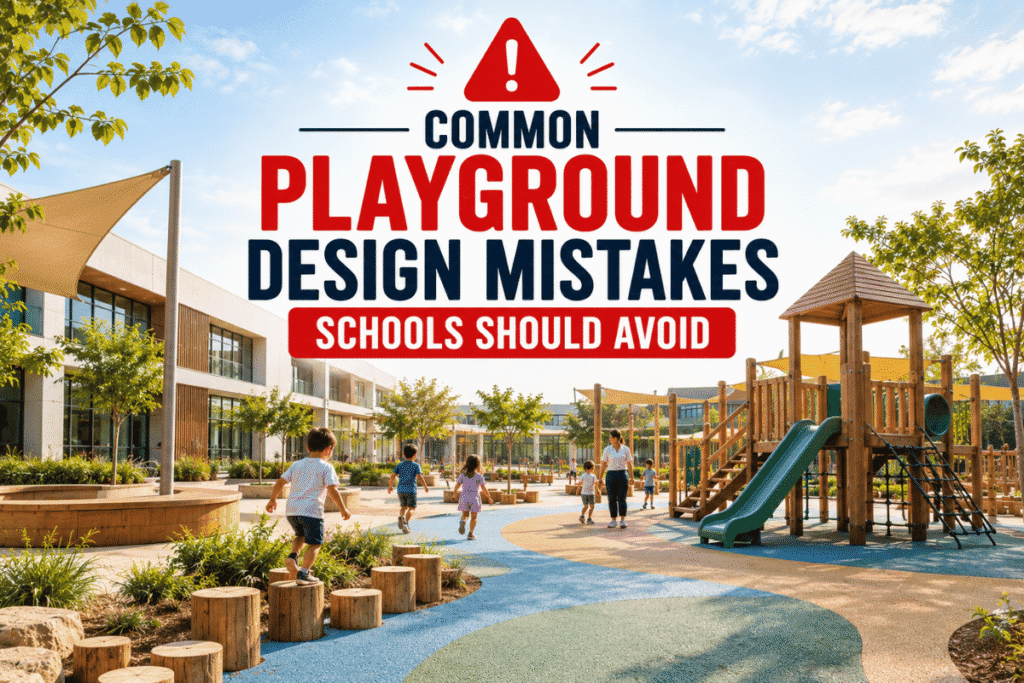
When comparing Artificial Grass vs Rubber Flooring for Outdoor Play, it is important to look at safety, comfort, maintenance, drainage, and long-term use together.
1. Safety and Impact Protection
Safety is one of the most important factors when selecting outdoor playground flooring.
Children may run, jump, climb, slide, and fall during active play. The surface therefore needs to be considered alongside the equipment’s height, use zone, fall area, and overall playground layout.
Rubber flooring is often considered for active play zones because resilient rubber surfaces can be designed to provide impact protection. Kids Home Decor offers Rubber Floor Tiles Flooring as an option for play environments where a durable rubber surface is required.
Artificial grass can also be used in children’s outdoor spaces, but its safety performance depends heavily on the complete installed system, including the underlying base and any shock-absorbing layer.
For playground safety planning, parents, schools, and facility managers can also review the U.S. Consumer Product Safety Commission’s playground safety resources.
2. Comfort Under Children’s Feet
Comfort matters because children can spend long periods walking, running, crawling, or sitting on the play surface.
Artificial grass creates a softer visual and tactile environment and can feel more lawn-like than hard paving.
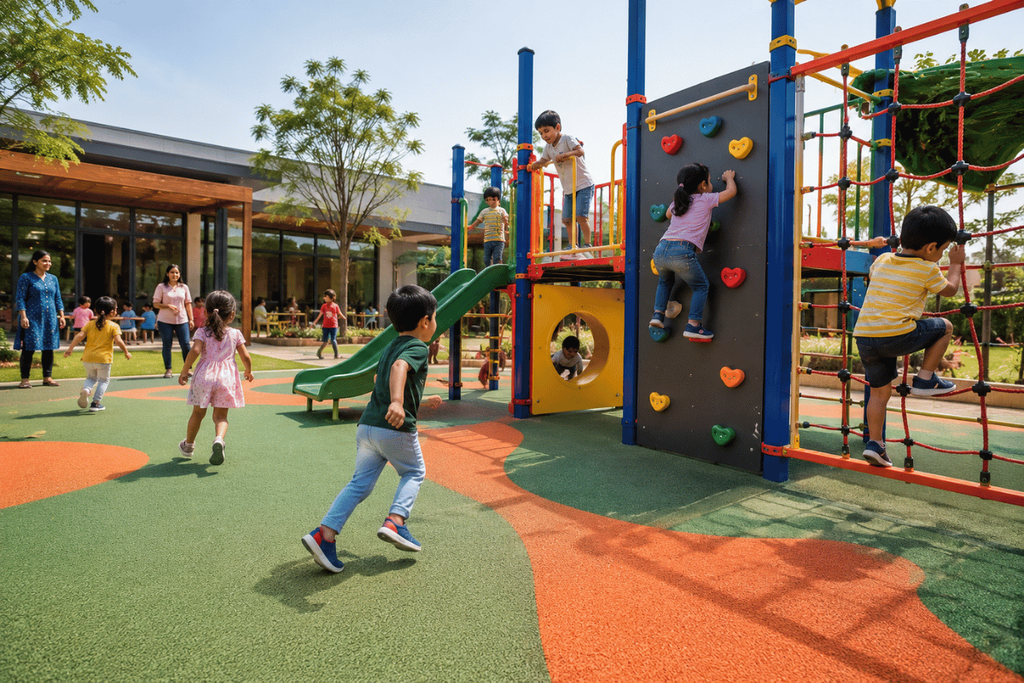
Rubber flooring provides a different kind of comfort. Its resilience can make it particularly useful in areas where children are moving frequently or where play equipment is installed.
The choice should therefore depend on whether your priority is a natural-looking surface, impact-focused play flooring, or a combination of both.
3. Durability for Busy Outdoor Play Areas
Outdoor play areas can experience substantial daily use.
Children may repeatedly run across the same paths, gather around popular equipment, and drag toys or outdoor materials across the surface.
Rubber flooring can be a practical choice for high-use zones because it is designed for repeated foot traffic and active environments.
Artificial grass can also be durable, but the quality of the turf, installation, base preparation, drainage, and maintenance all affect its long-term performance.
For facilities with heavy daily usage, it is important to consider the entire flooring system rather than only the top surface.
4. Maintenance Requirements
Every outdoor surface needs routine care, but the type of maintenance is different.
Artificial grass may require:
- Removing leaves and debris
- Occasional brushing
- Cleaning spills
- Checking drainage
- Maintaining the surrounding edges
Rubber flooring generally requires routine cleaning and periodic inspection for damage, loose sections, or surface wear.
The best choice is the surface that fits the maintenance capacity of the people responsible for the play area.
A well-designed outdoor environment should also include practical access for cleaning and inspection.
5. Appearance and Playground Design
Artificial grass is particularly effective when the goal is to create a bright, natural-looking outdoor play environment.
It can visually connect playground equipment with gardens, landscaping, and other natural elements.
Rubber flooring provides a more organized playground look and can work well when different zones need to be visually separated.
For example:
Green area → Open play
Rubber area → Climbing and active equipment
Seating area → Rest and observation
This kind of zoning can make a larger outdoor play area easier to navigate.
For more outdoor layout inspiration, see Outdoor Play Area Ideas.
6. Drainage and Weather Conditions
Drainage should be considered before either surface is installed.
A playground surface can perform poorly if water remains trapped underneath it.
Artificial grass depends heavily on the prepared base and drainage system beneath the turf. Rubber surfaces also require appropriate installation and drainage planning to prevent water-related problems.
Before making a decision, consider:
- Rainfall
- Existing ground conditions
- Drainage routes
- Surface slope
- Exposure to sunlight
- Local temperatures
- Frequency of outdoor use
The climate and site conditions can influence which flooring system is practical for your particular location.
7. Cost and Long-Term Value
Initial cost is important, but it should not be the only consideration.
When comparing Artificial Grass vs Rubber Flooring for Outdoor Play, think about the complete project cost, including:
- Base preparation
- Installation
- Drainage
- Safety underlay where required
- Maintenance
- Repairs
- Expected lifespan
- Replacement costs
A surface with a lower initial price may not necessarily provide the lowest overall cost over many years.
For a playground that will experience heavy daily activity, durability and maintenance should be considered alongside the purchase price.
8. Best Surface for Climbing and Active Equipment
The type of equipment in the play area can influence your flooring choice.
Climbing structures, monkey bars, slides, and other active equipment require careful planning around fall zones and movement areas.
For a play space with climbing equipment, resilient surfacing can be particularly important around landing areas.
Kids Home Decor also offers a Safety Matt that can be considered alongside appropriate active-play setups.
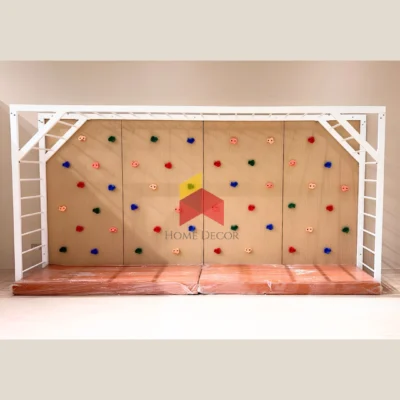
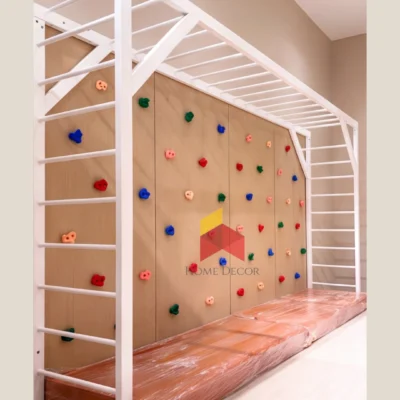
For outdoor installations, you can also explore Climbing Structures when planning the equipment and flooring together.
The flooring should be selected after considering the equipment layout—not independently from it.
This is where Artificial Grass vs Rubber Flooring for Outdoor Play becomes especially important, because active equipment requires more careful surfacing decisions.
9. Which Is Better for Schools and Preschools?
Schools and preschools typically need playground surfaces that can handle frequent use while remaining practical for staff to clean and inspect.
Rubber flooring may be particularly suitable for high-traffic activity zones, while artificial grass can work well in open areas where appearance and lawn-like aesthetics are important.
A mixed approach can sometimes be more effective.
For example:
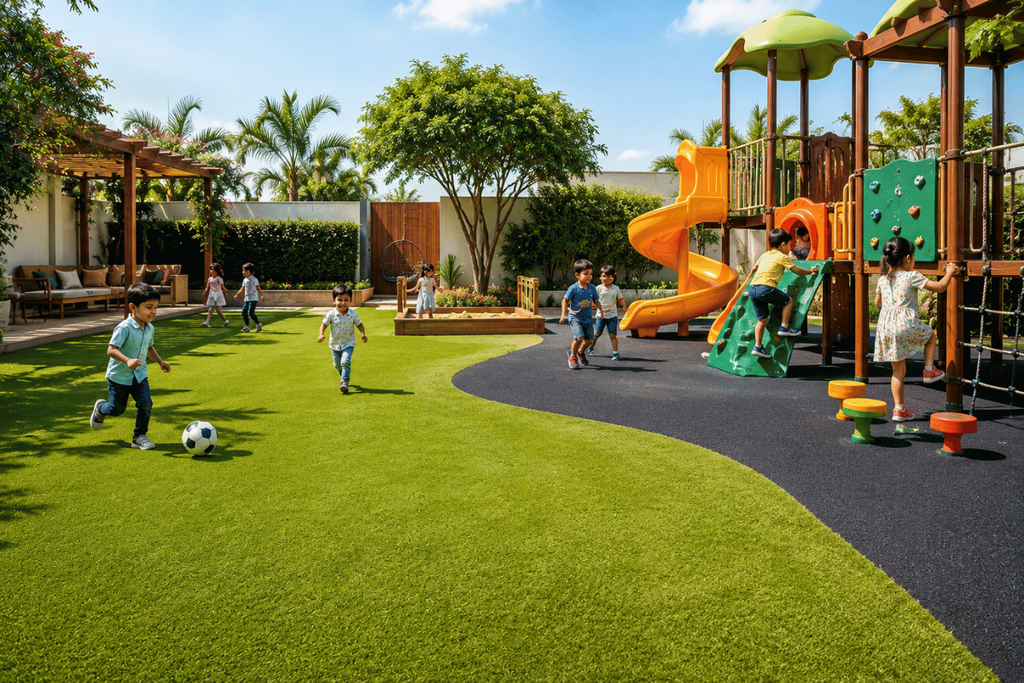
Artificial grass → Open running and free-play areas
Rubber flooring → Around active play equipment
Hardscape/pathways → Controlled access and circulation
This can create a more versatile outdoor play environment.
Schools planning a broader recreational space can also read 15 Outdoor Playground Ideas for Preschools for additional planning inspiration.
10. Which Is Better for Home Outdoor Play Areas?
For a home garden, terrace, villa play area, or private children’s outdoor zone, aesthetics may have greater importance.
Artificial grass can blend easily with existing landscaping and make a play area look like an extension of the garden.
Rubber flooring can be useful when the home includes:
- Climbing equipment
- Swings
- Slides
- Balance equipment
- Active play structures
The best solution often depends on how much of the space is dedicated to active play.
For ideas on combining equipment and outdoor activity zones, explore How Outdoor Play Supports Early Childhood Development.
Artificial Grass vs Rubber Flooring: Which One Should You Choose?
There is no single answer for every playground.
Choose Artificial Grass When:
- You want a natural grass-like appearance.
- Landscaping is an important part of the design.
- The area includes large open play zones.
- You want the space to visually blend with a garden.
- The complete turf system can be properly installed with suitable drainage and safety considerations.
Choose Rubber Flooring When:
- The area experiences heavy activity.
- Children frequently run, jump, or climb.
- The surface will be positioned around active play equipment.
- You want a resilient, structured playground surface.
- Easy routine maintenance is an important consideration.
Consider Combining Both
A combination of the two can provide the best balance for some projects.
For instance, artificial grass can cover open areas while rubber flooring is installed beneath or around selected active play equipment.
This approach can also help visually divide the playground into different activity zones without making the space feel disconnected.
How to Choose the Right Outdoor Playground Surface
Before making a final decision, ask these questions:
1. What equipment will be installed?
2. How many children will use the area?
3. How frequently will the surface be used?
4. Does the site have reliable drainage?
5. What level of impact protection is required?
6. How much maintenance can staff or homeowners manage?
7. Is appearance more important, or is active-use performance the priority?
8. What is the total installation and long-term maintenance budget?
Answering these questions makes the comparison much more practical.
Think About the Whole Playground, Not Just the Flooring
Flooring works as part of a larger outdoor play environment.
Equipment placement, movement paths, shade, seating, storage, drainage, supervision, and safety surfacing all influence the final experience.
A playground with excellent flooring can still be difficult to use if equipment is overcrowded or pathways are poorly arranged.
For more ideas about creating a complete outdoor environment, see Safe Kids Play Area Design.
Final Verdict
When comparing Artificial Grass vs Rubber Flooring for Outdoor Play, the better option depends on the purpose of the space.
Artificial grass stands out when you want a natural-looking, visually attractive outdoor environment. Rubber flooring is often the stronger choice for dedicated active-play zones where durability and resilient surfacing are important.
For many children’s play areas, the most effective solution may not be choosing one surface exclusively. A thoughtful combination of artificial grass and rubber flooring can create separate areas for movement, active equipment, and open-ended play.
The key is to choose the surface based on safety, equipment, usage, drainage, maintenance, and long-term value rather than appearance alone.
A careful Artificial Grass vs Rubber Flooring for Outdoor Play comparison can help families, schools, and play-area planners choose a surface that matches the way children actually use the space.
Frequently Asked Questions
Is artificial grass safe for children’s outdoor play areas?
Artificial grass can be suitable for children’s play areas when it is installed as part of an appropriate playground surfacing system. The underlying base, drainage, cushioning requirements, and equipment use zones should all be considered.
Is rubber flooring better than artificial grass for playgrounds?
Rubber flooring can be a strong option for active playground areas because it provides a resilient surface and is particularly useful around climbing and other movement equipment. However, the best choice depends on the playground design, equipment, usage, and site conditions.
Can artificial grass and rubber flooring be used together?
Yes. Combining both surfaces can create different activity zones. Artificial grass can be used for open play and landscaped areas, while rubber flooring can be placed around climbing structures, slides, and other active equipment.
Which outdoor playground flooring requires less maintenance?
Both surfaces require maintenance. Artificial grass generally needs debris removal, brushing, cleaning, and drainage checks, while rubber flooring needs routine cleaning and inspections for wear or damage. Actual maintenance requirements depend on the specific flooring system and how heavily it is used.
What flooring is best under climbing equipment?
A resilient playground surface designed for the equipment’s required fall protection is important under climbing equipment. Rubber flooring can be suitable for these areas, but the complete surfacing system should be selected according to the equipment, fall height, installation requirements, and relevant safety standards.
Is rubber flooring suitable for schools and preschools?
Rubber flooring can be suitable for schools and preschools, particularly in high-traffic and active-play areas. Its practicality depends on the specific product, installation method, drainage, maintenance plan, and required safety performance.