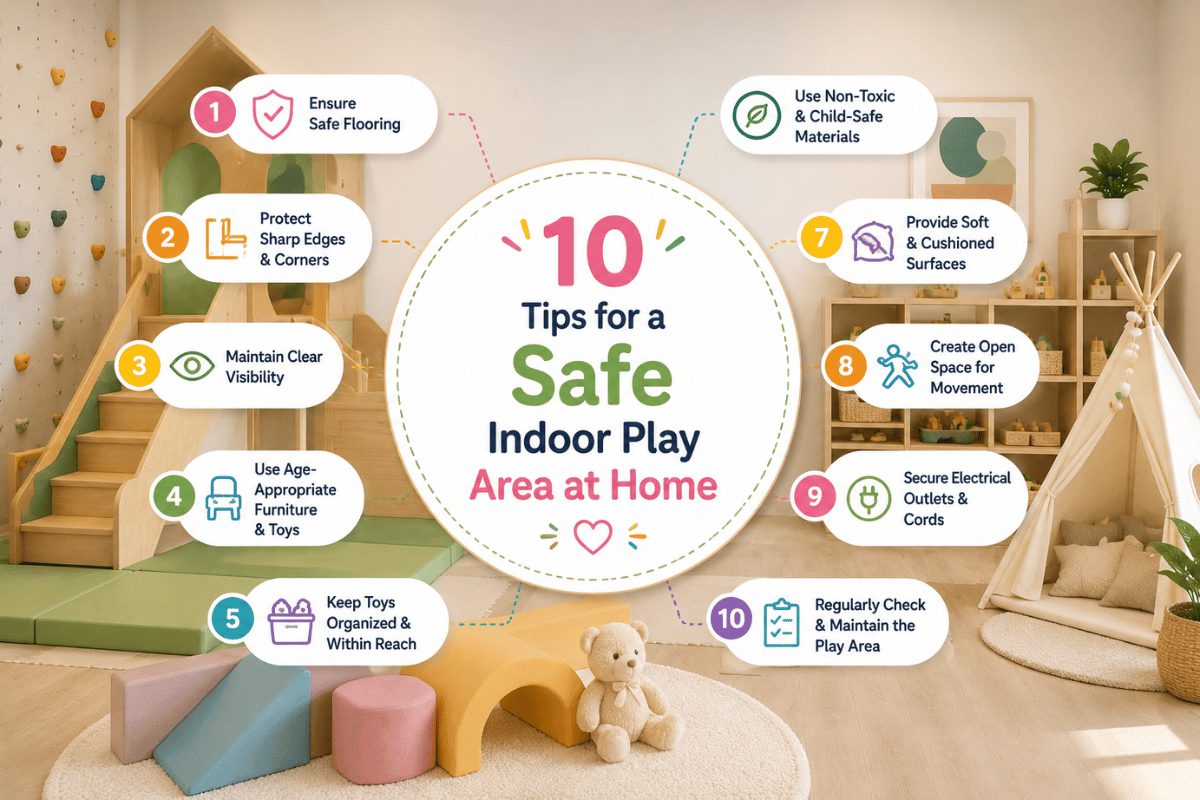
Safe Indoor Play Area at Home banana sirf toys ko ek room mein rakh dene ka naam nahi hai. A well-planned indoor play space should give children room to move, climb, explore, imagine, and relax while reducing avoidable hazards around them.
The safest setup usually combines suitable flooring, age-appropriate equipment, clear movement areas, secure furniture, practical storage, protected walls, and easy supervision. Kids Home Decor also emphasizes thoughtful indoor play planning around flooring, climbing equipment, storage, and available space.
You do not necessarily need a large playroom. A spare bedroom, a section of a living room, or a compact apartment corner can work when the layout is planned carefully.
Why Indoor Play Safety Starts With the Room
Before buying equipment, look at the room itself.
Children may run, crawl, climb, jump, or suddenly change direction while playing. That means a beautiful room can still be poorly designed if furniture blocks movement or active equipment is placed too close to hard surfaces.
Start by identifying:
- Available floor space
- Ceiling height
- Windows and doors
- Electrical outlets
- Furniture placement
- Potentially sharp corners
- High-traffic areas
- Storage locations
- Areas visible to adults
For additional planning inspiration, the indoor play area for kids guide covers practical ways to organize indoor activity spaces in homes and apartments.
Choose the Right Location for the Play Area
The best location is one where children can play while an adult can easily see what is happening.
A dedicated playroom offers the most flexibility, but it is not essential. A clearly defined play zone can work in a bedroom or shared family space too.
Try to keep active equipment away from:
- Glass doors and windows
- Stairways
- Heavy furniture
- Narrow walkways
- Unsecured shelving
- Frequently used household pathways
In smaller homes, vertical layouts can help preserve valuable floor space. Kids Home Decor’s indoor play guidance also highlights compact climbing solutions and the importance of planning around room dimensions.
Start With Safe and Comfortable Flooring
Flooring should be considered before installing active play equipment.
Children spend plenty of time sitting, crawling, rolling, and moving directly on the floor. Around climbing or movement equipment, the surface becomes even more important.
A dedicated rubber floor tiles flooring solution can be considered for areas that need a durable and resilient surface. Kids Home Decor’s flooring guidance also explains that play-area flooring needs to support active movement while remaining comfortable and practical to maintain.
For equipment with a fall height, appropriate safety surfacing should be planned according to the equipment and installation requirements.
A Simple Flooring Check
| What to Consider | Why It Matters |
|---|---|
| Cushioning | Helps make active areas more comfortable |
| Stability | Supports confident movement |
| Cleaning | Important for everyday family use |
| Durability | Handles frequent play |
| Equipment compatibility | Works with the planned setup |
Add Appropriate Safety Mats Around Active Equipment
If the room includes climbing equipment, a soft play structure, or other elevated activity, think about the landing area before installation.
A Safety Matt can be incorporated into suitable play setups where additional cushioning is needed.
The mat should be part of the overall layout rather than an afterthought. The available landing area, equipment position, surrounding furniture, and clear walking paths should all be considered together.
For a deeper look at creating safer children’s play environments, you can also read How to Make Kids Play Areas Safer.
Childproof the Room Before Adding Equipment
Even the safest play equipment cannot compensate for hazards elsewhere in the room.
Take a slow walk around the space and look at everything from a child’s point of view.
Check:
- Electrical outlets
- Cables and cords
- Window access
- Furniture stability
- Sharp corners
- Small detachable objects
- Doors and hinges
- Tall shelving
- Decorative items that can fall
Furniture should not create an easy climbing route toward windows or other hazards.
This is especially important when a playroom includes low shelves, benches, climbing equipment, or movable furniture.
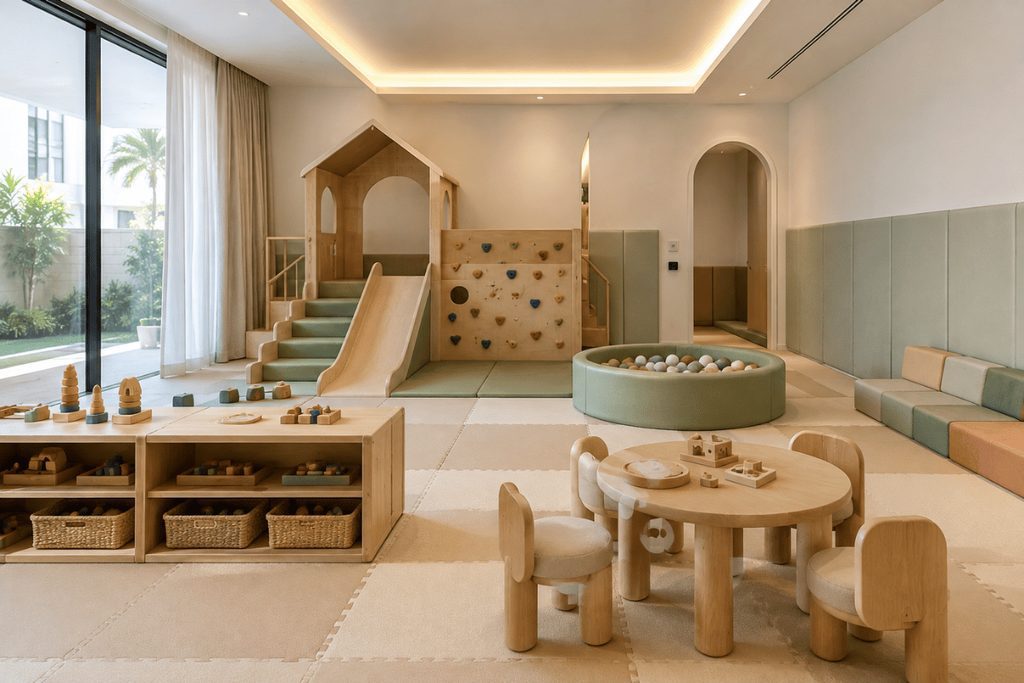
Select Equipment for Your Child’s Age
A play area should challenge children without asking them to use equipment beyond their abilities.
Toddlers may benefit more from low-level movement, soft play, simple climbing, and balance activities. Older children may be ready for more challenging climbing or multi-step movement features.
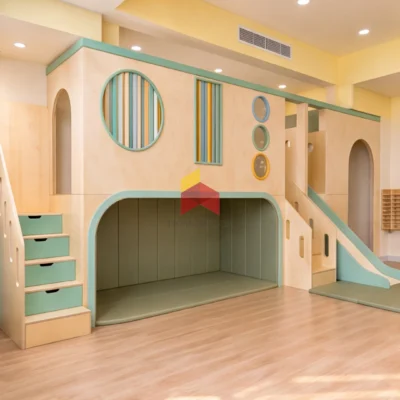
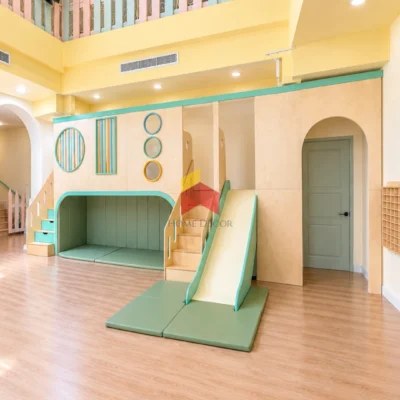
For toddlers, a Soft Play Set for Toddlers can create opportunities for crawling, climbing, and movement in a softer environment.
For families looking for a more active setup, the Climbing Frame Adventure Gym Box combines multiple movement activities in one structure. The product page also highlights rounded edges, a soft landing mat, and adult supervision requirements.
The important point is not to choose the biggest or most exciting product. Choose the equipment that matches the child’s age, ability, room, and intended use.
Keep Enough Open Space for Movement
One of the biggest mistakes in indoor playroom design is filling the entire floor with equipment.
Children need open space between activities.
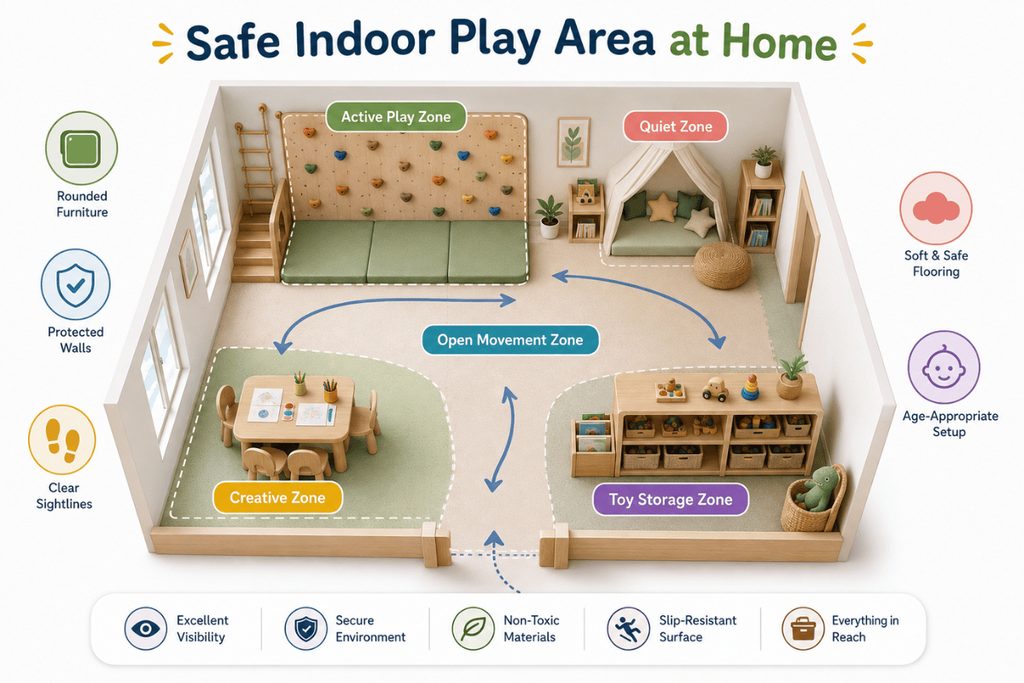
A practical layout can include:
Active Zone → Climbing / Soft Play / Movement
Open Zone → Walking / Crawling / Free Movement
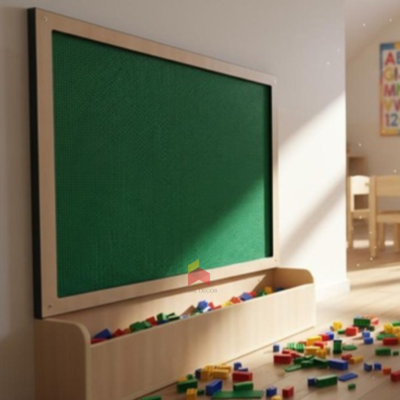
Creative Zone → Drawing / Building / Activities
Quiet Zone → Books / Rest / Calm Play
Storage Zone → Toys / Books / Equipment
This separation can reduce unnecessary collisions and make supervision easier.
For more ideas about organizing different activities within a home playroom, see Indoor Playroom Ideas.
Use Vertical Space Without Losing Safety
Vertical space can be valuable in compact homes, but it needs to be planned carefully.
Wall-mounted or vertical equipment should only be installed on an appropriate structure and according to the product’s installation requirements.
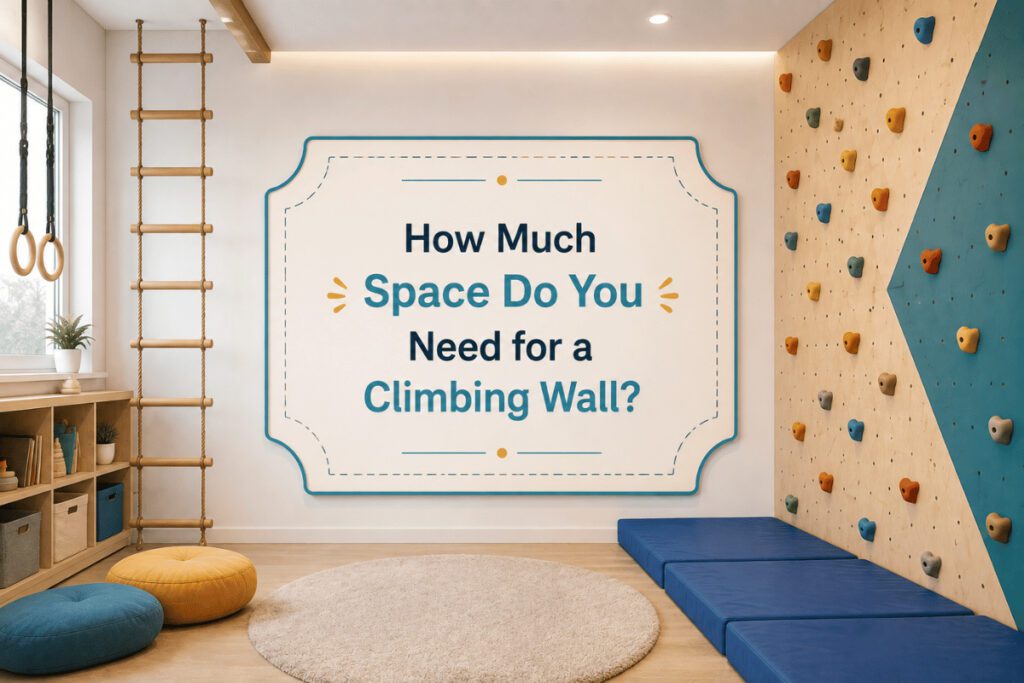
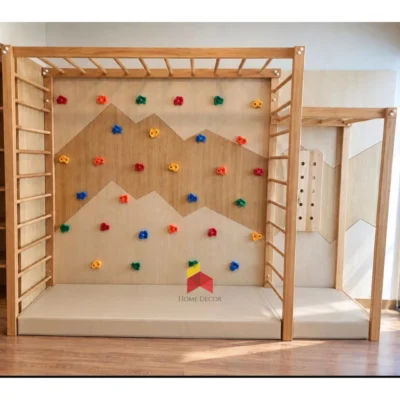
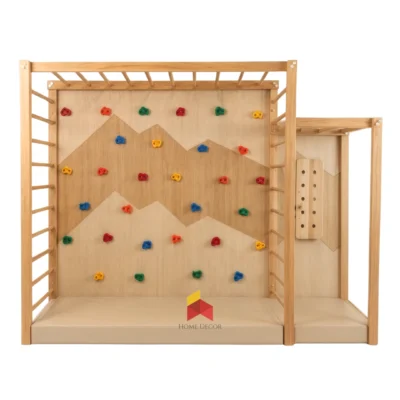
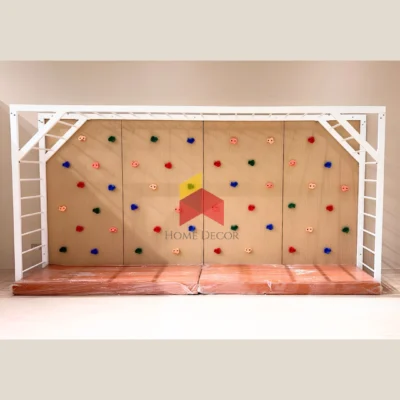
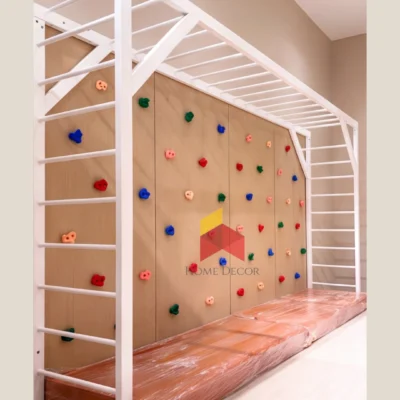
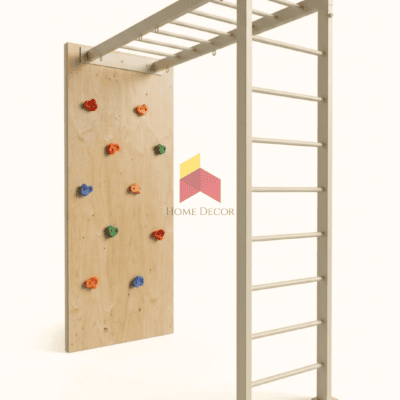
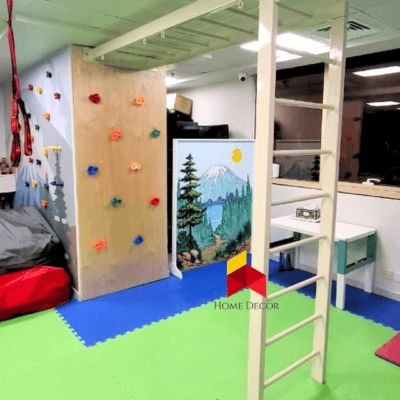
For example, the Climbing Wall with Colorful Mountain Background is designed for indoor play areas and includes rounded edges and a safety-mat recommendation.
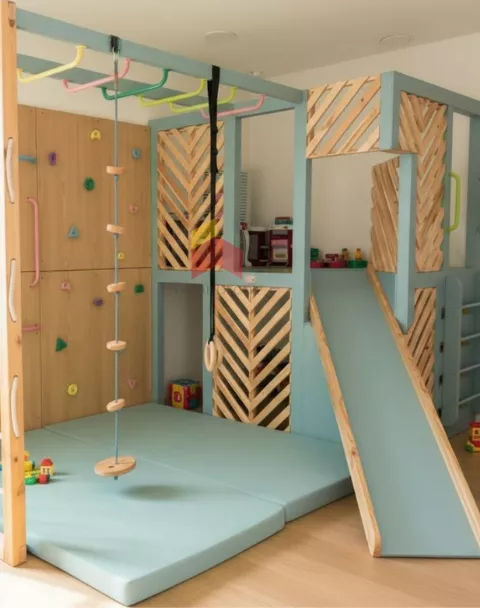
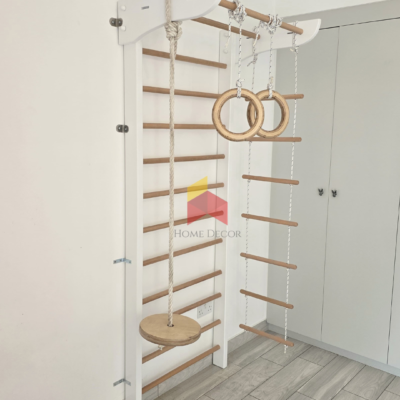
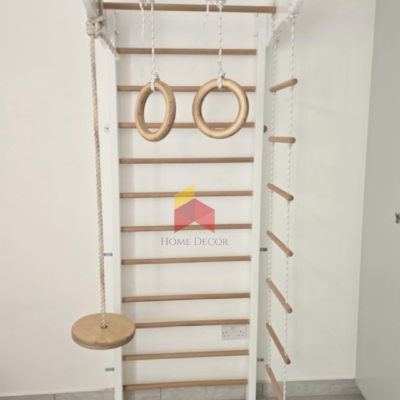
Another option is the Indoor Tower Climbing Wall and Net Rope, which combines climbing, a Swedish ladder, monkey bars, a slide, and gymnastic rings in a space-saving format.
However, the wall type, installation surface, ceiling clearance, and surrounding space should always be checked before installation.
Protect Walls Around Active Play Areas
Walls near climbing or high-energy play areas may need additional protection.
Hard surfaces can become a concern if children repeatedly move, jump, or fall near them. In appropriate areas, wall padding mats for safety can provide an additional protective layer.
Padding should complement—not replace—proper equipment placement and suitable safety clearance.
Make Storage Part of the Safety Plan
Toys scattered across the floor can create unnecessary trip hazards.
Instead of leaving everything in one pile, divide toys by type and frequency of use.
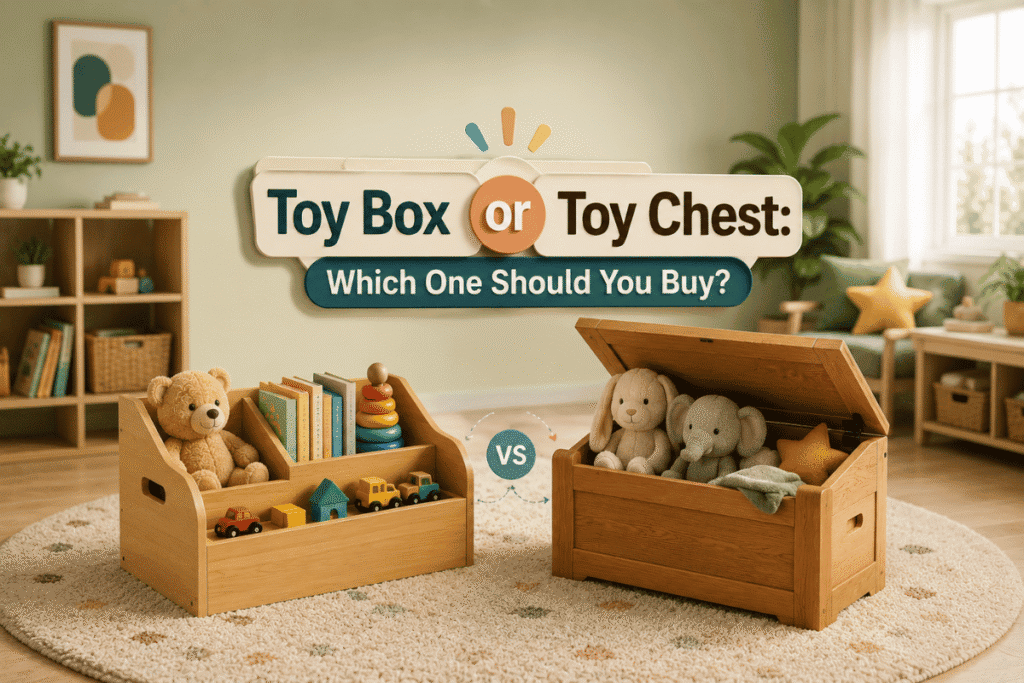
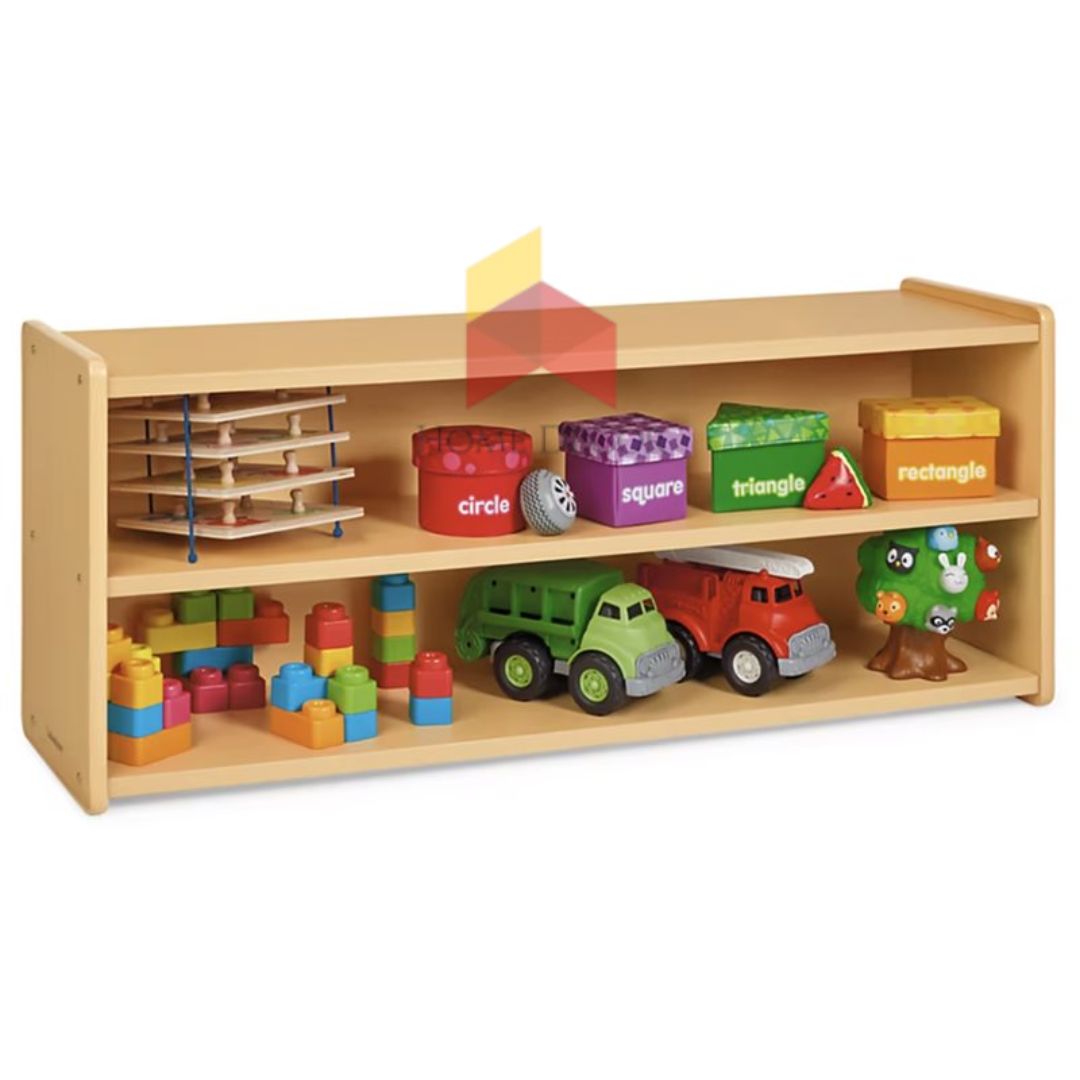
For everyday toys, an Open Shelving Unit can keep items visible and easier to organize.
A Toy Shelf 3 Storage can also work well when children need simple access to frequently used toys.
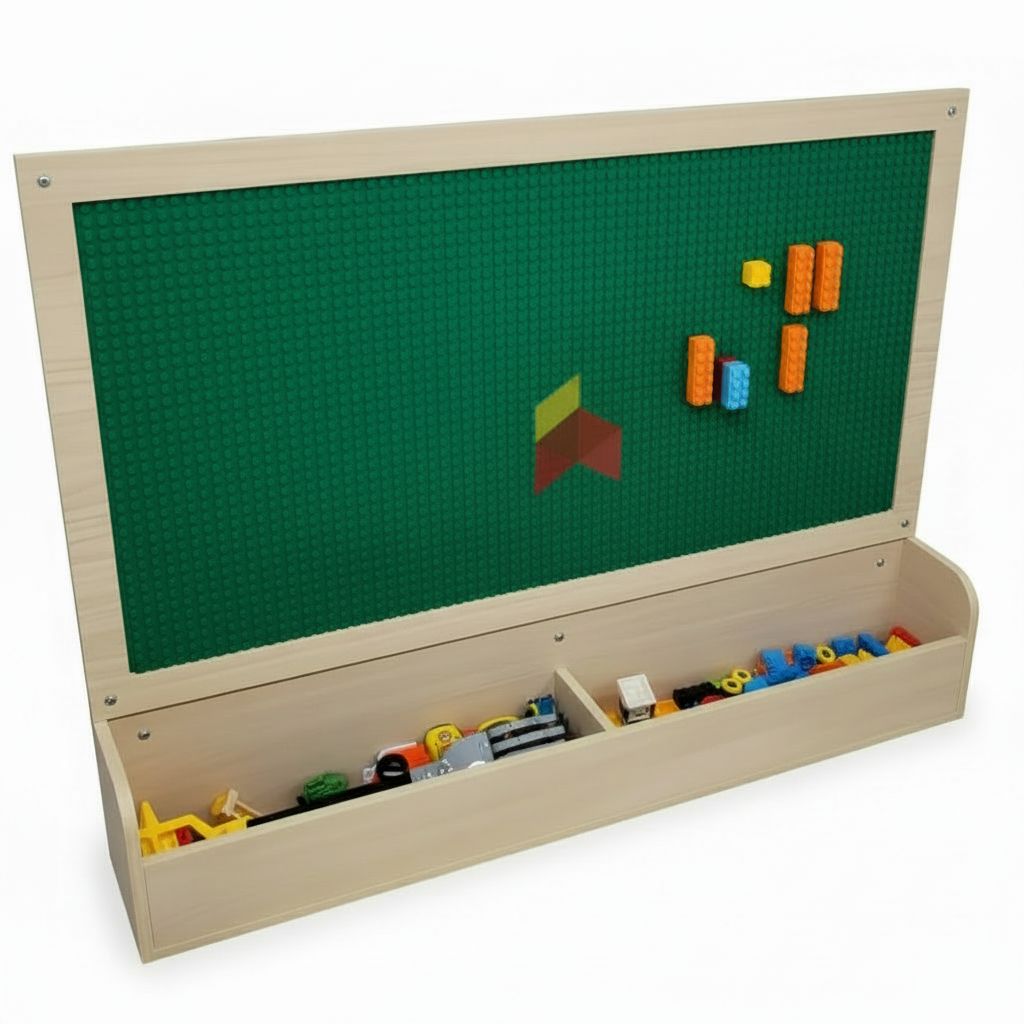
For a more substantial children’s room setup, a Wooden Toy Storage Unit for Kids UAE can provide dedicated storage while keeping the room visually organized.
Storage should remain stable and should not encourage children to climb furniture to reach items placed too high.
Create a Quiet Area Alongside Active Play
A good playroom does not need to be energetic all the time.
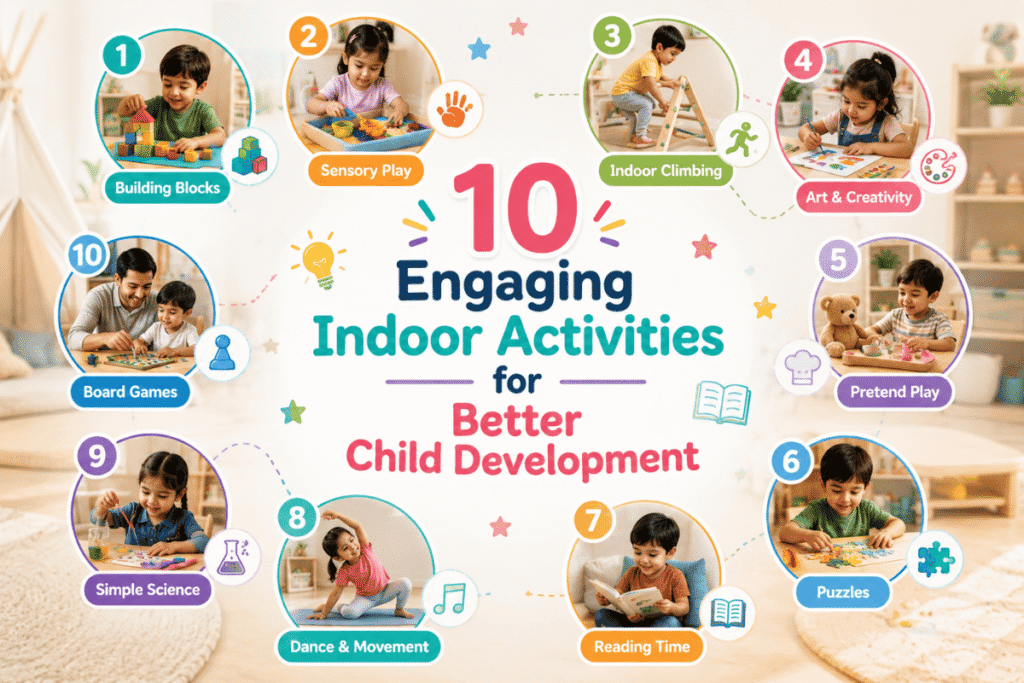
A quiet corner can give children a place to:
- Read
- Draw
- Build
- Complete puzzles
- Play sensory activities
- Take a break
This balance can make the playroom useful throughout the day rather than only during high-energy activities.
A small table, comfortable seating, accessible books, and organized materials can create a simple calm zone without taking much space.
Plan the Room Around Supervision
Supervision becomes easier when adults can see the main activity areas from a comfortable position.
Try not to create unnecessary hidden corners behind tall cabinets or furniture.
For active equipment, adults should be able to see:
- The equipment itself
- The landing area
- Entry and exit points
- Nearby pathways
- Other children using the room
Kids Home Decor’s indoor playground products also emphasize adult supervision, particularly around active climbing and play equipment.
Create a Safe Indoor Play Area at Home With a Simple Layout
You can use this basic planning model before purchasing anything:
| Zone | Recommended Purpose |
|---|---|
| Active Zone | Climbing, soft play, balance |
| Movement Zone | Crawling, walking, free movement |
| Creative Zone | Art, building, table activities |
| Quiet Zone | Reading and calm play |
| Storage Zone | Toys, books, activity materials |
The objective is not to create five separate rooms. Even in one room, these zones can be suggested through furniture placement, rugs, shelving, and equipment positioning.
Simple Room-Planning Formula
Equipment footprint + safe clearance + open movement space + storage + supervision sightlines = better playroom layout
That simple formula can prevent many common planning mistakes.
What to Avoid in an Indoor Play Area
Avoid choosing equipment simply because it looks attractive online.
Also avoid:
- Overcrowding the room
- Blocking windows with furniture
- Placing climbing equipment beside hard furniture
- Using unstable shelves
- Leaving toys scattered across pathways
- Ignoring ceiling height
- Installing wall equipment without checking the wall structure
- Choosing equipment beyond the child’s age or ability
- Treating supervision as optional
A practical indoor playroom should feel inviting while still leaving enough breathing room for children to move safely.
Build the Space in Stages
You do not need to complete the entire room in one purchase.
A better approach can be:
Stage 1: Secure the room and improve the flooring.
Stage 2: Add age-appropriate active play equipment.
Stage 3: Create accessible toy storage.
Stage 4: Add a quiet or creative area.
Stage 5: Improve wall protection, seating, and decorative details.
This makes it easier to evaluate how your child actually uses the room before adding more equipment.
For families working with limited space, Small Space Kids Room Ideas can also provide useful inspiration for combining play, furniture, and storage.
Final Checklist for Parents
Before considering the room ready, check:
☐ Flooring is suitable for the activities
☐ Active equipment has appropriate clearance
☐ Furniture is stable
☐ Sharp or hazardous areas have been addressed
☐ Toys are stored safely
☐ Windows and outlets are secured
☐ Adults have clear sightlines
☐ The room is not overcrowded
☐ Equipment matches the child’s age
☐ Safety mats or wall protection are used where appropriate
☐ Equipment is checked regularly

Final Thoughts
A Safe Indoor Play Area at Home does not need to be huge or expensive. What matters most is how thoughtfully the space is planned.
Start with the room rather than the products. Consider movement, flooring, storage, supervision, childproofing, and equipment together. Then choose products that fit those requirements instead of trying to make the room fit the products.
When safety and play are designed together, an ordinary room can become a space where children can move, explore, build confidence, and enjoy independent play every day.
Parents can also review the U.S. Consumer Product Safety Commission’s playground safety resources for additional safety guidance.