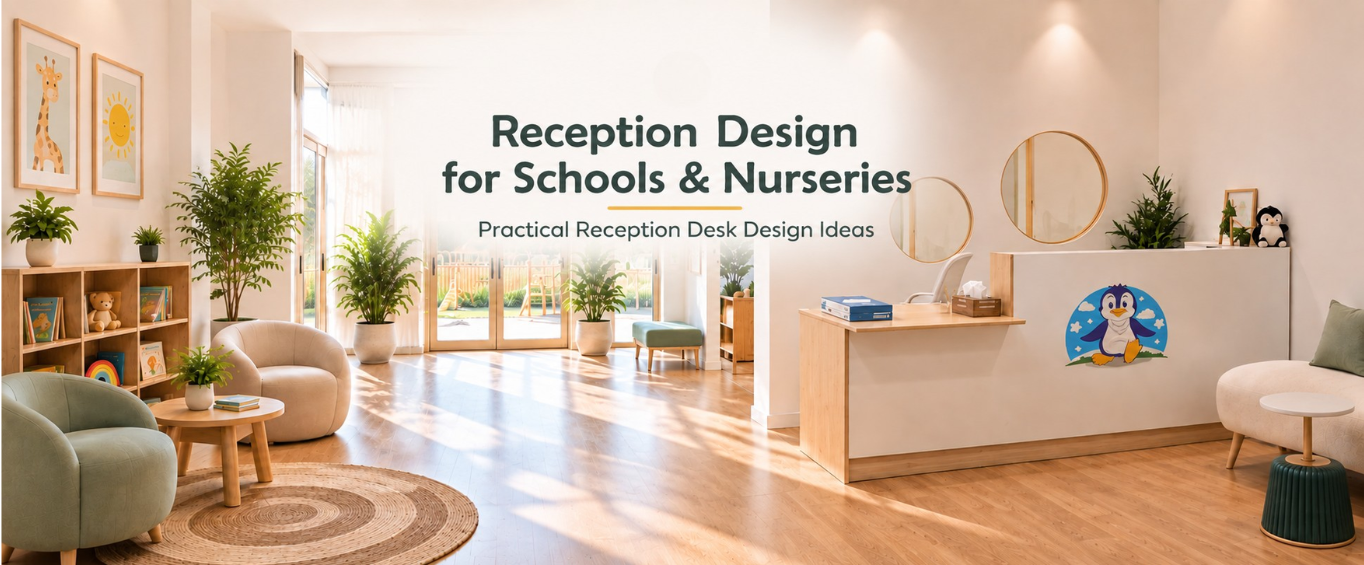
The reception area is often the first place parents see when they enter a school, nursery or children’s learning center. A well-planned reception design can make the space feel organized, welcoming and easy to use.
The challenge is that a school reception needs to do more than look good. Staff may need a place to greet parents, answer questions, manage documents and keep important items organized. Parents also need enough space to wait, while children should be able to move through the area safely.
Good reception desk design brings these needs together without making the entrance feel crowded.
This guide explains how to plan a practical reception area that works for staff, parents and children.
What Makes Good Reception Design?
Good reception design starts with how the space will actually be used.
Before choosing furniture or colours, think about:
- Where parents will enter and leave
- Where the receptionist will sit or stand
- How visitors will approach the desk
- Where parents can wait
- Where documents and office supplies will be stored
- How children will move around the space
- How much space is available
- How the reception connects with classrooms and other areas
A reception area should have a clear flow. Visitors should be able to see the desk soon after entering instead of having to search for the right place to go.
For schools and nurseries, school reception design should also consider the movement of children, teachers and parents throughout the day.
If you are planning several areas at the same time, Kids Home Decor also offers area design consultation for children’s spaces.
1. Start With the Reception Desk
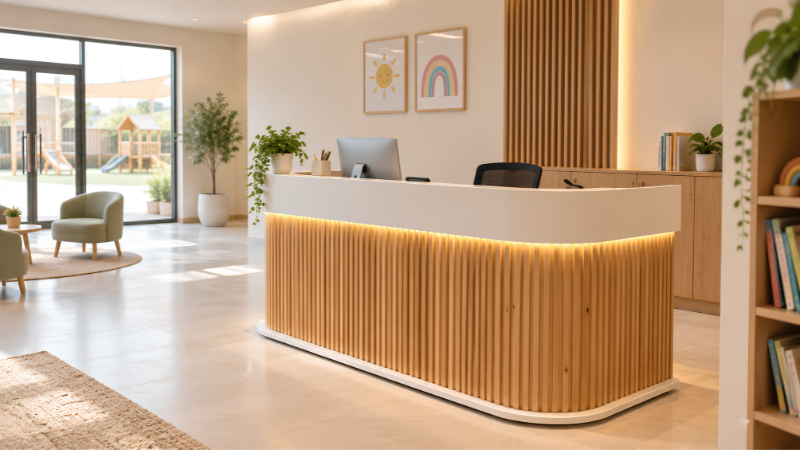
The reception desk is usually the main feature of the entrance, so its position and size matter.
A good desk should give reception staff enough working space without taking over the entire entrance. There should also be enough room for visitors to approach comfortably.
When planning reception desk design, consider:
- Desk height
- Available working space
- Storage requirements
- Visitor access
- Cable management
- Visibility from the entrance
- Space behind the desk for staff movement
A desk with built-in storage can help keep paperwork and everyday supplies organised. This is especially useful in busy nurseries where staff may need quick access to forms, stationery and other items.
The desk should also fit the overall style of the building. Light wood furniture can create a warm, child-friendly look, while simple modern designs can make the space feel clean and professional.
The desk should also work comfortably for staff throughout the day. Keep computers, stationery and documents within easy reach, while making sure cables and storage do not block movement.
2. Plan the Reception Area Around Visitor Flow
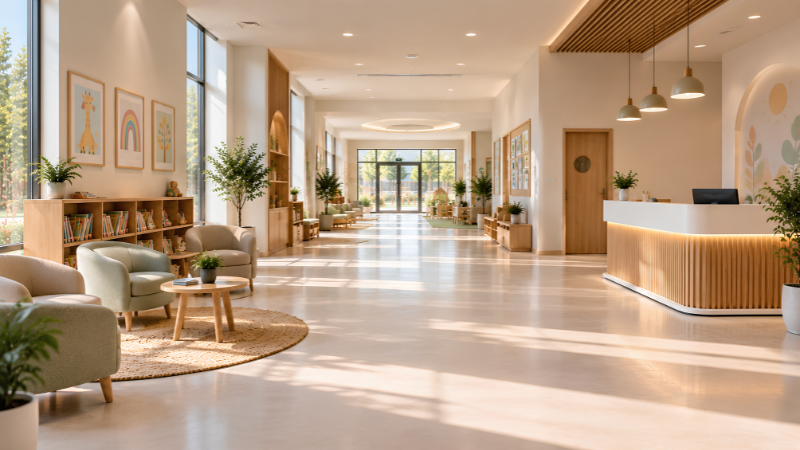
A common mistake is choosing furniture first and thinking about movement later.
Instead, look at the complete entrance area. Imagine a parent walking through the door for the first time. Can they immediately see where to go? Is there enough room for two or three people to stand near the desk? Can children pass through without bumping into furniture?
This is where school reception area design becomes especially important.
Try to create separate zones for:
- Greeting: The main desk where visitors speak with staff.
- Waiting: A small seating area for parents and visitors.
- Storage: Cabinets, shelves or other organised storage.
- Movement: A clear path between the entrance and other areas.
The goal is not to fill every empty corner. Leaving some open space can make the reception feel larger and easier to navigate.
For schools with multiple children’s areas, room dividers can also help separate spaces without making the entire entrance feel closed off.
3. Choose Seating That Fits the Space
Parents may need to wait for a few minutes during pick-up, drop-off or meetings. A small seating area can make the reception more comfortable.
You do not necessarily need a large sofa. A few well-placed chairs may be enough for a smaller nursery.
Consider:
- The number of daily visitors
- Available floor space
- Easy-to-clean materials
- Comfortable seating height
- Space between chairs
- Safe edges and stable construction
For a children’s setting, furniture should also be suitable for the age group using the space.
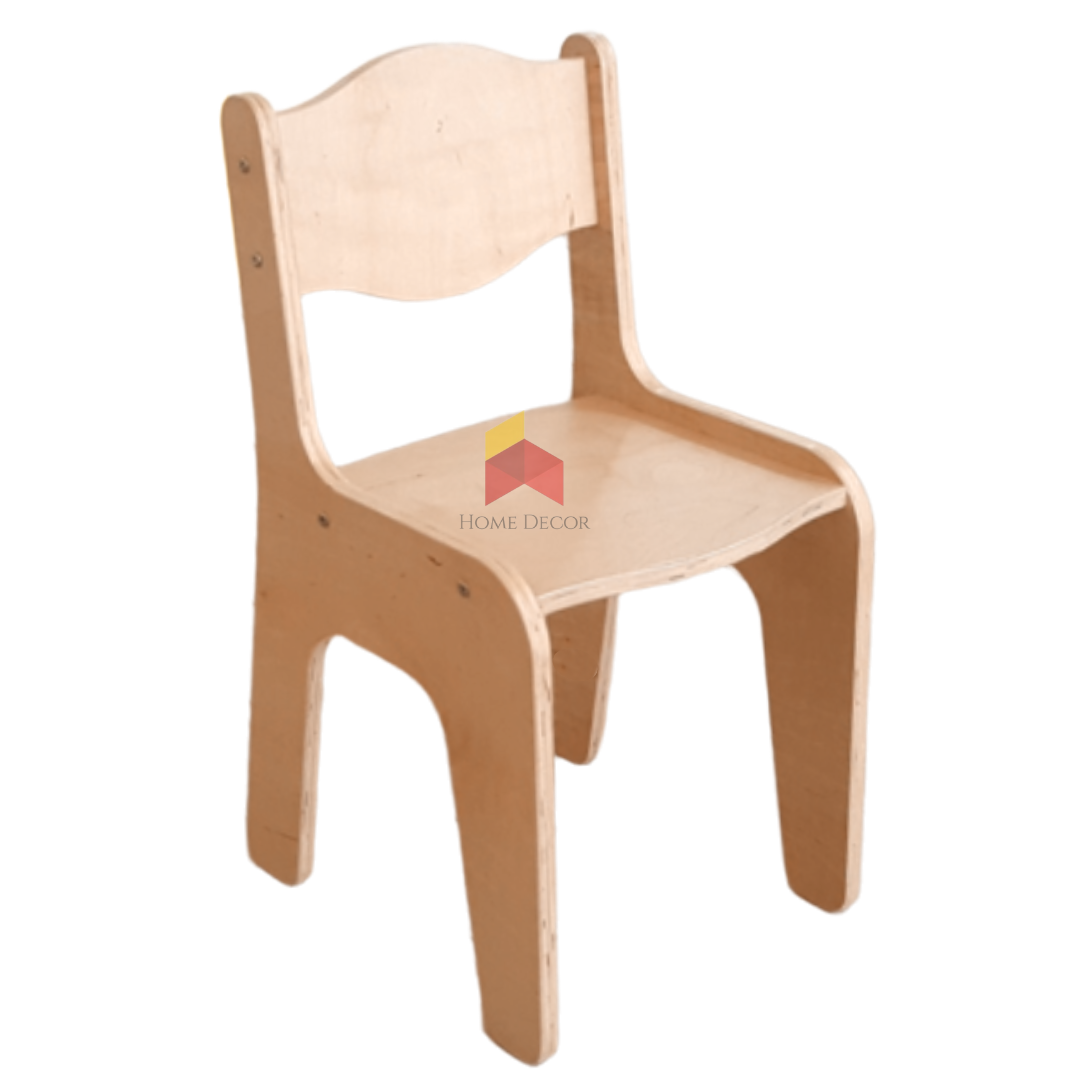
If the reception connects directly to a classroom or children’s waiting area, wooden chairs can help maintain a consistent furniture style.
4. Think About Storage From the Start
Reception areas can become cluttered quickly. Forms, stationery, files, keys, visitor information and other everyday items all need a place.
This is why storage should be part of the initial reception table design, rather than something added later.
Useful storage can include:
- Drawers inside the reception desk
- Closed cabinets for documents
- Open shelves for frequently used items
- Storage boxes for smaller supplies
- Lockable storage for sensitive paperwork
For a children’s environment, avoid leaving important documents or office equipment where children can easily reach them.
If the reception also needs to display books or educational material, bookshelves can provide useful storage while keeping the area organized.
5. Keep the Reception Child-Friendly

A school or nursery reception does not need to look like a corporate office.
Children and parents should feel comfortable as soon as they enter.
You can create a warmer environment through:
- Natural wood furniture
- Soft, neutral colours
- Simple children’s artwork
- Easy-to-read signage
The key is balance. Too many decorations can make a reception look busy, while a completely plain space may feel cold.
A simple display of children’s work can also make the entrance feel connected to the learning environment.
For additional ideas, see our guide to modern classroom furniture ideas.
6. Make Safety Part of the Design
Safety should be considered before furniture is installed.
Reception areas can become busy during arrival and collection times, so furniture should not block entrances, exits or important walkways.
Look for:
- Stable furniture
- Rounded or softened edges where possible
- Secure shelving
- Clear walking paths
- Safe cable placement
- Easy-to-clean surfaces
- Suitable flooring
- Furniture that is appropriate for children
Flooring is another important consideration, especially when children regularly pass through the reception. For children’s spaces, kids’ play area flooring can be considered based on the needs of the area.
For spaces where children may sit or play near the reception, suitable safety padding may also be useful.
7. Use Signage to Make the Entrance Easier to Understand
Good signage helps parents and visitors understand where to go. Reception signs should be easy to see, simple to read and consistent with the school’s interior. Additional signs can guide visitors towards classrooms, offices, washrooms and waiting areas.
For a more personalized entrance, custom signage design can be used to create signage that matches the school’s branding and interior.
8. Match the Desk With the Rest of the Interior
The reception should not feel disconnected from the rest of the school.
If classrooms use light wood furniture, colorful children’s furniture or simple neutral finishes, similar materials can be carried into the reception.
The same applies to colours and storage.
For example, a nursery with natural wood tables and chairs may look better with a reception desk that uses similar wood tones rather than a completely different style.
This approach also helps create a consistent reception table design that feels like part of the overall school rather than a separate office.
If you are furnishing other parts of the school, you can also explore classroom furniture and classroom boards to maintain a consistent look.
9. Consider the Size of Your School
A large school may need a larger reception with multiple staff members, more visitor seating and additional storage.
A small nursery may need only a compact desk, a few chairs and basic storage.
Do not copy a reception layout simply because it looks good in another school. The right setup depends on the size of the entrance, number of visitors and daily activities.
For smaller spaces, choosing furniture that combines storage and workspace can help save floor space.
The same principle applies when planning the wider school reception area design. Every piece of furniture should have a clear purpose.
Simple Reception Design Checklist
Before finalizing the reception, check:
- Is the reception desk easy to see?
- Is there enough staff workspace?
- Can parents approach the desk easily?
- Is there enough seating?
- Is storage included?
- Are walking paths and cables safe?
- Does the reception match the rest of the school?
Final Thoughts
A good reception should be welcoming for parents, practical for staff and safe for children. Start with the space you have, then plan the desk, visitor flow, seating and storage around it.
For schools and nurseries planning a complete children’s environment, KidsHomeDecor’s area design consultation can also help bring different furniture and learning areas together into one practical plan.
FAQs
What should a school reception include?
A school reception should usually include a reception desk, staff workspace, visitor seating, storage and clear signage. The exact setup depends on the available space and visitor flow.
How should I choose a reception desk for a nursery?
Choose a stable, practical desk with enough workspace and storage. Keep the design simple and make sure it does not block children’s or visitors’ walking paths.
What makes a reception area child-friendly?
Use safe, stable furniture, clear walking paths, soft colours and simple displays. Avoid clutter and keep office equipment, cables and sensitive documents out of children’s reach.
How can I make a small reception look bigger?
Use compact furniture, open walking areas, light colours and storage that uses vertical space. Avoid filling the entrance with too many chairs, shelves or decorative items.
Is reception design important for schools?
Yes. The reception is often the first area parents and visitors see. A clear layout can make arrivals easier while creating a welcoming and organized first impression.