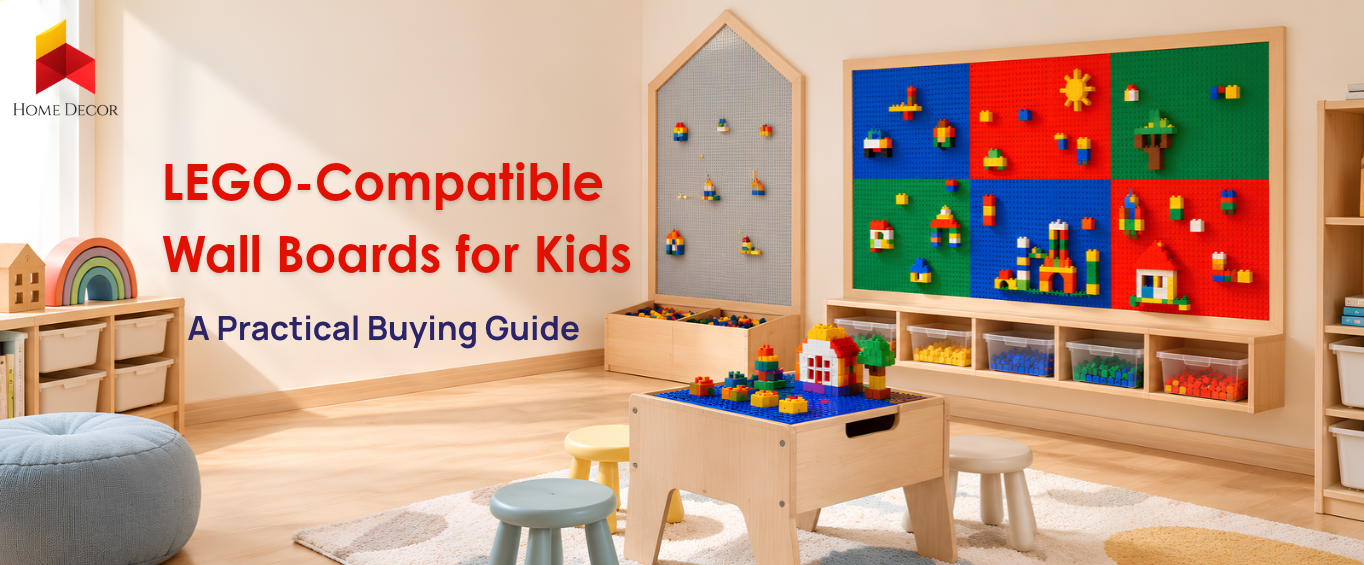
A LEGO-compatible wall board gives children a dedicated space to build, create and display their designs without taking up an entire table. It can be a practical addition to a small bedroom, playroom, nursery or classroom where floor space is limited.
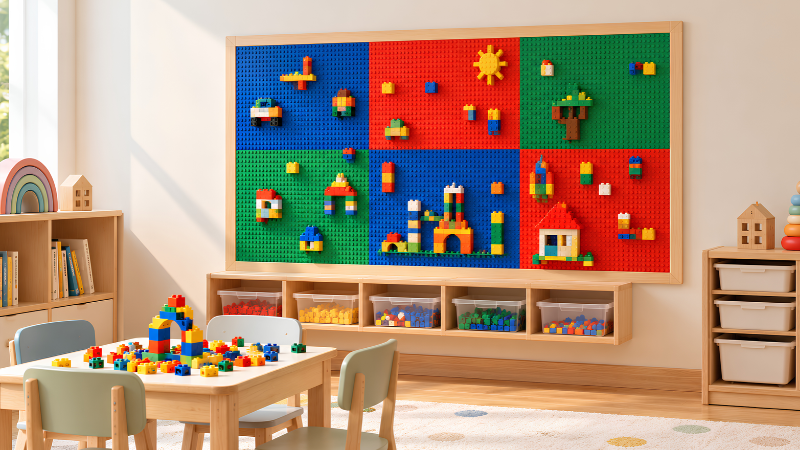
Different options are available, from colourful wall panels to house-shaped boards and wall-mounted units with storage. The right choice depends on your child’s age, the available wall space, the type of building bricks you use and how you plan to organise the play area.
This guide explains how to choose a LEGO-compatible wall board, plan its size and mounting height, compare it with an activity table, and keep the setup safe and organised.
What Is a LEGO-Compatible Wall Board?
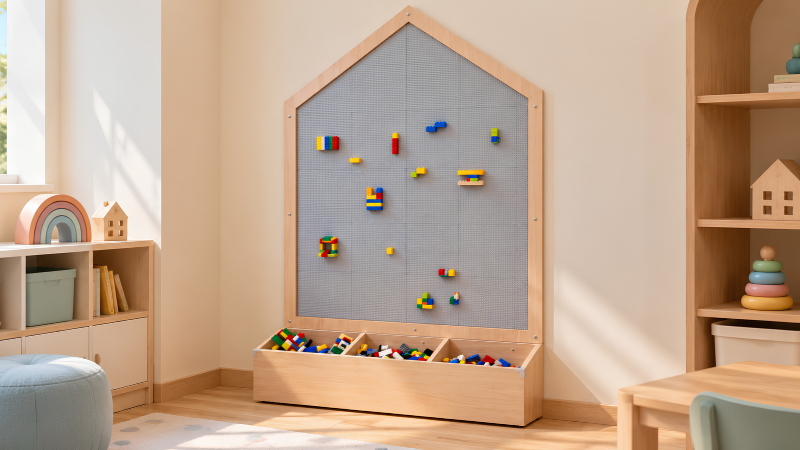
A LEGO-compatible wall board is a vertical building surface designed to hold compatible interlocking bricks. Children can use it to create patterns, buildings, vehicles and other designs while making use of wall space.
Unlike a traditional building table, a wall board can leave more floor area available for other activities. Some models also include storage compartments, helping keep bricks close to the building surface.
Check the product specifications before buying, as compatibility varies by product and brick type. The term LEGO-compatible describes compatibility with suitable building bricks, not official manufacture by LEGO. For more building and activity options, explore our LEGO-compatible wall boards and building units for children’s play and learning spaces.
How to Choose the Right Wall Board Size
The best size depends on the available wall space and how many children will use the board. Before choosing a model, measure the wall and check the position of doors, windows, switches, sockets and nearby furniture.
Consider these points when comparing sizes:
- Small bedrooms: A compact wall panel can provide a building area without taking up valuable floor space.
- Shared playrooms: A wider panel may give two children room to build together, provided both can reach the surface comfortably.
- Nurseries and classrooms: Consider the number of children, available wall length and the need for adult supervision.
- Play areas needing extra storage: A model with integrated storage may reduce the need for additional furniture.
For reference, the Display Colorful LEGO Board Wall Panel is listed at 108 × 74 cm. The House Shaped LEGO-Compatible Wall Board with Storage is listed at 100 × 30 × 150 cm.
Use these measurements to check the available space before ordering. Allow enough room in front of the board for children to stand or sit and move around comfortably.
What Is the Best Mounting Height for Kids?
Mounting height affects how comfortably children can use a wall board. If it is too high, a child may stretch, climb on furniture or need an adult to reach the upper sections.
There is no single mounting height that suits every child. Consider the child’s height, age, the board’s dimensions and whether the activity will mainly take place while standing or sitting.
Follow these installation tips:
- Check the child’s reach. Plan the main building area around a comfortable, reachable height.
- Consider different age groups. In classrooms shared by children of different heights, make sure the setup works for the intended users.
- Use suitable fixings. The wall, anchors and mounting hardware must be appropriate for the product’s weight and the wall type.
- Follow the installation instructions. Use professional installation if the manufacturer recommends it.
- Inspect the board regularly. Check for loose fittings, damage or movement.
Do not rely only on product photographs when deciding where to mount a board. Confirm the installation requirements and make sure the finished setup is secure before children use it.
LEGO Wall Board vs LEGO Activity Table: Which Is Better?
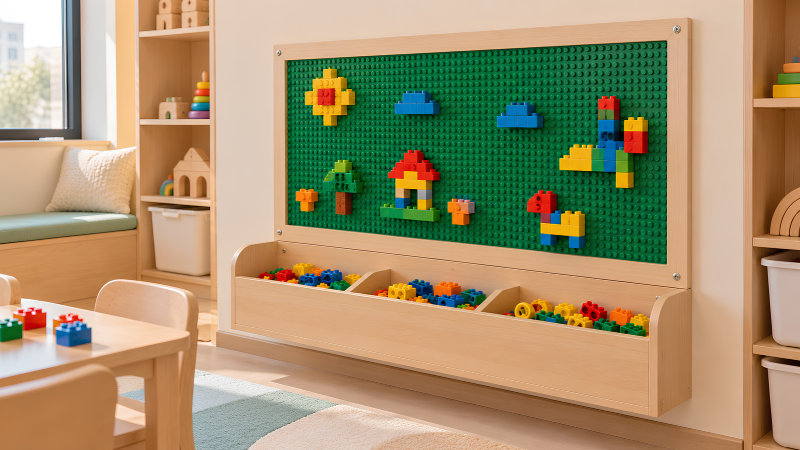
Both options support creative building, but they suit different rooms and play habits.
| Feature | Wall board | Activity table |
|---|---|---|
| Space | Uses vertical wall space | Occupies floor space |
| Playing position | Usually standing or sitting nearby | Usually seated or standing around the table |
| Building surface | Vertical | Horizontal |
| Storage | Available on selected models | Available on selected models |
| Best suited for | Compact rooms and wall-based building | Tabletop play and longer building sessions |
A wall board may be a better fit for a narrow bedroom where floor space is needed for other furniture. An activity table can be more practical for children who prefer sitting while building or who need a horizontal surface for sorting and assembling larger creations.
The Building Blocks Activity Table with Storage measures 55 × 55 × 45 cm and features a compatible building surface with storage. If your child prefers building while seated, compare our kids’ wooden activity tables when planning a dedicated building corner.
You can also use both options in a larger playroom or classroom. A wall board provides space for vertical designs, while a table offers a place to sort bricks and build more detailed structures.
Storage Ideas for LEGO-Compatible Wall Boards
Building bricks can quickly spread across the room, especially when children switch between different designs. A simple storage system makes it easier to find pieces and tidy up after play.
Try these practical ideas:
- Sort bricks by type: Keep larger bricks, smaller pieces, wheels and accessories in separate containers.
- Use labelled bins: Simple labels or pictures can help children identify where items belong.
- Keep frequently used pieces close: Store everyday bricks in an accessible compartment and less-used pieces elsewhere.
- Make tidying part of play: Encourage children to return bricks before starting another activity.
- Avoid overfilled containers: Children should be able to find pieces without emptying the entire box.
- Store small pieces securely: Keep age-inappropriate bricks away from toddlers and other children who may put objects in their mouths.
A wall board with integrated storage can help reduce clutter, but it is still important to decide how the pieces will be sorted. For more ideas, read our guide to kids’ storage ideas.
Safety Tips for Toddlers and Young Children
Building activities can encourage creativity and problem-solving, but the equipment and bricks must be suitable for the child’s age.
Choose age-appropriate bricks
Small building bricks can pose a choking risk for young children. For toddlers, choose larger bricks specifically labelled as suitable for their age group. Follow the manufacturer’s age guidance and keep small pieces out of reach.
Secure the board properly
Install the board using suitable fixings for the wall type and product. Follow the manufacturer’s instructions and check the fittings regularly for signs of loosening or damage.
Keep the surrounding area clear
Keep the space in front of the board free from furniture and clutter that could cause trips or encourage children to climb. Store loose bricks after each session.
Check the board and storage
Inspect the surface for damaged edges, loose components or other defects. Keep storage compartments in good condition and clean the equipment according to the manufacturer’s guidance.
Supervise younger children
Adult supervision is particularly important when toddlers use building toys or children of different ages share the same area. Store small pieces separately and check that all bricks are collected after play.
A well-planned building area should make play easier while supporting age-appropriate toy selection and supervision.
LEGO-Compatible Wall Board Ideas for Playrooms and Classrooms
In a small bedroom
Choose a wall that is not blocked by a door or wardrobe. A wall-mounted board can create a building corner without taking up the space needed for a bed, storage or movement.
In a shared playroom
Use the board as one activity zone and keep other toys organised separately. If two children will use it together, check that the panel is wide enough and both can reach it comfortably.
In a nursery or classroom
A wall board can provide a dedicated building activity for supervised small-group sessions. Keep the area away from busy walkways and establish a routine for returning bricks to storage after each session.
For shared classroom use, select bricks and equipment suitable for the children who will use them. Staff should be able to supervise the activity and check that all pieces are collected afterwards.
In a creative building corner
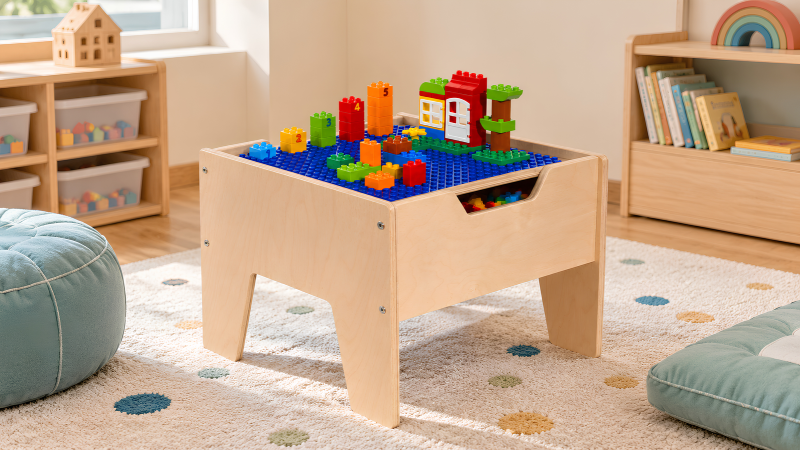
Pair a wall board with an activity table or nearby storage unit. Children can use the vertical surface for wall-based designs and the table for sorting pieces or assembling larger structures.
Keep the layout simple, with enough room for children to approach the board, move around safely and tidy away their materials. For a complete learning environment, browse our classroom furniture and play equipment to plan a space around building, creative activities and storage.
Frequently Asked Questions
1. What is a LEGO wall board?
A LEGO-compatible wall board is a vertical surface designed for building with compatible interlocking bricks. It lets children create and display designs while using wall space instead of a full tabletop.
2. Is a LEGO-compatible wall board suitable for toddlers?
It depends on the product and the child’s age. Choose age-appropriate equipment and larger bricks designed for young children. Keep small pieces out of reach and supervise toddlers during play.
3. Is a LEGO wall board better than a LEGO table?
Neither option is best for every child. A wall board saves floor space and supports vertical building, while a table provides a horizontal surface for seated play and larger projects. Choose based on the room layout and the child’s preferences.
4. Can a LEGO-compatible wall board be installed in a classroom?
Yes, a suitable wall board can be used in a classroom or nursery. Check its dimensions, wall requirements, mounting instructions and suitability for the children using it. Ensure it is securely installed and easy for staff to supervise.
5. How can I keep LEGO bricks organized?
Separate bricks by type, use labelled containers and return pieces to storage after play. A wall board with integrated storage can help keep building materials close to the activity area.
Final Thoughts
A LEGO-compatible wall board can create a dedicated building area without using much floor space. The right option depends on the child’s age, available wall space, brick compatibility, storage needs and installation requirements.
Consider a house-shaped board if you want a defined play feature with storage, a colourful wall panel for vertical building, or a wall-mounted DUPLO board for compatible larger bricks. If children prefer tabletop play, an activity table may be a better fit.
Measure the space, check product details and plan storage before buying. With a suitable setup, children can enjoy building, creating and displaying their designs while keeping the play area organised.