A well-designed school playground does more than fill an outdoor space with equipment. It creates an environment where children can move, explore, build confidence, develop social skills, and take healthy risks under appropriate supervision.
However, many playground projects face problems long before installation begins. Poor planning, limited understanding of the users, overlooked accessibility needs, and short-term budget decisions can result in a space that looks appealing initially but does not perform well for students or staff.
Schools making significant investments in outdoor recreation areas should approach the process carefully. The goal should not simply be to purchase playground equipment. It should be to create a complete play environment that is safe, engaging, inclusive, durable, and appropriate for the school’s students.
Below are the key planning and design issues schools should keep in mind before moving forward with a new playground project.
Common Playground Design Mistakes Schools Should Avoid
1. Designing Without Understanding the Students
One of the biggest planning errors is selecting equipment before considering who will actually use the space.
A playground designed primarily for younger children may not provide enough challenge for older students. At the same time, equipment intended for older age groups can create unnecessary safety concerns for younger children.
Before choosing equipment, schools should evaluate:
- Student age groups
- Physical abilities and developmental stages
- Number of children using the playground
- Daily and peak usage periods
- Supervision requirements
- Available outdoor space
- Existing recreational facilities
Different students interact with play environments in different ways. Some children are drawn to climbing and physical challenges, while others prefer imaginative, social, or sensory play.
A successful design considers these differences from the beginning.
Rather than selecting individual products first, schools should think about the complete experience they want to create. This often leads to a more balanced playground with different opportunities for movement, exploration, social interaction, and independent play.
For schools looking to create a play area around specific student needs and available space, custom playground solutions can provide a more tailored starting point. For active play areas, options such as outdoor playground structures can also be considered based on the age group and activities the school wants to support.
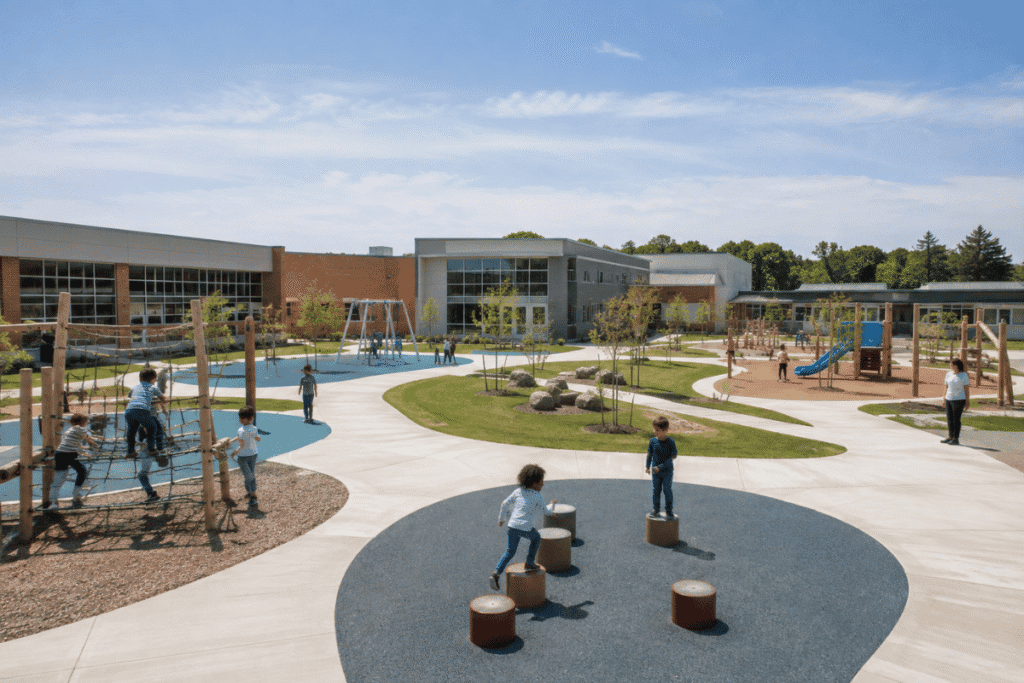
2. Poor Playground Layout and Traffic Flow
A playground can include excellent equipment and still feel difficult to use if the layout is poorly planned.
Traffic flow is especially important in busy school environments. Students need enough room to move between different activity areas without creating unnecessary congestion.
Common layout problems include:
- Equipment placed too closely together
- Limited pathways between activity zones
- High-traffic areas crossing through active play spaces
- No clear separation between younger and older users
- Poor visibility for supervisors
- Inadequate space for students waiting their turn
The placement of equipment should support natural movement throughout the playground.
For example, high-energy activities such as climbing and spinning may benefit from being positioned away from quieter spaces. Social play areas, seating, and imaginative play features can be arranged where children are less likely to be interrupted by heavy traffic.
A thoughtful layout also helps staff supervise the space more effectively. Clear sightlines can reduce hidden areas and make it easier for adults to monitor several activities at the same time.
For schools planning a playground around a specific site, outdoor play space design can help create a layout that considers available space, circulation, activity zones, and supervision needs. Schools can also explore outdoor playground structures when planning equipment placement around different activity areas.
3. Treating Safety as Something to Address Later
Safety should influence the planning process from the beginning rather than being treated as a final checklist before installation.
Schools should consider how equipment placement, fall zones, surfacing, access routes, and supervision work together as one system.
A common problem occurs when equipment is selected first and the surrounding requirements are considered afterward. This can create challenges with spacing, circulation, or the available site.
Important areas to evaluate include:
- Appropriate use zones around equipment
- Fall protection and surfacing requirements
- Equipment spacing
- Entrances and exits
- Visibility across the playground
- Drainage and site conditions
- Potential obstacles near active play areas
Safety planning also includes future inspections and maintenance. A playground that is difficult to inspect or access can create long-term challenges for school staff.
Schools should work with experienced professionals who understand how playground components, site conditions, and ongoing maintenance requirements affect the finished space.
The playground surface also deserves careful attention. Schools can explore EPDM flooring as one option for outdoor play areas, while floor padding and wall padding mats for safety can provide additional protection around suitable activity areas. For more planning guidance, see our safe kids play area design guide.
4. Ignoring Accessibility and Inclusive Play
A playground should offer meaningful opportunities for as many children as possible.
Accessibility is sometimes misunderstood as simply providing an entrance or pathway. In reality, inclusive design requires a broader approach.
Children have different physical, sensory, and social needs. A stronger play environment provides multiple ways to participate.
Schools can consider:
- Accessible routes through the playground
- Ground-level activities
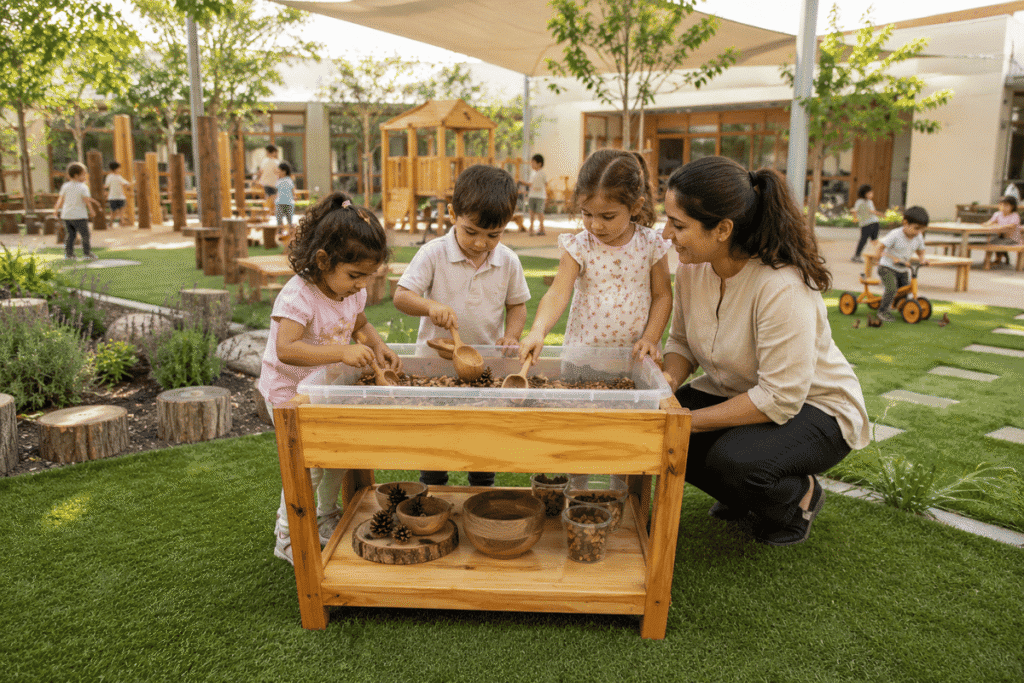
- Sensory play opportunities
- Social spaces
- Different levels of physical challenge
- Equipment that supports cooperative play
- Areas where children can take a break from high-energy activity
Inclusive design benefits more than one group of students. When children have different ways to engage with the environment, the playground can support a wider range of play styles.
The best approach is to think about participation rather than simply access.
Can students enter the space? Can they move through it? Can they interact with activities? Can they play alongside classmates?
These questions can lead to a more thoughtful and welcoming environment. Schools planning around different student needs can also consider sensory play equipment as part of a wider play environment that gives children different ways to participate and explore.
5. Choosing Equipment Based Only on Initial Cost
Budget matters, but the lowest upfront price does not always represent the best long-term value.
Schools should evaluate the total life cycle of the playground rather than focusing only on the initial purchase.
A lower-cost option may lead to additional expenses if equipment requires frequent repairs, replacement parts, or earlier replacement.
Long-term planning should consider:
- Product durability
- Material quality
- Maintenance requirements
- Replacement availability
- Warranty coverage
- Expected usage levels
- Installation requirements
- Future expansion possibilities
A busy school playground can experience significant daily use. Equipment should be selected with realistic expectations about how frequently it will be used.
Investing in durable, appropriately selected equipment can provide better value over time. Schools can explore outdoor playground structures designed to support different play needs and age groups while providing multiple activities within one setup.
6. Forgetting About Supervision During the Design Process
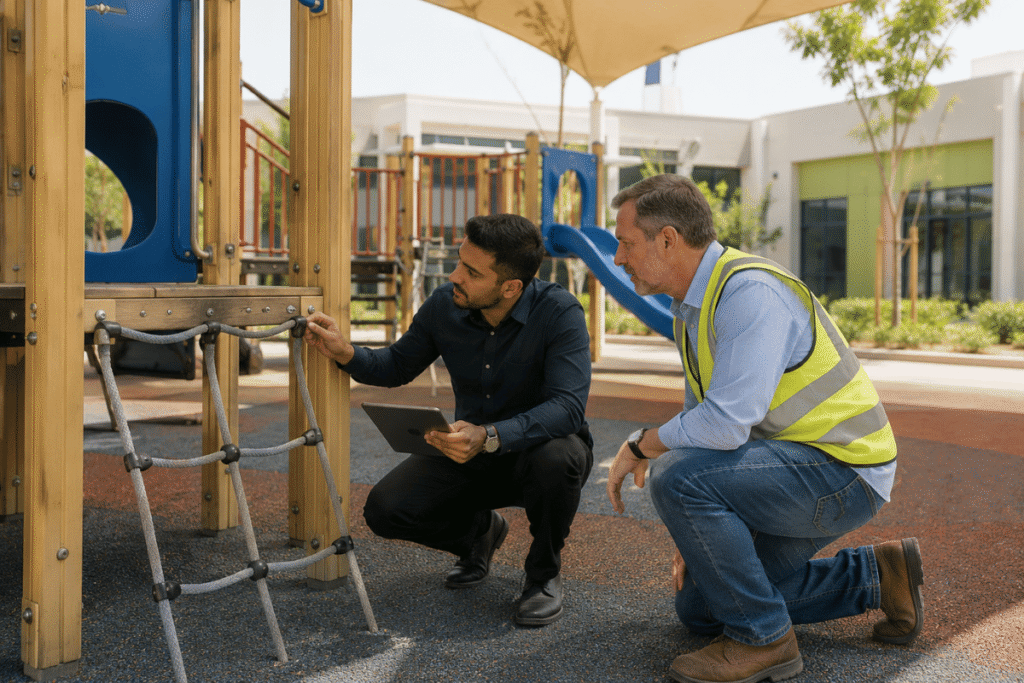
A playground may look attractive on a site plan but become difficult for staff to supervise once students begin using it.
Blind spots, oversized structures, poor equipment placement, and crowded zones can make supervision more challenging.
During the design stage, schools should consider where teachers and staff members are likely to stand and what areas they can see from those positions.
Questions worth asking include:
- Are there hidden areas behind structures?
- Can staff view major activity zones?
- Are entrances and exits easy to monitor?
- Where are students likely to gather?
- Are high-energy activities visible from key supervision points?
- Is there enough space for adults to move around safely?
The design should support the school’s supervision practices rather than creating additional challenges for staff.
Small layout changes can often improve visibility and circulation significantly.
7. Overlooking the Importance of the Surrounding Site
The playground equipment is only one part of the project.
The surrounding site can influence safety, usability, drainage, maintenance, and overall appearance.
Schools should review:
- Existing trees and shade
- Drainage patterns
- Slopes and elevation changes
- Nearby buildings
- Parking and vehicle access
- Fencing
- Seating areas
- Outdoor storage
- Weather exposure
Ignoring site conditions can lead to problems after installation.
For example, poor drainage may affect surfacing performance, while a lack of shade can make certain areas uncomfortable during warmer months.
A complete site review helps ensure that the finished playground works well with the existing environment.
Schools can also consider ongoing support and maintenance options through Care+ services when planning for the long-term performance of their outdoor space.
8. Creating a Playground With Limited Variety
Children do not all play in the same way.
Some enjoy physical challenges. Others prefer imaginative activities, social interaction, sensory experiences, or quieter forms of play.
A playground that focuses too heavily on one type of activity may leave some students with fewer ways to engage.
A balanced environment can include opportunities for:
- Climbing
- Sliding
- Swinging
- Spinning
- Balancing
- Social interaction
- Imaginative play
- Sensory exploration
- Quiet breaks
Variety can also encourage students to use the playground in different ways over time.
Instead of creating one central attraction surrounded by limited activity, schools can develop multiple areas that support different forms of engagement.
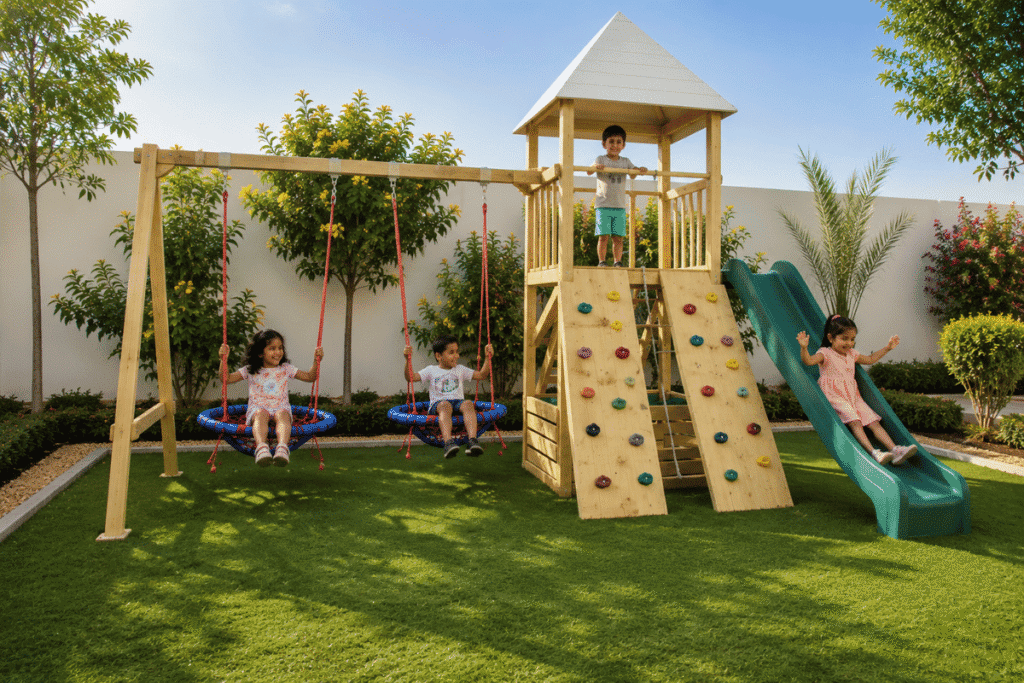
This approach can improve traffic distribution and reduce overcrowding around a single feature. Schools can also explore outdoor playground structures that combine different activities and give children more varied ways to play across age groups
9. Failing to Plan for Future Needs
Schools change over time.
Enrollment may increase, grade levels may expand, or the outdoor space may need to support new programs.
A design that uses every available inch of space without considering future needs can limit flexibility.
When possible, schools should think about:
- Future playground expansion
- Additional seating
- New activity areas
- Equipment replacement
- Changes in student population
- Accessibility improvements
- Landscape updates
A phased approach may also be appropriate for larger projects.
Planning for future development does not mean purchasing everything at once. It means designing the site in a way that allows future improvements to be added more easily.
How Schools Can Create a Better Planning Process
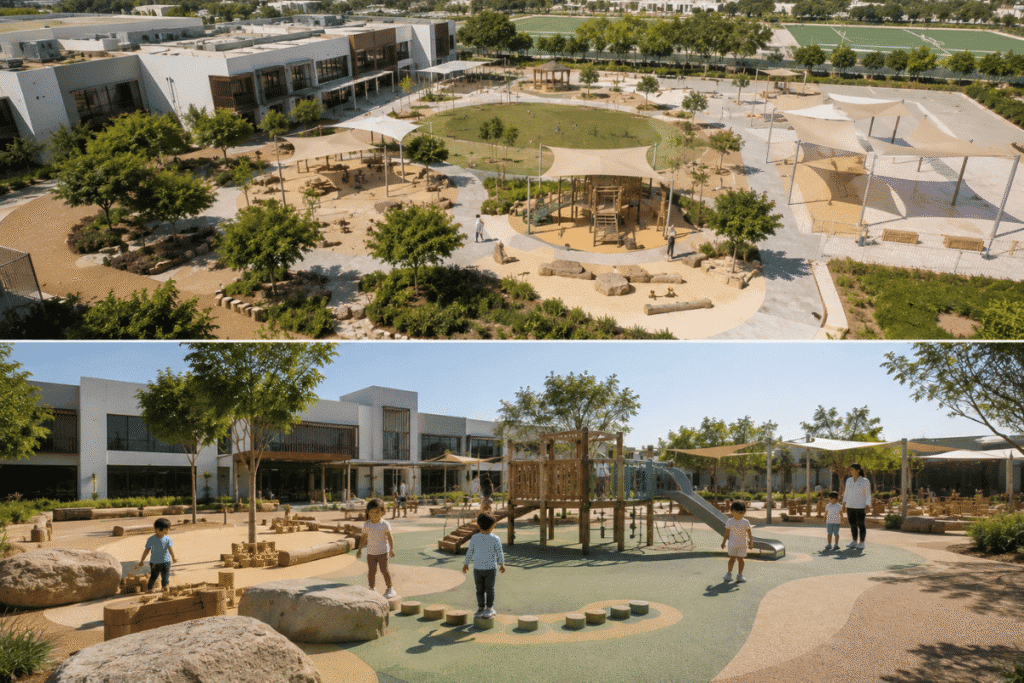
The strongest playground projects usually begin with a clear planning process.
Instead of immediately selecting products, schools can start by defining their goals and evaluating the needs of students and staff.
A practical planning process may include:
Step 1: Assess the Current Space
The strongest playground projects usually begin with a clear planning process.
Instead of immediately selecting products, schools can start by defining their goals and evaluating the needs of students and staff.
A practical planning process may include:
Step 1: Assess the Current Space
Review the existing playground, available land, site conditions, and current challenges.
Step 2: Identify Student Needs
Consider age groups, abilities, interests, and the number of students using the space.
Step 3: Establish Project Goals
Determine whether the priority is physical activity, inclusive play, replacement of aging equipment, improved supervision, or a combination of goals.
Step 4: Review Budget Beyond Installation
Consider long-term maintenance, repairs, durability, and future improvements.
Step 5: Develop a Complete Site Plan
Think about equipment, surfacing, circulation, accessibility, supervision, seating, shade, and drainage together.
Step 6: Work With Experienced Playground Professionals
Professional guidance can help schools identify practical issues before installation begins.
A well-planned project can prevent expensive changes later and create a more useful environment for students.
Frequently Asked Questions
What should schools consider before designing a new playground?
Schools should begin by understanding the students who will use the space. Age groups, abilities, enrollment numbers, supervision practices, available land, budget, accessibility needs, and long-term maintenance should all be considered before selecting equipment.
How can a school make its playground more inclusive?
An inclusive playground should provide different ways for children to participate. This can include accessible routes, ground-level activities, sensory features, social play spaces, physical challenges at different levels, and areas for children who prefer quieter activities.
Why is playground layout important?
The layout affects how children move through the space, how staff supervise activities, and how different play zones function together. A poorly planned layout can create congestion, blind spots, and unnecessary conflicts between activities.
Should schools choose playground equipment based on price alone?
No. Initial cost is only one part of the decision. Schools should also consider durability, maintenance requirements, expected usage, replacement availability, warranties, and long-term value.
How can schools plan for future playground expansion?
Schools can preserve flexible space, consider modular designs, and create a site plan that allows additional features to be added later. Planning ahead can make future improvements easier and more cost-effective.
When should playground maintenance be considered?
Maintenance should be considered during the initial planning stage. Equipment selection, material quality, access for inspections, replacement parts, and long-term service needs can all affect the cost and usability of the playground over time.
Final Thoughts
A successful school playground is the result of thoughtful planning rather than a collection of individual pieces of equipment.
By understanding student needs, improving layout and supervision, considering accessibility, planning for long-term maintenance, and accounting for future growth, schools can create outdoor environments that remain valuable for years.
The best projects balance safety, durability, activity, inclusion, and practical day-to-day use. Taking time to address these factors before installation can help schools avoid costly changes and create a space where more students can enjoy meaningful outdoor play.