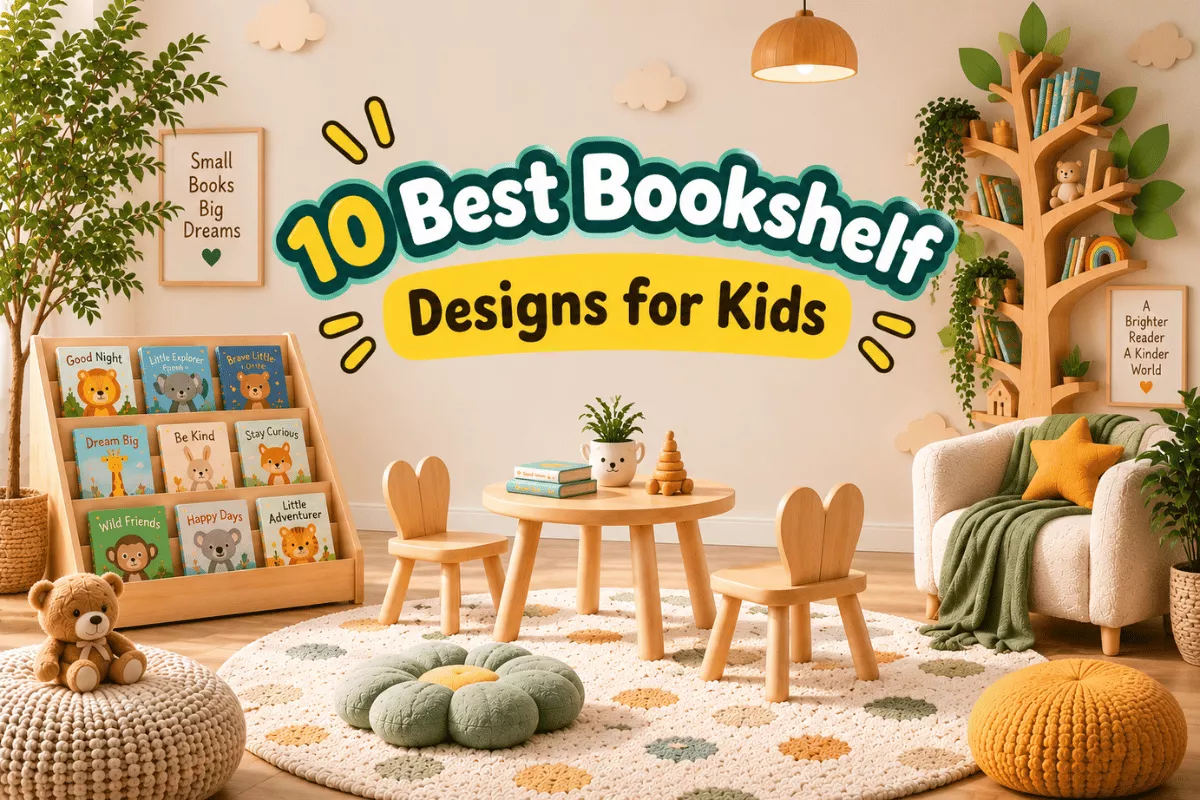
Best Bookshelf Designs for Kids are not simply about finding a place to put books. The right design can make books easier to see, easier to reach, and more naturally connected to a child’s bedroom, reading corner, Montessori setup, or playroom.
From low Montessori shelves and playful tree-shaped bookcases to compact wall-mounted designs, today’s children’s bookshelves come in many styles. The best choice depends on your child’s age, available space, number of books, room theme, and how much independence you want to encourage.
For UAE homes, this is especially useful when a bookshelf needs to work inside a compact apartment bedroom, a spacious villa, or a dedicated playroom without making the room feel crowded.
What Makes a Good Kids Bookshelf Design?
Before choosing a style, look beyond appearance. A good kids bookshelf should combine accessibility, stability, useful capacity, and a design your child actually wants to use.
A low shelf makes everyday books easier to reach. A forward-facing design makes covers more visible. A wall-mounted shelf can preserve floor space, while a shaped bookshelf can become part of the room’s decor.
Safety also deserves priority. The U.S. Consumer Product Safety Commission recommends securing bookcases and other furniture that could tip over, and placing heavier items lower down.
For the outbound safety reference, use CPSC’s Anchor It! furniture safety guidance as a dofollow external link in this section. CPSC Anchor It! furniture safety guidance
10 Best Bookshelf Designs for Kids to Consider
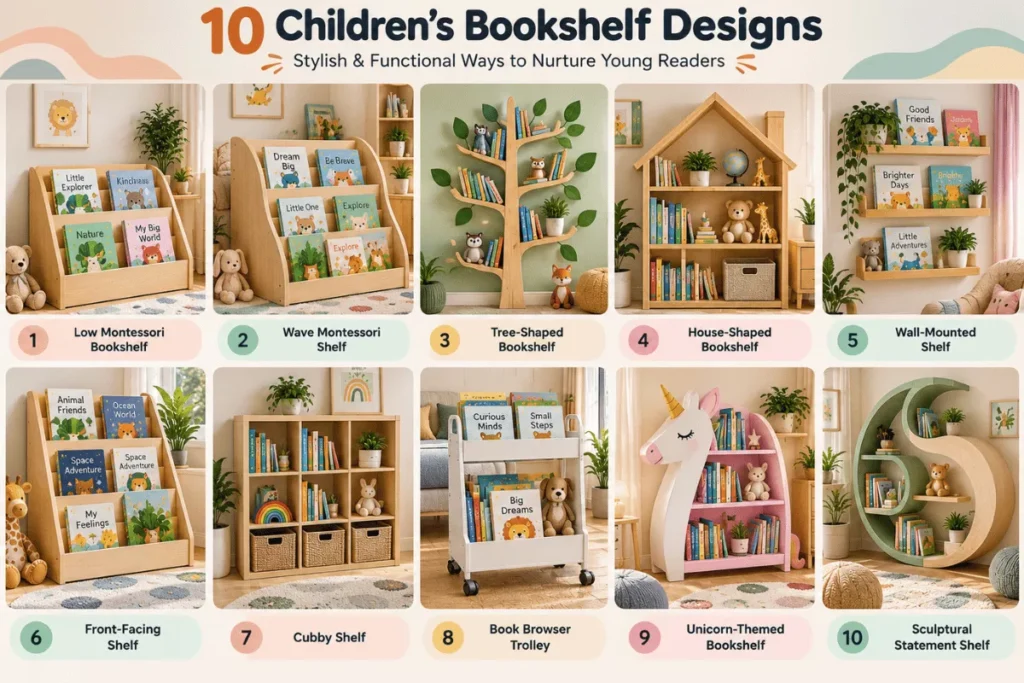
Different children and different rooms need different solutions. These ten designs cover the most useful styles, from Montessori-inspired options to statement pieces.
1. Low Montessori Bookshelf
A low Montessori bookshelf is one of the most practical choices for toddlers and preschoolers because books can be positioned at a child’s level.
Instead of hiding titles behind tall furniture, the shelf keeps books visible and easy to browse. A child can select a book, sit nearby, and return it afterward with less adult assistance.
The Wooden Montessori Bookshelf is a strong example, with a low 70 cm height and rounded edges. It is designed for children aged 2+ and is available in MDF or birch plywood.
This style is particularly suitable for Montessori bedrooms, nursery reading areas, and quiet corners in playrooms.
2. Wave-Design Montessori Bookshelf
For parents who want Montessori functionality without a very plain appearance, a wave-shaped shelf creates more visual interest.
The Montessori Bookshelf with Wave Design is available in multiple sizes, making it easier to choose a version that fits the available room space. Its rounded edges and natural wood finish also suit soft, neutral children’s interiors.
This works especially well in a room where the bookshelf needs to function as both storage and decor.
3. Tree-Shaped Bookshelf
A tree bookshelf can turn ordinary book storage into a decorative feature.
The branching shape works beautifully in reading corners, nature-themed bedrooms, Montessori-inspired rooms, and playrooms. Books become part of the visual display instead of simply sitting inside a rectangular cabinet.
For a larger statement piece, the Tree Shaped Book Shelf With 7 Branches offers multiple display areas and a tall 180 cm structure. The product uses rounded edges and is intended for indoor use.
Because this type of shelf is taller, installation and stability should be treated as a priority.
4. House-Shaped Bookshelf
House-shaped shelves are ideal for children’s bedrooms where furniture is expected to contribute to the room theme.
The shape gives the bookshelf a playful architectural look while still providing storage for books, toys, and smaller decorative pieces. The House Shaped Book Shelf is 160 cm high and uses a compact footprint, making the design suitable for themed bedrooms and smaller areas where a purely decorative piece would not be enough.
It can also work as a visual focal point beside a reading chair or play table.
5. Wall-Mounted Bookshelf
When floor space is limited, moving some storage onto the wall can make a noticeable difference.
Wall-mounted bookshelves are particularly useful in compact UAE apartments, where parents may need to create a reading zone without sacrificing open floor space. The approach also works well beside a desk, reading chair, or bed.
The key is placement. Books intended for independent use should remain within your child’s safe reach. Higher shelves should be reserved for adult-managed items or decorative pieces.
This complements ideas from Small-Space Kids Room Ideas for UAE Apartments, where vertical storage is recommended for compact children’s rooms.
6. Front-Facing Book Display
A front-facing bookshelf shows the covers rather than relying on children to read the titles from the spines.
This can be especially useful for toddlers and preschoolers who recognize pictures, characters, colors, and familiar visual cues before they can confidently read book titles. Current kids bookshelf guides and products consistently emphasize this display approach for younger readers.
A front-facing setup is excellent for:
- Picture books
- Favorite bedtime stories
- Early-learning books
- Rotating weekly selections
- Small reading corners
It also makes it easier to create a curated display instead of filling every shelf to maximum capacity.
7. Cubby-Style Open Bookshelf
A cubby bookshelf combines book storage with small compartments for toys, puzzles, baskets, and learning materials.
This is useful in playrooms where books are only one part of the storage requirement. Instead of buying separate furniture for every category, a cubby-based design can help create one organized activity zone.
For families who need both books and toy storage, this can be paired with the Nine Compartment Open Shelf or another open shelving solution from Kids Home Decor.
The best setup is usually to dedicate some compartments to books and others to clearly defined toy or activity categories.
8. Book Browser Trolley
A book browser trolley is a smart option for nurseries, classrooms, daycare areas, and flexible home reading spaces.
Instead of one fixed bookshelf, it allows books to be displayed face-out and moved closer to different activity zones. It is particularly useful when reading happens in more than one location.
Kids Home Decor also offers a Book Browser Trolley as part of its children’s storage range.
For commercial learning environments, this style can be paired with low tables, child-sized chairs, and other classroom furniture to create a complete reading zone.
9. Unicorn or Character-Themed Bookshelf
Some children’s rooms need a bookshelf that feels more playful than traditional furniture.
A unicorn, cartoon, animal, or other themed shelf can become part of the room’s visual identity. Royal Oak’s competitor content also highlights cartoon-designed children’s bookshelves as a way to combine storage with a fun reading environment.
At Kids Home Decor, a Unicorn Shaped Book Shelf can suit a themed girl’s bedroom, fantasy-inspired playroom, or colorful reading corner.
The important point is to make sure the design remains functional. A decorative shape should not come at the expense of usable shelf area.
10. Statement Tree or Sculptural Bookshelf
For parents who want the bookshelf to become a major decor element, a sculptural design can work as a room feature.
Rather than treating book storage as something to hide, these designs make the shelf part of the interior. This approach is especially effective in playrooms, library corners, Montessori-inspired spaces, and larger children’s bedrooms.
The existing Tree Book Shelves collection gives another example of how children’s book storage can become part of the room’s overall design language.
The idea is similar to what current design-focused competitors emphasize: children’s bookshelves can combine storage, visibility, and imaginative decor rather than functioning like a standard adult bookcase.
Best Bookshelf Designs for Kids: Which Style Is Right for You?
| Bookshelf Design | Best For | Space Requirement | Main Advantage |
|---|---|---|---|
| Low Montessori | Toddlers & preschoolers | Low to medium | Easy independent access |
| Wave Montessori | Montessori rooms | Low to medium | Functional + stylish |
| Tree-shaped | Playrooms & themed rooms | Medium to high | Decorative statement |
| House-shaped | Kids bedrooms | Medium | Playful room design |
| Wall-mounted | Small bedrooms | Low floor space | Saves floor area |
| Front-facing | Young readers | Low to medium | Makes covers visible |
| Cubby-style | Playrooms | Medium | Books + toys together |
| Book browser trolley | Nurseries & classrooms | Medium | Mobile reading storage |
| Unicorn/character | Themed rooms | Medium | Strong visual appeal |
| Sculptural/tree shelves | Feature spaces | Medium to high | Storage + decor |
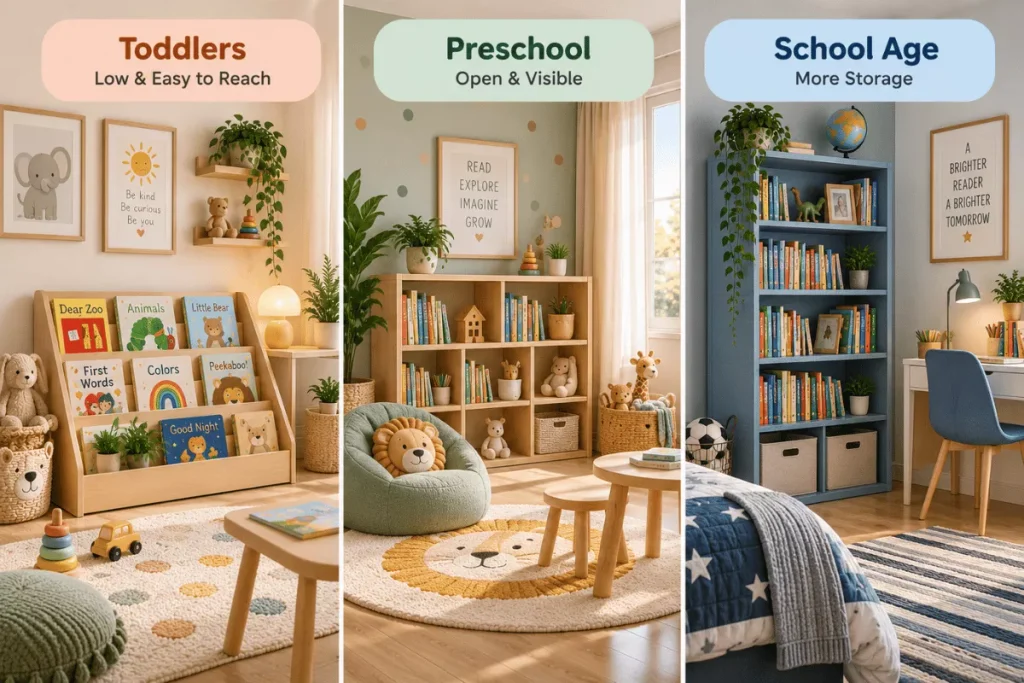
How to Choose the Right Bookshelf for Your Child’s Age
Age should influence the shelf design, not just its appearance.
For toddlers, low and open designs are generally more practical because children can reach books without climbing. Forward-facing displays can also make book selection easier.
For preschoolers, a combination of open shelves and front-facing displays gives children more choice while keeping the setup manageable.
For school-age children, deeper shelving becomes useful because collections usually grow. At this stage, spine-out storage can hold more books efficiently, while favorite titles can still remain face-out.
The important rule is simple: the books a child uses independently should be stored at a comfortable level, while heavier or rarely used items should stay lower or be managed by an adult.
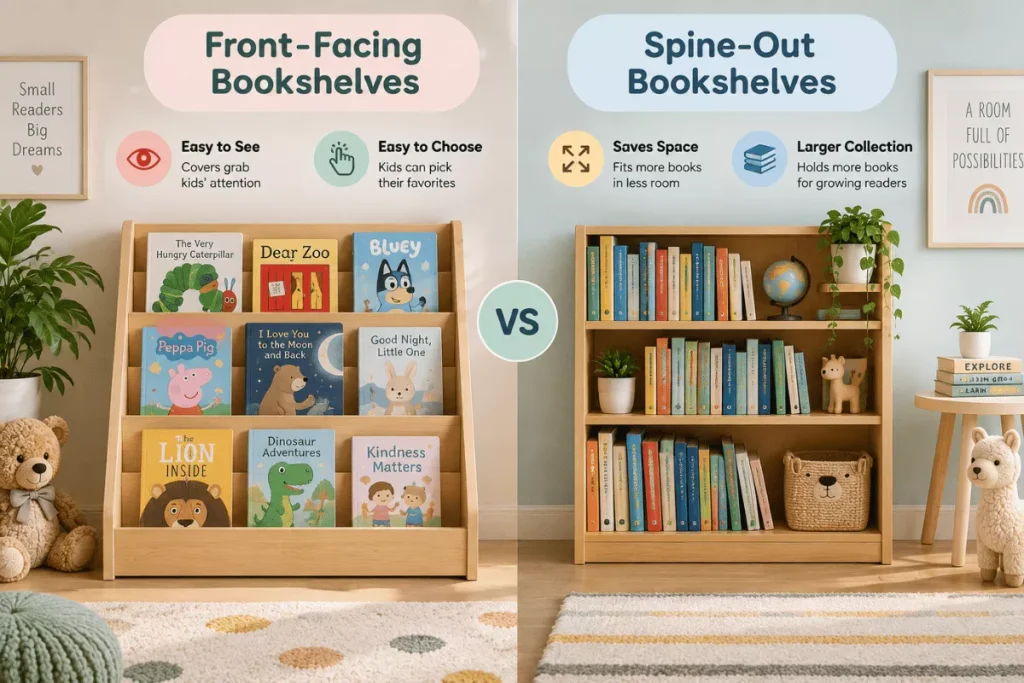
Front-Facing vs Spine-Out Bookshelves
There is no single winner between these two layouts.
A front-facing shelf is excellent when the goal is visibility and easy choice. It makes picture books look inviting and works especially well for younger children.
A spine-out shelf is more space-efficient and can hold a larger collection. It becomes increasingly practical when children are old enough to recognize titles and organize their own books.
Many families can use a hybrid approach: keep current favorites and picture books facing outward, while storing the larger collection spine-out.
This same principle appears in current competitor guidance and children’s furniture designs, which combine visibility with storage capacity depending on the child’s age and reading stage.
What to Check Before Buying a Kids Bookshelf
A beautiful bookshelf can still be the wrong choice if the design does not work for everyday use.
1. Height
Can your child reach the books without climbing, stretching dangerously, or asking for help every time?
2. Stability
A freestanding bookshelf should be stable and installed according to the manufacturer’s instructions. Where appropriate, anchor furniture to the wall. CPSC specifically recommends anchoring bookcases and other furniture that may tip.
3. Edges and Finish
Rounded or softened edges are preferable in children’s spaces where kids may move around furniture during play.
4. Shelf Depth
A shelf that is too deep can make younger children struggle to see or reach books. Choose depth according to the types of books being stored.
5. Capacity
Do not buy based only on the current book collection. Leave some room for new books, but avoid making the shelf so large that it encourages unnecessary clutter.
6. Room Style
The bookshelf should complement the room rather than visually overpower it. A natural wooden Montessori shelf may suit a calm neutral bedroom, while a tree or unicorn design may work better in a themed playroom.
7. Maintenance
Children’s furniture experiences everyday dust, fingerprints, spills, and activity. A surface that is simple to wipe and maintain can make long-term use much easier.
Bookshelf Ideas for Small UAE Kids’ Rooms
A compact room does not mean your child needs to give up a dedicated reading area.
Use vertical space carefully, select compact furniture, and avoid filling every available wall with storage. A narrow wall-mounted bookshelf can free up floor area, while a low shelf beside a soft mat or chair can create a simple reading corner.
For more room-planning ideas, the Small-Space Kids Room Ideas guide covers ways to use vertical space and keep compact rooms functional.
In a larger bedroom, a bookshelf can also define the reading zone without the need for a separate room divider.
How to Create a Complete Kids Reading Corner
The bookshelf becomes more useful when it is part of a complete setup.
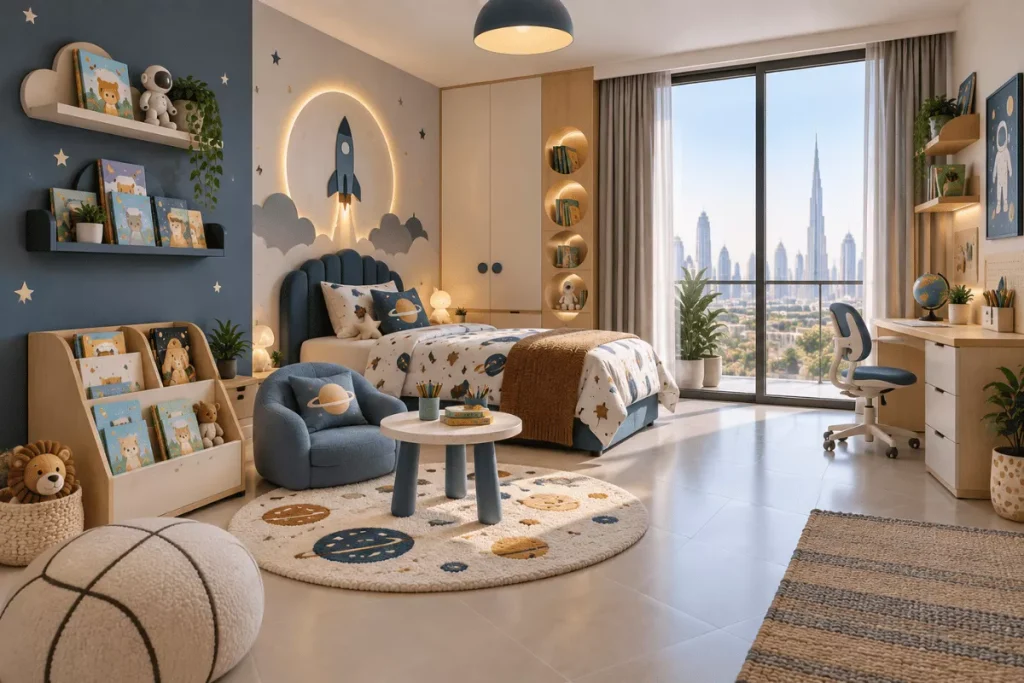
Place the shelf beside a comfortable child-sized chair, add a soft rug or floor mat, and keep a small selection of books visible. Avoid placing too many competing toys in the same zone.
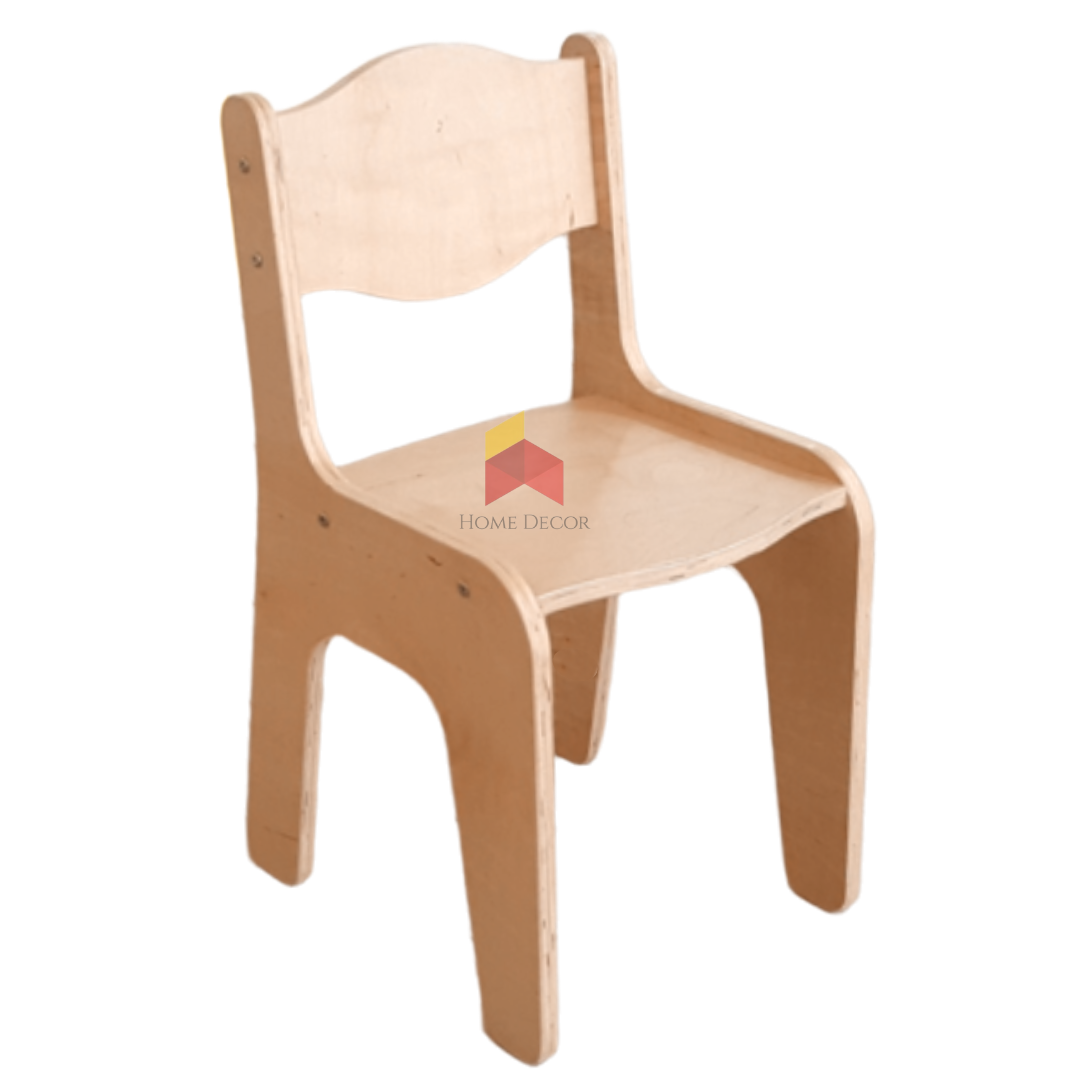
A Simple Montessori Chair for Kids can complement a low bookshelf and create a comfortable independent reading spot.
For a playroom, the reading corner can sit alongside active play zones rather than being isolated completely. This creates a natural transition between movement, quiet time, and storytelling.
The Indoor Playroom Ideas article can also be used as an internal resource when planning the rest of the room.
Bookshelf, Room Decor and Storage Should Work Together
The best children’s rooms do not treat furniture as individual pieces.
A bookshelf should work with the child’s bed, seating, toy storage, activity furniture, and available floor space. For example, a Montessori bookshelf may be part of a low-access bedroom setup, while a statement tree shelf may anchor a playroom reading corner.
This is especially important when designing a room around independence. The American Montessori Society emphasizes child-accessible environments and open shelving as part of a prepared environment approach.
For more context, readers can explore the How to Set Up a Montessori Bedroom at Home guide.
Final Buying Checklist
Before ordering a bookshelf, ask:
Can my child reach the books?
Does the design suit the room?
Is there enough usable storage?
Can the furniture be secured properly?
Are the edges suitable for a children’s environment?
Will the design still work as the book collection grows?
These questions are more useful than choosing a shelf purely because it looks attractive in a product photo.
FAQs About Best Bookshelf Designs for Kids
What is the best bookshelf design for toddlers?
A low, open, child-accessible bookshelf is generally the most practical choice. Front-facing designs can also make it easier for toddlers to see and select books.
Are Montessori bookshelves good for kids?
Yes, Montessori-style bookshelves are designed around accessibility and independent use. Low open shelving can make books easier for young children to reach and return.
Is a front-facing bookshelf better for children?
For younger children, a front-facing bookshelf can be more intuitive because the covers are visible. For larger collections and older readers, spine-out shelving usually stores more books efficiently.
Are tree-shaped bookshelves practical?
Yes. Tree-shaped bookshelves can provide functional book storage while also contributing to room decor. They are especially effective in themed bedrooms, reading corners, and playrooms.
How do I make a kids bookshelf safe?
Choose a stable design, follow the manufacturer’s installation instructions, keep heavier items low, and anchor furniture where appropriate. CPSC recommends securing bookcases and other furniture that could tip over.
What bookshelf is best for a small kids room?
Wall-mounted or compact low-profile bookshelves are often the best options when floor space is limited. They preserve open play space while keeping books accessible.
Should children’s books be stored face-out or spine-out?
Use face-out display for favorite picture books and younger readers, while spine-out storage is useful for larger collections and older children. A hybrid setup often provides the best balance.
Conclusion
The Best Bookshelf Designs for Kids combine practical storage with accessibility, safety, and a style that fits the child’s room.
A low Montessori shelf can support independent book selection, a front-facing shelf can make favorite stories more inviting, a wall-mounted design can save precious floor space, and a tree or house-shaped bookshelf can turn storage into part of the room’s decor.
The right choice is not necessarily the biggest bookshelf or the most decorative one. It is the design that fits your child’s age, book collection, room layout, and everyday routine.
For families planning a complete children’s environment in the UAE, explore Kids Home Decor’s Kids Book Shelves & Storages collection alongside its room, playroom, and Montessori furniture solutions.