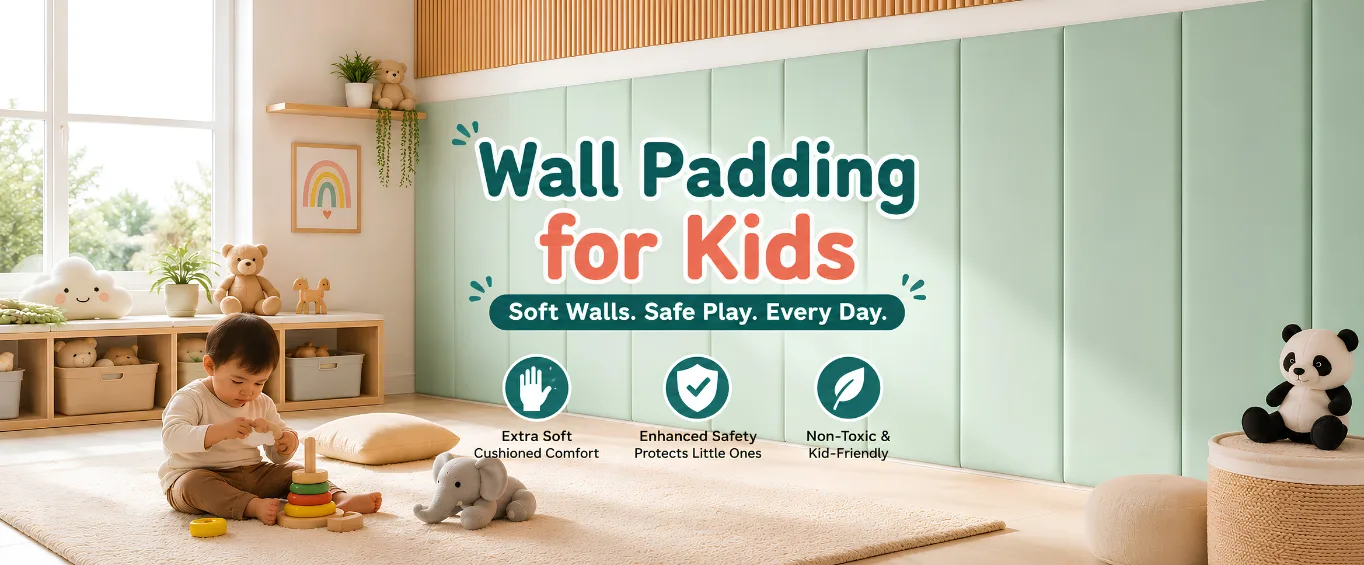
Kids fall a lot while they learn to walk, run, and climb. Hard walls, sharp corners, and low columns can turn a small trip into a real injury. This is why many parents across the UAE now add wall padding to playrooms, hallways, and bedrooms. This guide explains what it is, where to use it, and how to pick the right type for your home.
What Is Wall Padding for Kids?
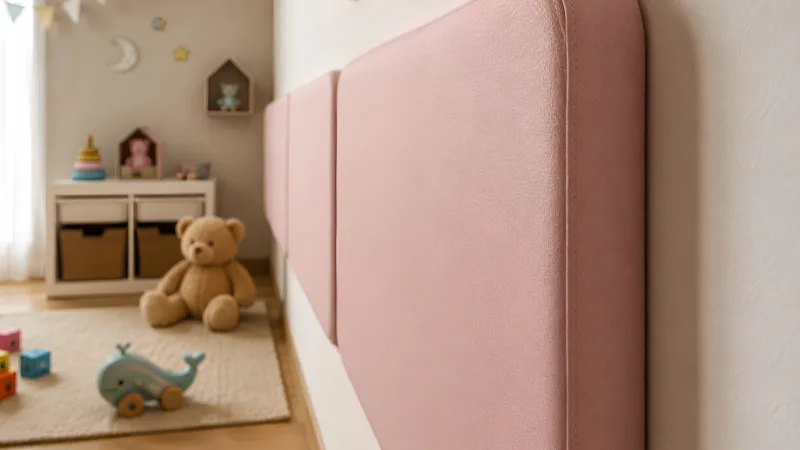
Wall padding for kids is a soft foam layer that sticks or fixes onto walls, columns, or low edges. It works like a cushion, so if a child bumps into it, the padding takes the hit instead of hard plaster or wood. Most padding comes in foam sheets or rolls that you can cut to fit doorways, corners, and flat wall sections.
This kind of padding is common in playrooms, home gyms, and areas near stairs, since these spots see the most falls and bumps during active play.
Why UAE Parents Are Adding It at Home
Many homes in Dubai and Abu Dhabi have open layouts with columns, low walls, and sharp furniture edges. As more parents set up home playrooms and climbing corners, the need for soft, safe walls has grown too. Wall padding gives peace of mind during rough play, especially with toddlers who are still learning to balance and stop safely.
It also helps protect the wall itself. Kicks, toy throws, and climbing gear can chip paint or dent plaster over time. A padded wall stays in better shape and needs less repair work later.
Corner Protector vs Wall Padding: What’s the Difference?
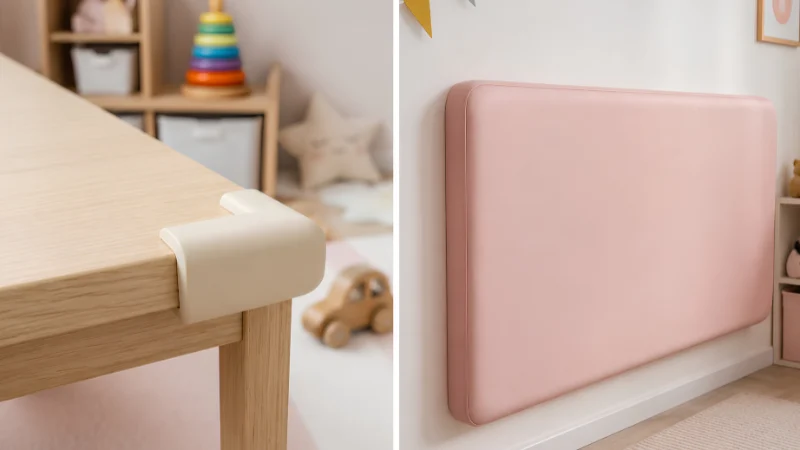
A corner protector is a small foam or rubber piece made to cover a single sharp corner, like the edge of a table, wall, or low column. Wall padding covers a larger flat area, like a full wall or a long stretch near a staircase.
Most parents use both together. A corner protector is a quick fix for one sharp spot, while wall padding covers bigger zones where kids run, climb, or play rough games. If you only have one or two sharp corners at home, a corner protector alone may be enough. For playrooms or busy hallways, full wall padding gives better coverage.
Where to Use Wall Padding for Kids
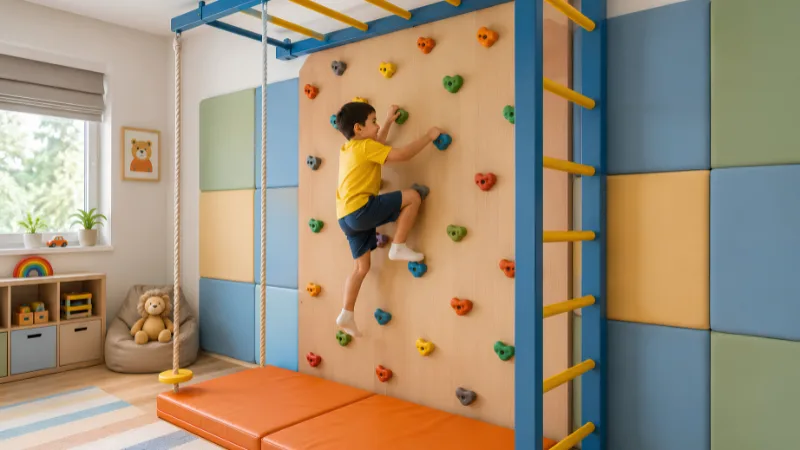
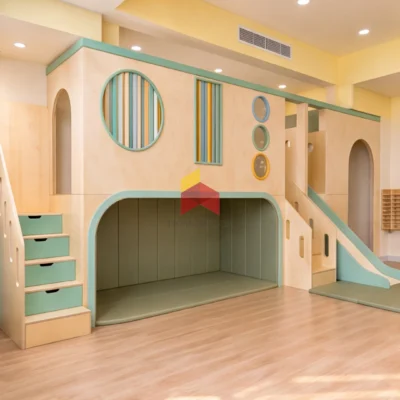
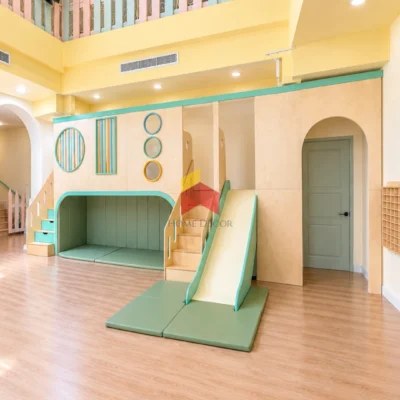
Playrooms: This is the most common spot. Kids run, jump, and climb here more than anywhere else in the house.
Near staircases: A padded wall at the bottom of a staircase can soften a fall if a child trips on the last few steps.
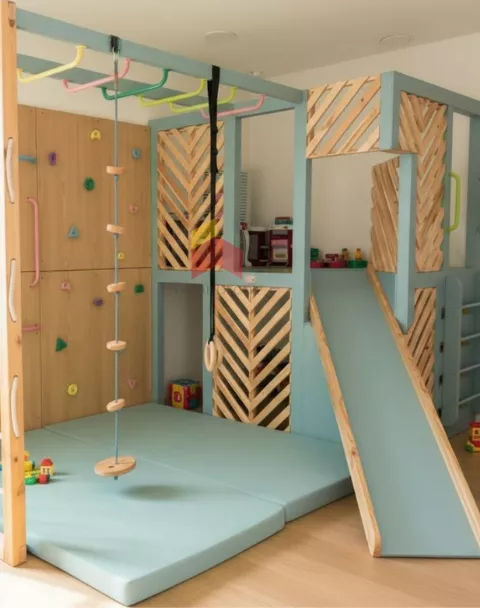
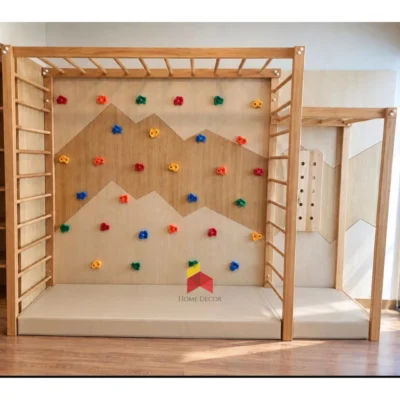
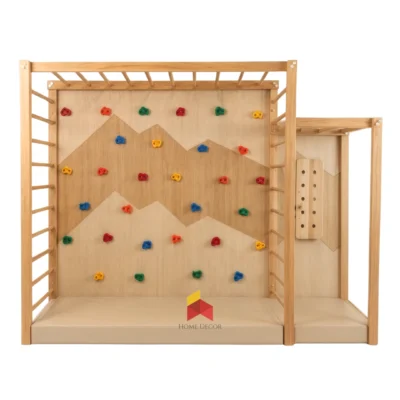
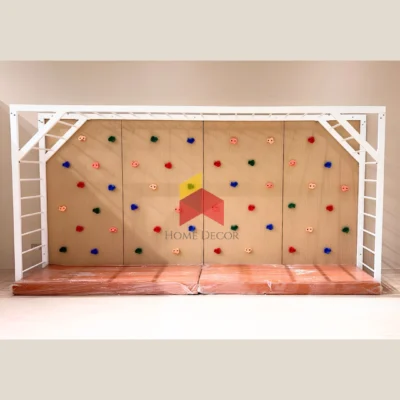
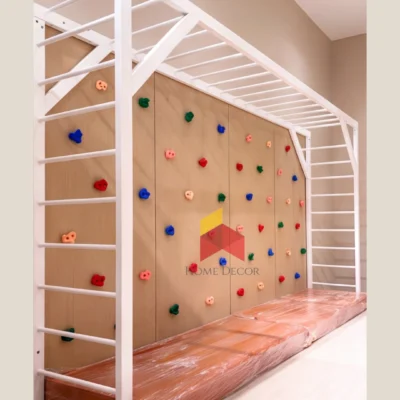
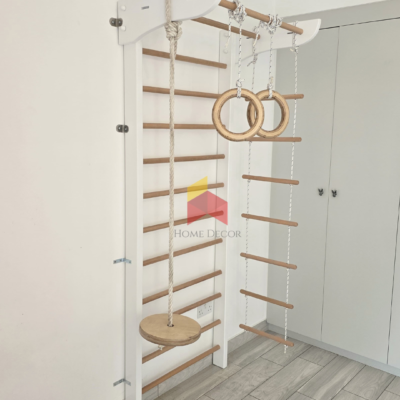
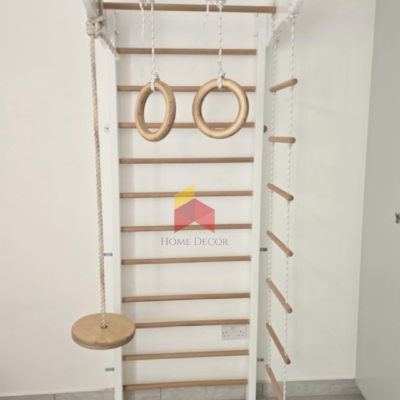
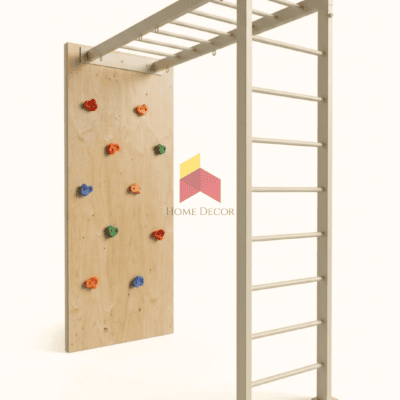
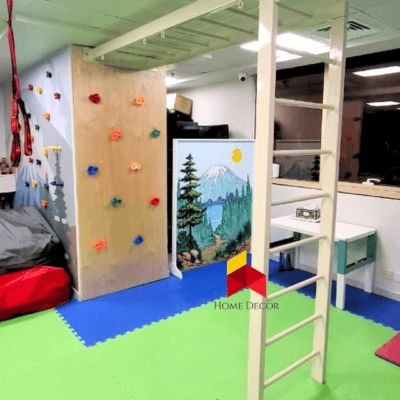
Behind climbing walls or monkey bars: If your home has a climbing set, the wall behind or beside it should have padding, since kids often lose their grip while learning new moves.
Nurseries: Low, soft padding near a crib or changing table adds an extra layer of safety for babies who are starting to pull up and stand.
Columns and pillars: Open floor plans in many Dubai villas and apartments often have support columns in the middle of a room. These are easy to bump into and work well with both wall padding and a corner protector. Rubber corner guards are a good add-on here too, since they hold their shape well on high traffic spots like kitchen islands or low tables.
Types of Wall Padding to Choose From
Foam padding comes in a few thickness levels. Thin padding works fine for light bumps in low traffic areas, while thicker padding suits playrooms and spots near active climbing gear. Some padding also comes with a soft fabric or vinyl cover, which makes it easier to wipe clean after meals or messy play.
Color is another factor. Bright colors work well in playrooms and can double as fun wall decor, while plain white or grey padding blends in better in hallways or shared living spaces.
How to Install Wall Padding at Home
Most wall padding comes with adhesive backing, so it sticks directly to a clean, dry wall. For heavier padding, some parents use screws or wall anchors for a stronger hold, especially in areas where kids climb or pull on the padding.
Before you install it, clean the wall so dust and grease do not stop the adhesive from sticking. Measure the space first and cut the foam to size, leaving a little extra at the edges so there are no small gaps where a child could get a finger stuck.
Safety Padding for the Whole Home
Wall padding is just one part of a safer home for kids. Many parents also add floor padding near play areas and rubber corner guards on low tables. Together, these small changes cut down on common injuries like bumps, scrapes, and cuts during normal daily play.
If you are setting up a new playroom or fixing up a nursery, it helps to plan safety padding before you add furniture or climbing gear, so you know exactly which walls and corners need the extra layer. Browse our full range of safety padding for kids in the UAE to find the right fit for your home.
Quick Tips Before You Buy
- Measure your wall space first so you buy the right amount of foam.
- Pick thicker padding for playrooms and areas near climbing gear.
- Add a corner protector on any sharp table or shelf edge nearby.
- Choose a wipeable cover if the padding will be near food or messy play.
- Check that adhesive strength matches your wall type, since some paints and finishes hold glue better than others.
Frequently Asked Questions
Is wall padding safe for babies and toddlers?
Yes. Soft foam padding is a common safety choice for nurseries and playrooms, since it lowers the risk of injury from bumps and falls.
Can I install wall padding myself?
Most padding comes with a sticky backing that is easy to apply at home. Thicker padding may need screws for a stronger hold.
Do I need both wall padding and a corner protector?
It depends on the space. Wall padding covers large flat areas, while a corner protector covers one sharp edge. Many parents use both for full coverage.
How thick should wall padding be for a playroom?
Most playrooms do well with padding around 2 to 3 centimeters thick. Areas near climbing gear or monkey bars may need thicker padding, closer to 4 to 5 centimeters, for extra cushion during falls.
Does wall padding work on textured or painted walls?
Yes, but the surface needs to be clean and mostly smooth for the adhesive to hold well. On rough textured walls, screws or wall anchors give a stronger and safer hold than adhesive alone.
Final Thoughts
Wall padding for kids is a small change that makes a big difference in everyday safety. It softens bumps during play, protects your walls from damage, and gives parents peace of mind in busy homes across Dubai, Abu Dhabi, and the rest of the UAE. Ready to childproof your space? Shop our wall padding and safety collection and get your home set up in a weekend.