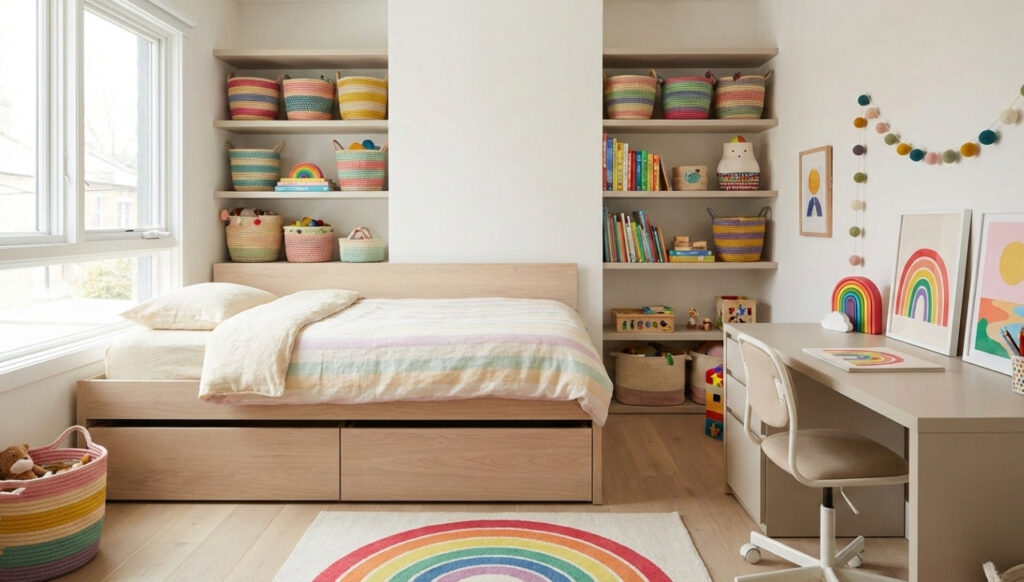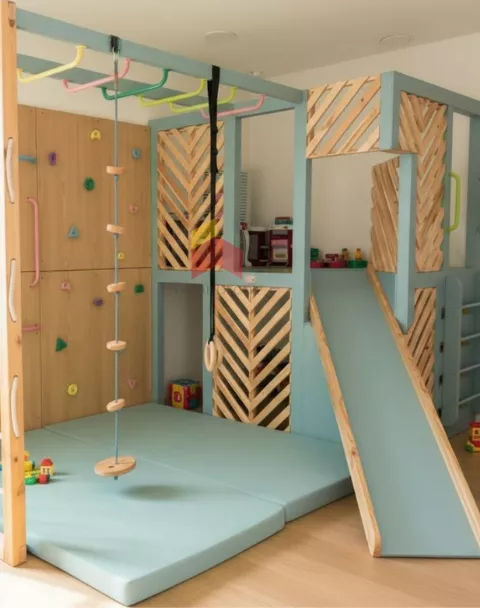
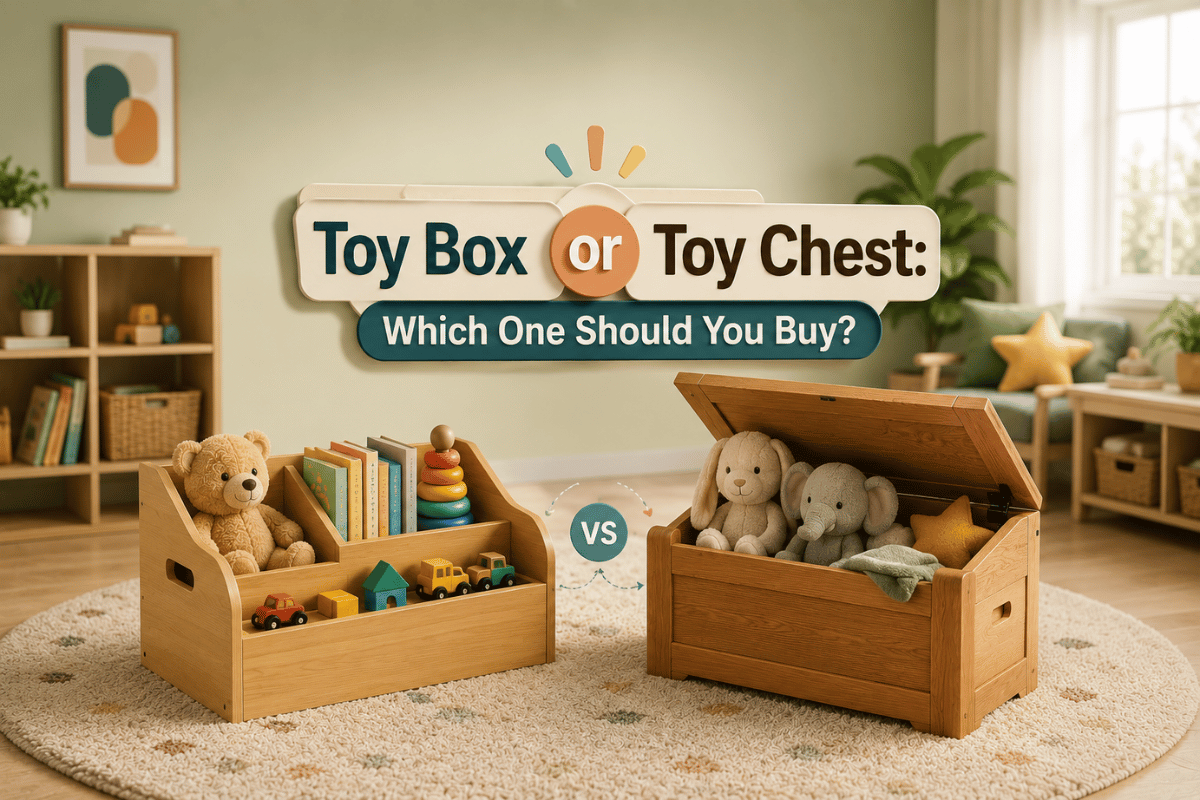
Toy Box or Toy Chest The better choice depends on your child’s age, the type of toys you need to store, how much storage you need, and whether easy independent access or hidden storage is more important.
A soft open toy box can work well for toddlers who need to see and reach their toys easily. A sturdier toy chest can be useful for larger collections, bulky stuffed animals, dress-up items, or rooms where parents want toys quickly contained.
The key is not simply choosing the biggest storage piece. It is choosing one that makes everyday play, cleanup, and organization easier.
Toy Box vs Toy Chest: What’s the Difference?
The terms are often used interchangeably, but there is a practical difference.
A toy box usually refers to a lightweight, open, fabric, plastic, or simple wooden storage container. Many are designed for quick access and easy cleanup.
A toy chest is generally a more substantial piece of furniture, often with a lid and a larger enclosed compartment. It may provide more hidden storage, but it can require more thought around accessibility and lid safety.
| Feature | Toy Box | Toy Chest |
|---|---|---|
| Access | Usually quick and easy | Depends on lid design |
| Weight | Often lightweight | Usually heavier |
| Storage | Small to medium collections | Medium to large collections |
| Best for | Everyday toys | Bulky toys and larger collections |
| Visibility | Often higher | Usually lower |
| Organization | Easy with smaller categories | Can become one large mixed compartment |
| Mobility | Often easier to move | Usually more stationary |
| Safety | Usually fewer moving parts | Lid and hinges need careful checking |
Both can be useful. The right choice depends on how your child actually plays.
1. Consider Your Child’s Age First
Age is one of the simplest ways to narrow down your options.
Younger children tend to benefit from storage that is easy to open, easy to reach, and easy to understand. Low open containers can make it easier for them to select toys and participate in cleanup.
For older children, a larger chest may become more useful because they can manage heavier lids and larger collections more confidently, provided the product is designed safely.
The Bump’s research similarly highlights the value of low-profile storage that children can access independently, while also noting that large toy boxes can be useful when quick cleanup and higher capacity are priorities.
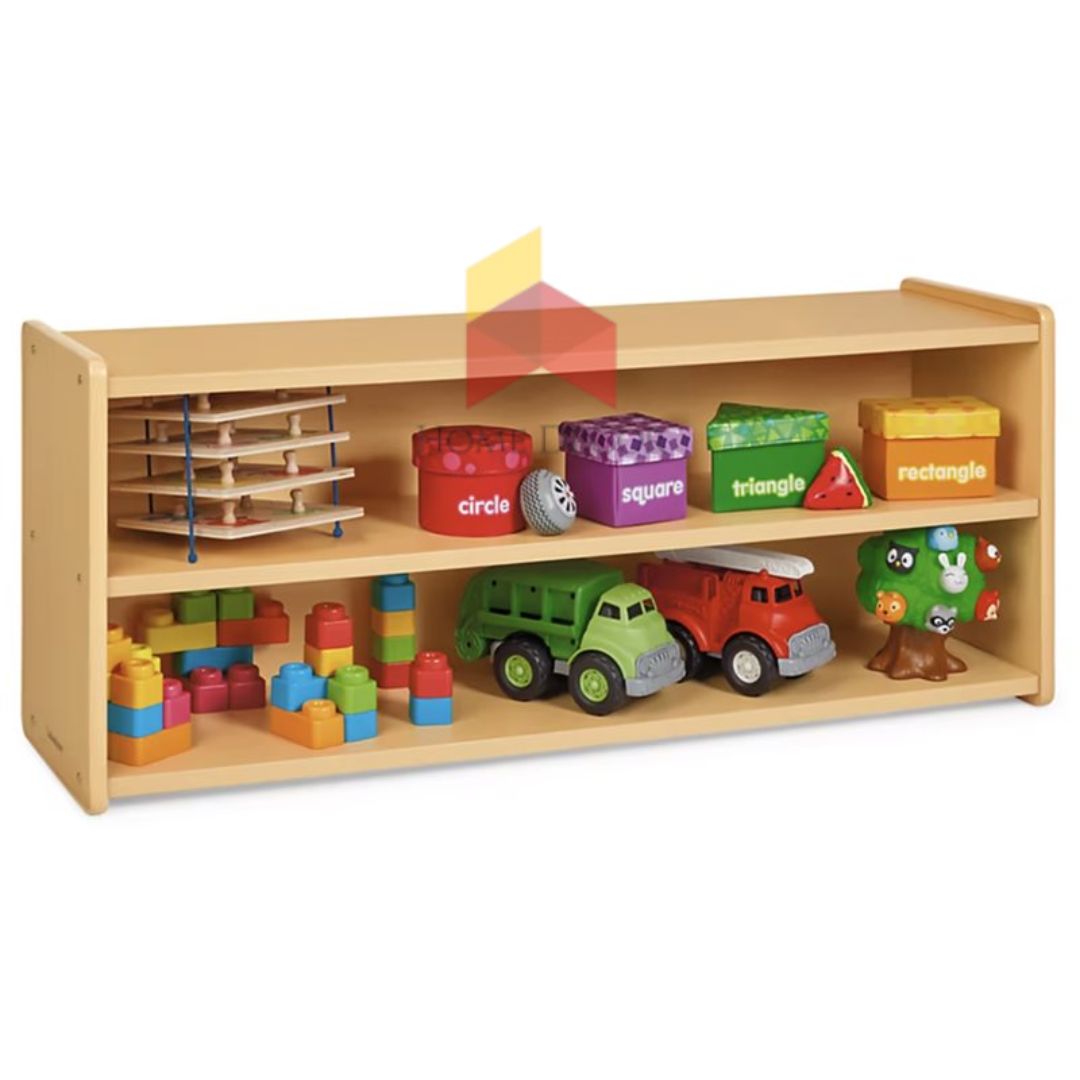
For a toddler-focused room, you can also explore the Toy Shelf 3 Storage as an alternative to putting everything into one deep container.
2. Think About What Toys You Need to Store
Not every toy needs the same type of storage.
A small collection of wooden blocks can be managed differently from a pile of stuffed animals, costumes, balls, or large vehicles.
For small toys
Consider open compartments or smaller bins for:
- Building blocks
- Toy cars
- Puzzles
- Figurines
- Craft materials
Smaller storage sections can make it easier to locate individual toys instead of emptying one large container.
For bulky toys
A larger enclosed space can be more practical for:
- Stuffed animals
- Dress-up clothes
- Large dolls
- Soft toys
- Oversized play accessories
This is where a toy chest can have an advantage.
The important point is to avoid turning the container into a deep “everything box.” When small toys disappear underneath larger objects, children may need to dump the entire contents onto the floor to find one item.
3. Choose Open Storage for Easy Daily Access
For younger children, accessibility can be more important than hidden storage.
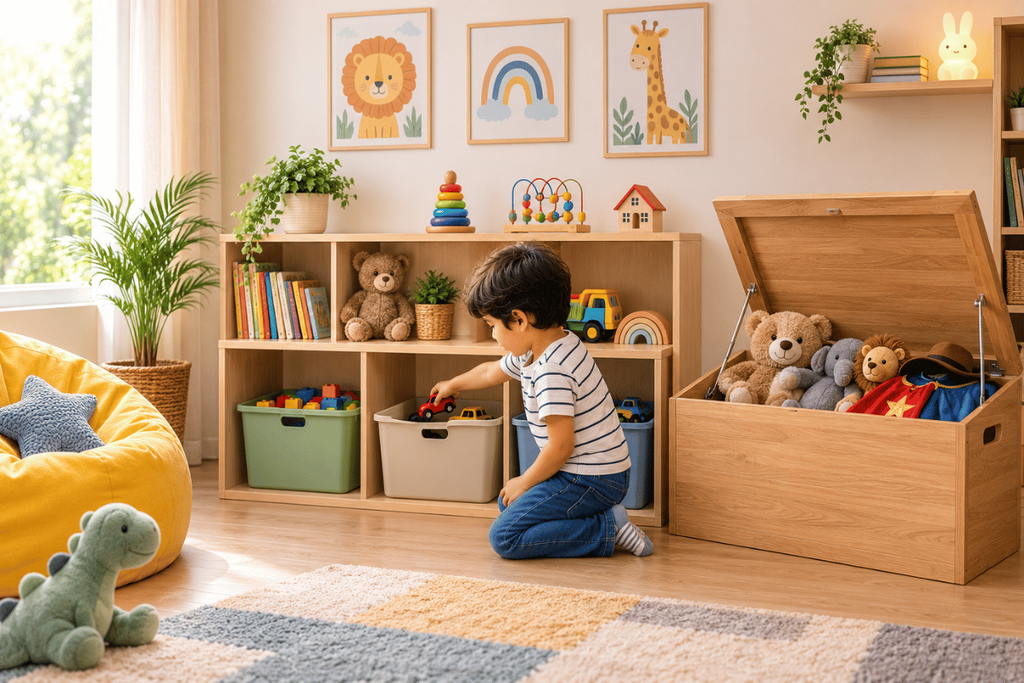
An open toy box or low shelf allows children to see what is available and choose an activity without asking an adult to open a lid.
IKEA’s current toy-storage range also emphasizes low storage and easy access, while Architectural Digest highlights open-top storage as useful when families want children to find items without unpacking everything first.
For a more structured setup, the Plastic Box Storage Stand can be useful when you want separate storage spaces rather than one large pile.
Another option is the Multi Storage Trolley when toys or activity materials need to move between areas.
4. Choose a Toy Chest When Hidden Storage Matters
Sometimes the biggest goal is not independent access. It is keeping the room looking calm.
A toy chest can quickly contain a large amount of clutter, making it useful in:
- Shared family rooms
- Children’s bedrooms
- Reading areas
- Living rooms
- Playrooms with large toy collections
A well-designed chest can also look more like furniture than a plastic container.
Architectural Digest’s recent toy-storage guide emphasizes that storage needs to balance functionality with appearance, especially when children’s storage is located in shared parts of the home.
For homes where storage needs to blend into the room, a larger wooden storage solution may be more visually appealing than several colorful plastic containers.
5. Don’t Choose a Huge Chest Just Because It Holds More
More storage isn’t always better.
A very large toy chest can encourage families to keep too many toys in circulation. It can also make it difficult for children to find anything.
Instead, think about the usable storage space.
A good container should hold enough for the activities your child regularly uses without becoming a bottomless pile.
Try dividing toys into categories:
Building → blocks, construction toys
Creative → coloring and craft supplies
Pretend Play → costumes and role-play accessories
Vehicles → cars, trains, small vehicles
Soft Toys → stuffed animals
Rotate less frequently used toys into separate storage instead of mixing everything together.
For more ideas on reducing clutter, see Kids Storage Ideas.
6. Check the Lid Before Buying a Toy Chest
This is one of the most important differences between a simple open toy box and a traditional toy chest.
A hinged lid can create pinch, impact, or entrapment risks if it falls unexpectedly. The U.S. Consumer Product Safety Commission has specifically warned about toy-chest lids that can fall onto children’s heads or necks, as well as enclosed chests that lack adequate ventilation.
The CPSC recommends paying attention to lid-support mechanisms and notes that open containers or designs without freely falling hinged lids can eliminate the falling-lid risk.
Safety features to look for
Before buying, check for:
- A lid that does not freely fall
- A reliable lid-support mechanism
- No sharp exposed hardware
- Smooth edges and corners
- Adequate ventilation where applicable
- Stable construction
- No unsafe locking or latching mechanism
A 2024 CPSC recall involving toy-trunk storage chests specifically cited missing lid support and ventilation holes as entrapment and suffocation hazards.
For additional guidance, review the CPSC toy chest safety information before purchasing a hinged-lid chest.
7. Think About Independent Cleanup
Storage works best when children can participate in putting toys away.
A child is more likely to clean up when the process is simple:
Pick up → Find the storage → Put it away → Close or return it
The Bump’s parent-oriented research notes that open, accessible storage can help children retrieve toys independently and learn to return them after play.
This is one reason a combination of open and closed storage can work so well.
Keep everyday toys visible and accessible, while less frequently used items can be stored in deeper or closed compartments.
The Wooden Toy Storage Unit for Kids UAE can be considered when a room needs dedicated toy storage with a more furniture-like appearance.
8. Compare Materials and Durability
Material affects how a storage piece looks, feels, and performs over time.
Wooden toy storage
Wood can provide:
- A furniture-like appearance
- Strong construction
- Long-term use
- Easy integration with bedroom decor
A well-made wooden piece may also continue serving a purpose after the child has outgrown the toy-storage stage.
Plastic storage
Plastic can be useful when you need:
- Lightweight storage
- Easy cleaning
- Easy movement
- Separate bins or containers
It can work particularly well for messy play areas or situations where children frequently move their storage.
Fabric storage
Fabric bins can be useful for:
- Soft toys
- Lightweight objects
- Temporary storage
- Small playroom systems
However, they may not provide the same rigidity as a wooden piece.
Architectural Digest’s current storage recommendations similarly evaluate containers using factors such as durability, accessibility, versatility, appearance, and ease of use.
9. Match Storage to the Room
The best storage solution also depends on where it will be used.
| Room | Recommended Approach |
|---|---|
| Toddler Bedroom | Low open storage |
| Shared Bedroom | Compact box + shelf combination |
| Playroom | Open bins + categorized shelving |
| Living Room | Furniture-style closed storage |
| Reading Corner | Small low toy/book storage |
| Creative Area | Separate bins for supplies |
A dedicated playroom can handle more visible storage because the room already has an activity-focused purpose.
A living room may benefit from a storage piece that blends more naturally with the surrounding furniture.
You can also find room-planning inspiration in 15 Fun Playroom Ideas.
10. Don’t Forget About Future Use
Children’s storage needs change surprisingly quickly.
A piece that holds stuffed animals today may later be used for books, costumes, art supplies, dolls, or keepsakes.
Before buying, ask:
Will the size still make sense in two or three years?
Can the furniture serve another purpose later?
Will the style still work when the room changes?
Can it be combined with other storage?
A neutral, durable piece can often provide more long-term value than an item built around a very specific age or theme.
For more multifunctional room-planning ideas, explore Multi-Functional Kids Room Design UAE.
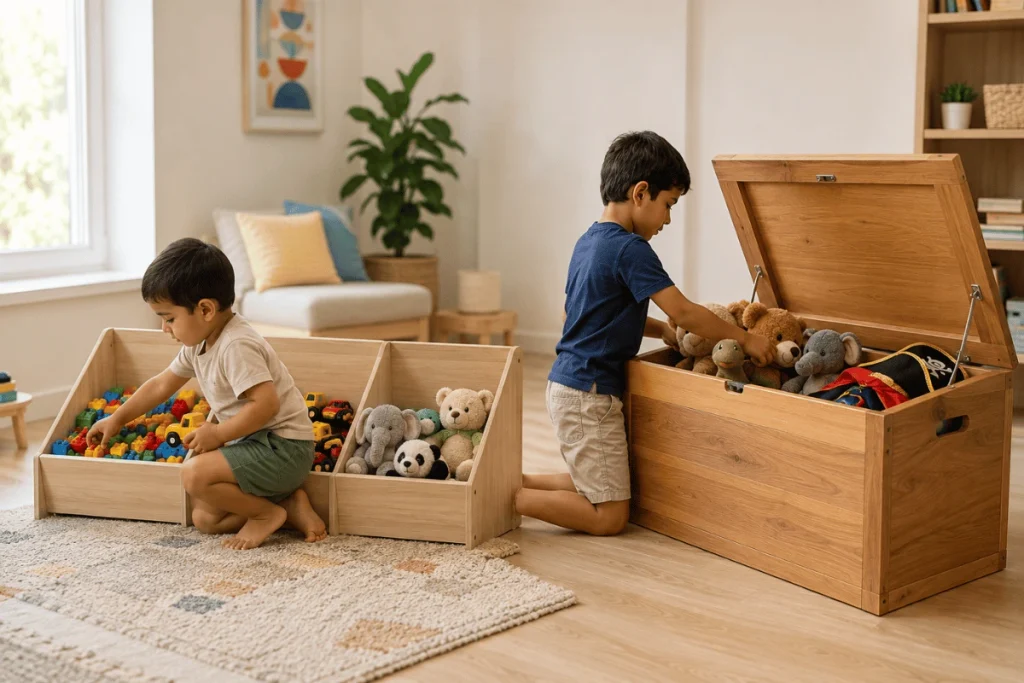
11. Combine a Toy Box and Toy Chest Instead of Choosing Only One
You don’t always have to choose between the two.
A mixed storage system can be more practical than asking one piece of furniture to handle every type of toy.
For example:
Open Toy Box → everyday blocks, cars, and small toys
Toy Chest → stuffed animals and dress-up clothes
Shelf → books and puzzles
Small Bins → craft supplies and tiny pieces
This approach combines visibility and hidden storage.
It also prevents one oversized container from becoming the dumping ground for every toy in the house.
Toy Box or Toy Chest: Which Is Better for Toddlers?
For toddlers, a low, easy-access toy box will often be more practical than a deep, heavy chest with a hinged lid.
The main reasons are simple:
- Easier access
- Better visibility
- Less dependence on adults
- Easier cleanup
- Fewer moving parts
However, the individual product design still matters more than the label “toy box.”
A lightweight toy box with unsafe construction isn’t automatically better than a carefully designed wooden storage piece.
The child’s age, reach, strength, and ability to use the furniture safely should guide the decision.
Toy Box or Toy Chest: Which Is Better for Larger Toy Collections?
For a large collection, a toy chest can provide useful hidden capacity, especially for bulky toys.
But if the collection contains many small toys, shelving or compartmental storage can be better.
A useful rule is:
Large toys need space. Small toys need organization.
If your collection includes both, combine storage types instead of forcing everything into one box.
The Multipurpose Bag Tray Storage Unit with Clear Translucent Bins can be useful when different categories need separate visible storage rather than one large container.
A Simple Buying Checklist
Before purchasing, check:
☐ Is the storage suitable for the child’s age?
☐ Can the child reach everyday toys?
☐ Is the container too deep?
☐ Does it provide enough capacity without encouraging clutter?
☐ Is the construction stable?
☐ Are corners and edges smooth?
☐ Does a hinged lid have appropriate safety support?
☐ Are ventilation requirements addressed?
☐ Can the furniture be cleaned easily?
☐ Could it remain useful as the child grows?
☐ Does the style work with the room?
Final Verdict
So, Toy Box or Toy Chest: Which One Should You Buy? A toy box is usually the stronger choice when easy access, lightweight storage, and everyday independent cleanup are your priorities.
A toy chest can be a better fit when you need larger enclosed storage, want to hide visual clutter, or need a furniture-style piece for bulky toys.
For many families, the smartest solution is not choosing one exclusively. Combining open storage for frequently used toys with closed storage for larger or less frequently used items can create a more organized and child-friendly room.
Whatever you choose, prioritize accessibility, organization, durability, and especially safety over appearance alone.
Frequently Asked Questions
Is a toy box or toy chest better for toddlers?
A low, easy-access toy box is often more convenient for toddlers because children can see and reach their toys more easily. A chest with a hinged lid requires closer attention to lid design and safety.
Are toy chests safe for children?
They can be, but the construction and lid design matter. CPSC warnings specifically address falling hinged lids, entrapment, and inadequate ventilation in some toy chests.
Should a toy chest have a lid?
A lid is optional. Closed storage can hide clutter, but open storage may be easier for younger children. When choosing a hinged lid, look for a design that prevents uncontrolled falling movement.
What is better for stuffed animals: a toy box or toy chest?
A larger toy chest can be convenient for bulky stuffed animals because it provides enclosed capacity. However, an open basket or low storage unit can make frequently used soft toys easier for children to access.
Are open toy boxes better for independent play?
Open or low storage can support independent access because children can see what is available without opening a heavy or complicated container. Parent-focused research also highlights accessible storage as useful for encouraging children to retrieve and return toys independently.
How do I stop a toy box from becoming cluttered?
Limit the number of toys stored inside, group similar items, and rotate less frequently used toys. A combination of shelves, smaller bins, and one larger storage container can work better than a single oversized box.
What material is best for a toy chest?
There is no universal best material. Wood can provide durability and a furniture-like appearance, while plastic and fabric can offer lighter, easier-to-move storage. Choose according to the room, age of the child, toy types, and expected use.
How big should a toy box be?
Choose a size based on the toys your child actually uses in that room. A box that is too small creates overflow, while one that is excessively large can make toys difficult to find and encourage clutter.
Can a toy chest be used as a bench?
Some chest designs are specifically built for dual use, but never assume that a toy chest is suitable for sitting unless the manufacturer explicitly designs and rates it for that purpose.
Where should a toy storage unit be placed?
Place it close to the main play area, with enough clear space for children to access it safely. Avoid creating climbing opportunities near windows or blocking doors and walking paths.
Can toy boxes and toy chests be used together?
Yes. Using open storage for everyday toys and a larger chest for bulky or less frequently used items can give you both accessibility and visual control.