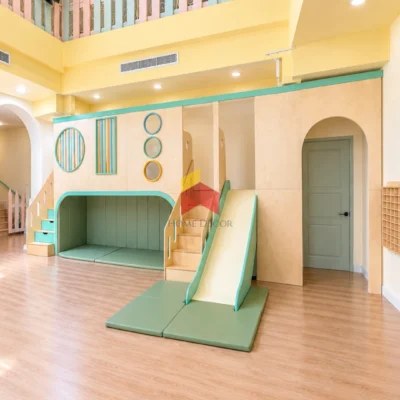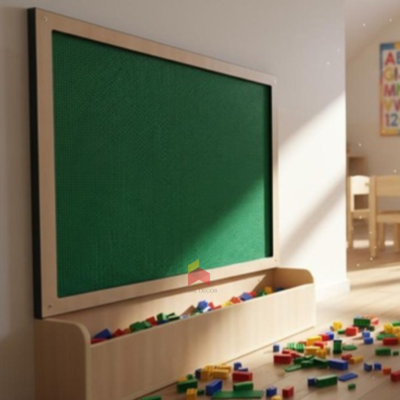
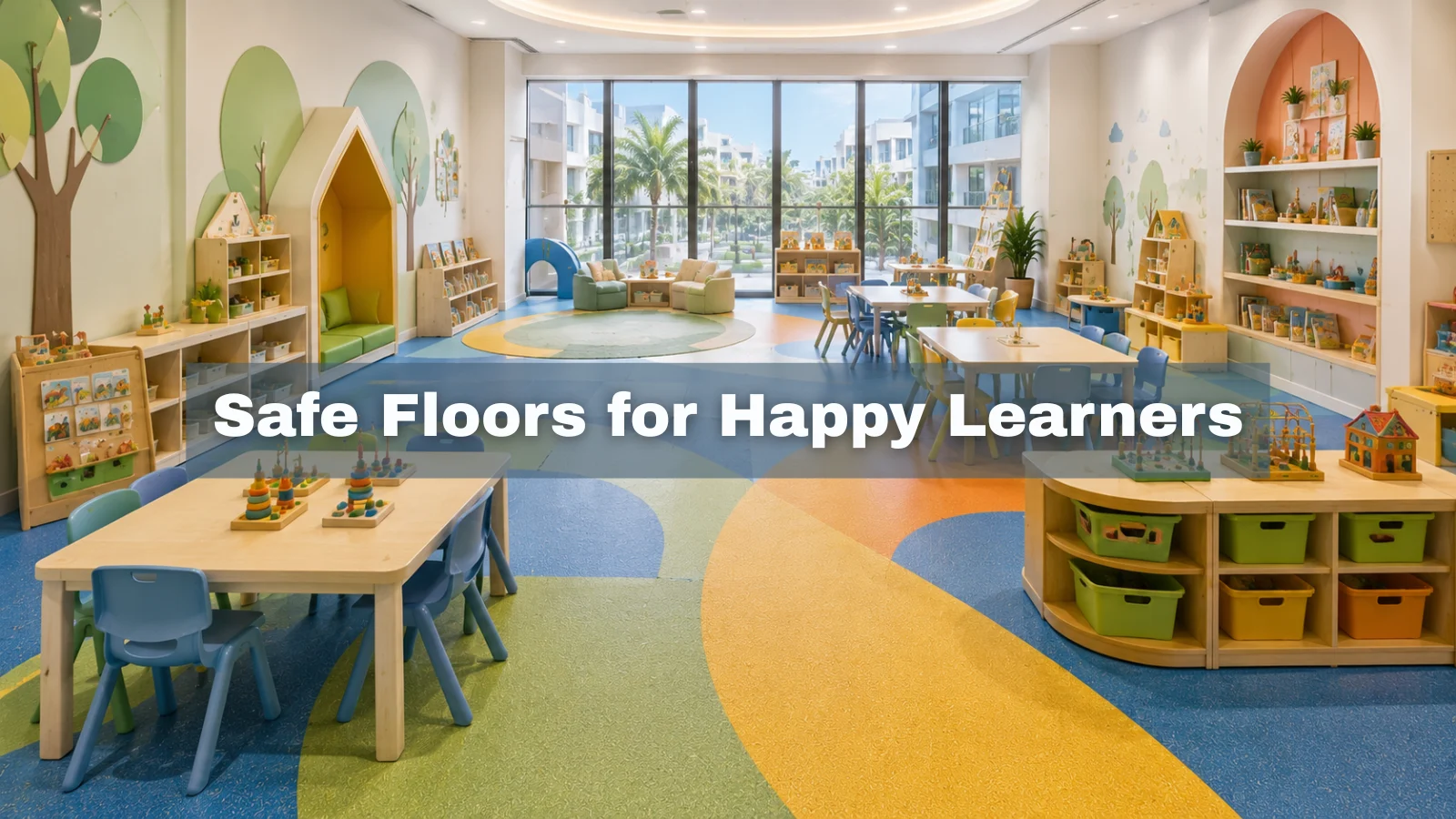
Most UAE nurseries are still running on ceramic tiles. They look clean, they are easy to source, and they were the default choice for decades. But ceramic tiles are hard, turn slippery the moment something spills, and offer zero protection when a three-year-old falls mid-run. For a space where children spend most of their day at floor level, that is a real problem.
Rubber flooring has become the practical standard for nurseries and preschools across Dubai, Abu Dhabi, Sharjah, and the wider UAE. This guide covers what to look for, which type suits which space, what installation involves, and how to maintain it properly.
Browse the full kids play area flooring UAE collection for available options.
Why the Floor Matters More Than Most People Think
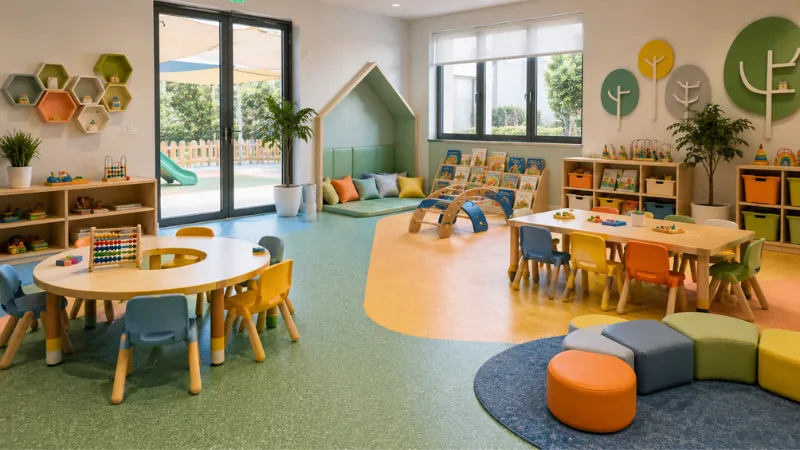
Children spend much of their day on the floor through activities such as play, story time, crawling, and group learning. This makes flooring an important part of nursery safety and comfort. Hard ceramic tiles can be slippery and offer little protection during falls, while carpets often trap dust and spills. Rubber flooring provides a safer alternative by offering better grip, impact protection, and easy cleaning. It also performs well in UAE conditions, where indoor spaces experience constant air conditioning and regular exposure to dust and sand.
The Four Types of Rubber Nursery Flooring
Rubber Tiles
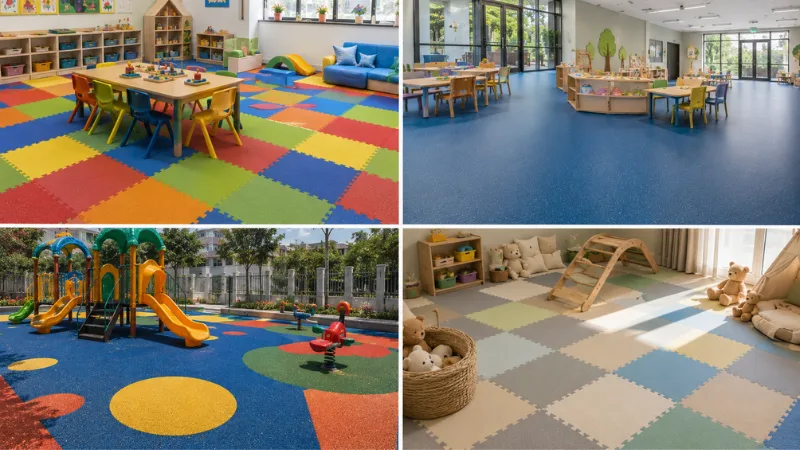
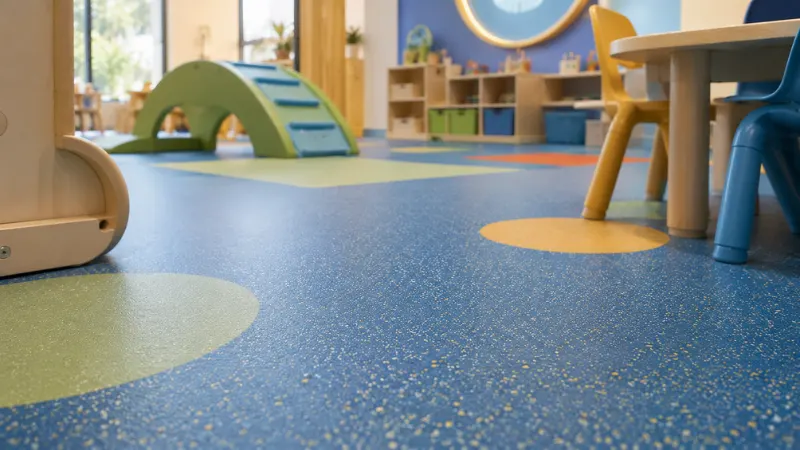
Rubber tiles are the most widely used option in UAE nurseries. Available in thicknesses from 8mm to 25mm and a wide range of colours, they are installed as individual squares that interlock or adhere to the subfloor. The biggest practical advantage is replaceability, if a high-traffic section wears or gets damaged, individual tiles swap out without touching the rest of the floor. Different colours also define separate activity zones within a classroom, which works well in Montessori and activity-based learning setups.
Rubber Rolls
Rubber rolls provide a seamless surface across larger spaces. With fewer joints than tiles, they mop cleaner and look more uniform, the right choice for large classrooms, corridors, and multi-purpose halls. The trade-off is that rolls are adhesive-fixed and replacing a damaged section is less straightforward than swapping individual tiles.
EPDM Rubber Flooring
EPDM rubber flooring is the correct product for outdoor nursery play yards. Standard rubber tiles and rolls are not designed for UAE outdoor conditions, direct sunlight and temperatures above 40°C will degrade them over time. EPDM handles UV exposure, heat, and rain without cracking or fading, and provides strong grip even when wet. It is the standard outdoor choice for nurseries across Abu Dhabi, Sharjah, Ajman, and Ras Al Khaimah.
Interlocking Nursery Floor Mats
Interlocking nursery floor mats connect together without adhesives and can be removed or reconfigured when layouts change. They are ideal for toddler rooms, soft play zones, and spaces that serve multiple functions throughout the day. Less durable than fixed tiles for permanent use, but the most flexible medium-term solution available.
Which Flooring Works Where
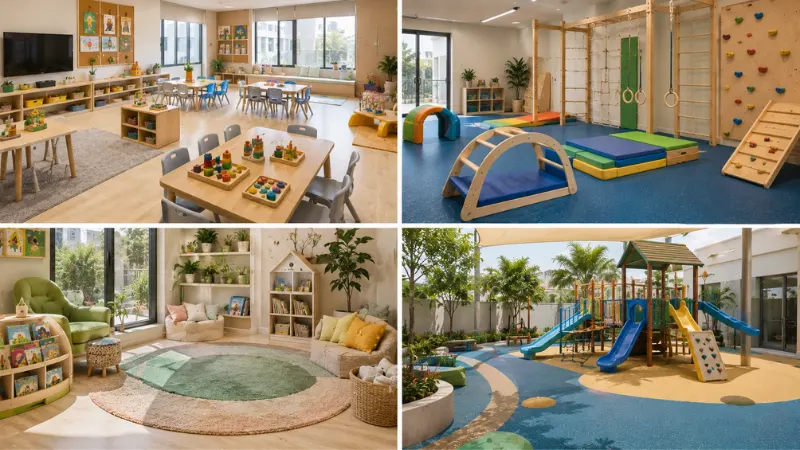
Classrooms: Rubber tiles at 10–12mm or rubber rolls at 8mm are standard for general classroom use, smooth enough to mop easily, textured enough to grip socks. Different coloured tiles create defined learning zones without furniture dividers.
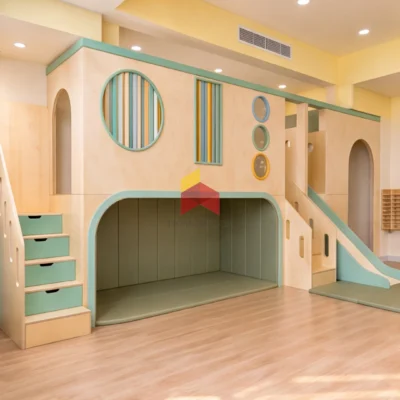
Active play zones: Kids play area flooring in high-energy spaces needs to be thicker; 15–20mm minimum. Children fall more frequently here and the floor takes significantly more daily impact than a classroom surface.
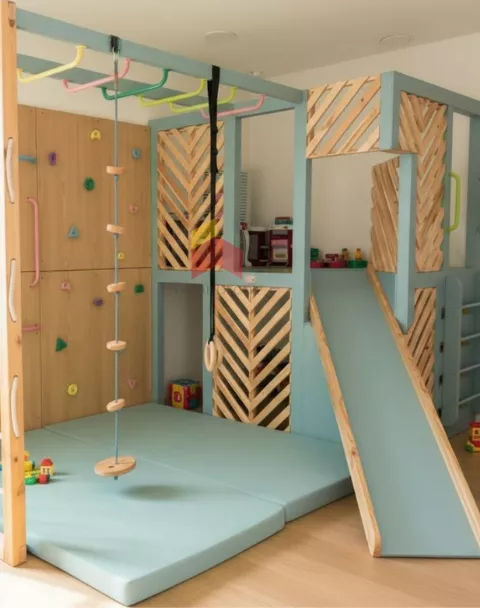
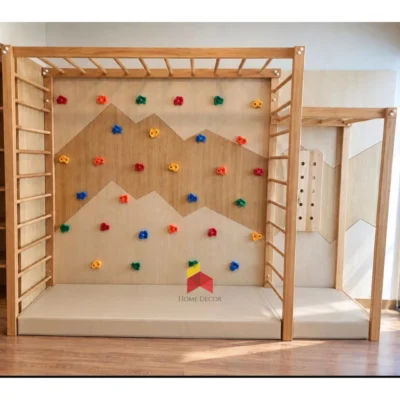
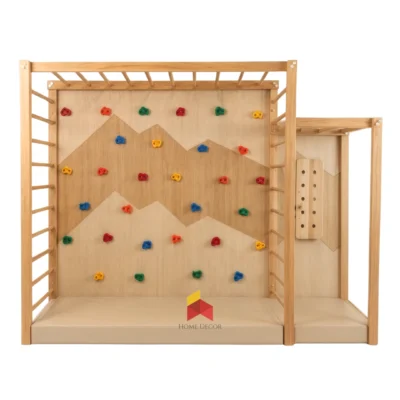
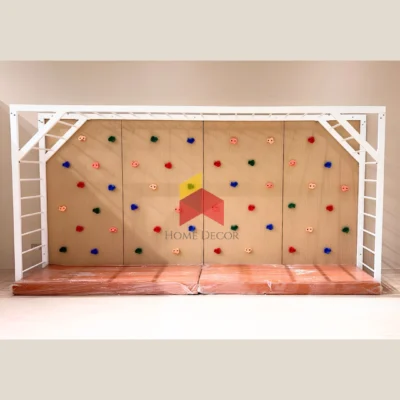
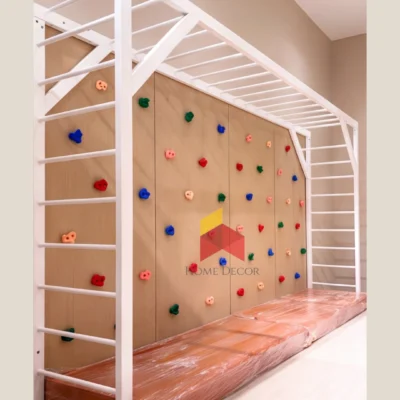
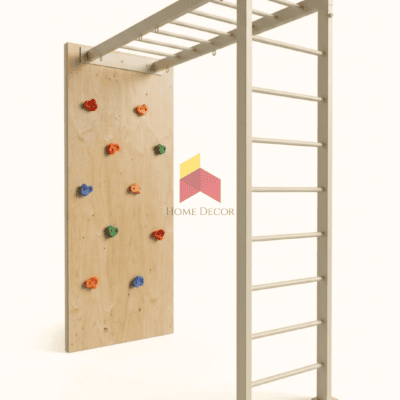
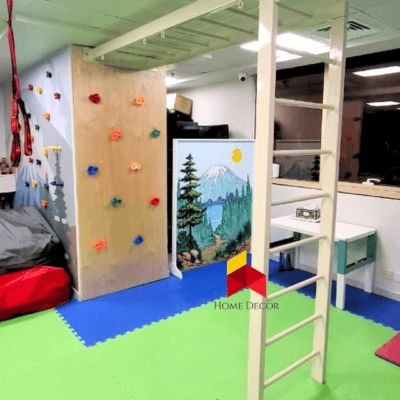
Under climbing equipment: Standard tiles alone are not enough beneath elevated play structures. Any area under monkey bars, climbing frames, or raised equipment needs either 25mm+ rubber tiles or dedicated safety matting rated to the fall height of that specific equipment. This is a safety requirement, not a style choice.
Reading and quiet corners: Rubber tiles combined with soft nursery floor mats create a warmer, quieter surface that helps children settle. Rubber absorbs sound better than hard tile, reducing noise bleed across the classroom.
Outdoor play yards: EPDM only. Do not install standard rubber products in exposed outdoor areas in the UAE.
Safety Certifications Worth Asking For
Not all rubber flooring sold in the UAE market meets the same standards. For a nursery environment, ask every supplier for documentation on the following before purchasing:
Slip resistance: Look for an R10 rating or above under the DIN 51130 standard. This is the minimum appropriate for children’s spaces.
Non-toxic certification: Ask for REACH compliance documentation confirming the product is free from heavy metals, formaldehyde, and harmful plasticisers.
VOC emissions: Children breathe closer to floor level than adults. Low VOC emissions matter in an enclosed nursery. Ask for GREENGUARD certification or equivalent indoor air quality documentation.
Fire safety: Ask for the fire classification rating. Class Bfl-s1 or equivalent is appropriate for school environments in UAE buildings.
Any reputable supplier should produce all of this without hesitation. If they cannot, look elsewhere.
What Professional Installation Actually Involves
Professional installation helps ensure rubber flooring performs well for years. The process begins with checking the existing floor for levelness and moisture. Most UAE nurseries have tile or concrete subfloors that may need preparation before installation.
Once the surface is ready, installers apply the appropriate adhesive, fit the tiles or rolls accurately, and finish edges and corners neatly. The flooring then requires at least 24 hours to cure before use. Most nursery classrooms can be installed within a day and reopened after the curing period.
Maintenance: What Works and What Damages
Sweep or vacuum first to remove grit and sand before mopping. In UAE environments this step matters more than most people expect, fine sand acts as an abrasive on rubber surfaces if it is mopped rather than removed first. Follow with a damp mop using a mild neutral-pH cleaner. For disinfection, use a child-safe product at the correct dilution and rinse with clean water after.
Avoid strong solvents, concentrated bleach, and acid-based cleaners, all degrade rubber over time by breaking down the surface texture and eventually making the material brittle. Confirm any cleaning products your team uses regularly are compatible with rubber surfaces.
With a proper daily routine, indoor rubber flooring lasts 10–15 years. Outdoor EPDM in UAE conditions typically lasts 8–12 years depending on sun exposure.
Related Reading
If you are designing or upgrading a nursery play space, these two guides cover the broader context around flooring decisions. The first addresses how to make a kids play area genuinely safe across all elements: equipment, padding, spacing, and surfaces: How to Make Kids Play Area Safer (Without Killing Fun). The second is a practical guide to outdoor play area design and equipment specifically for UAE nurseries and preschools: Outdoor Play Area and Equipment Ideas for Nursery and Preschool Kids.
Frequently Asked Questions
What is the safest flooring for a nursery?
The safest nursery flooring provides slip resistance, impact protection, and a comfortable surface for children to sit, crawl, and play on. Rubber flooring and safety flooring designed for childcare environments are popular choices.
How often should nursery flooring be replaced?
The lifespan depends on the material and level of use. Quality nursery flooring can last 10 to 15 years with proper cleaning and maintenance, while high-traffic areas may need replacement sooner.
What flooring is best for indoor play areas in preschools?
Indoor play areas benefit from flooring that offers cushioning and slip resistance. Rubber flooring, nursery floor mats, and indoor playground flooring are commonly used because they help reduce injuries during active play.
Can nursery flooring be installed over existing tiles?
In many cases, yes. Existing tiles must be level, secure, and in good condition before new flooring is installed. A professional assessment is recommended before installation begins.
How do I keep nursery flooring clean and hygienic?
Daily sweeping and damp mopping with child-safe cleaning products are usually enough. Promptly cleaning spills and following a regular maintenance schedule helps keep nursery flooring hygienic.
What is the best flooring for outdoor nursery play areas?
Outdoor play areas require surfaces that can handle sunlight, heat, and regular use. EPDM rubber flooring is commonly used because it provides grip, durability, and impact protection.
The right flooring improves safety, comfort, hygiene, and long-term maintenance in any nursery. For many UAE nurseries and preschools, rubber flooring remains one of the most practical choices for classrooms, play areas, and outdoor learning spaces.
Browse the full range of nursery and kids play area flooring UAE options. Delivery and professional installation available across Dubai, Abu Dhabi, Sharjah, Ajman, Ras Al Khaimah, Fujairah, and Umm Al Quwain.