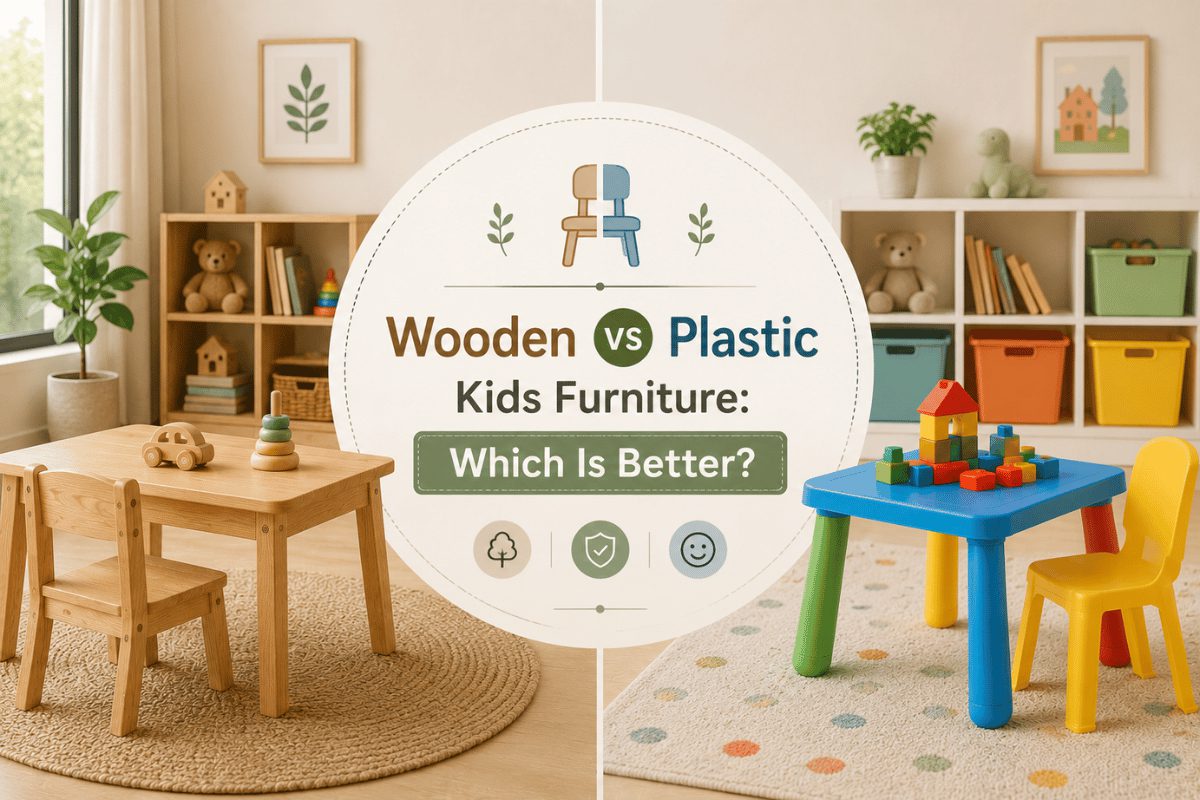
Wooden vs plastic kids furniture is a common choice for parents, schools, nurseries, and playroom designers. Both materials can work well for children, but they offer different benefits in terms of stability, durability, cleaning, portability, appearance, and cost.
Wooden furniture is often preferred for its solid feel, natural appearance, and long-term use. Plastic furniture is valued for being lightweight, easy to move, simple to clean, and practical for flexible spaces. The better option depends on how the furniture will be used, the age of the children, the type of room, and how much daily activity the furniture needs to handle.
Instead of choosing furniture based only on appearance or price, it is worth comparing the practical differences between the two materials before making a purchase.
Wooden and Plastic Kids Furniture: Quick Comparison
| Feature | Wooden Kids Furniture | Plastic Kids Furniture |
|---|---|---|
| Stability | Generally heavier and stable | Lightweight and easy to move |
| Durability | Strong option for regular, long-term use | Suitable for everyday use when well made |
| Cleaning | Depends on the finish and material | Usually quick and easy to wipe |
| Portability | Heavier and less portable | Very easy to move |
| Appearance | Natural, warm, and timeless | Bright, playful, and versatile |
| Outdoor Use | Depends on wood, finish, and treatment | Some products are suitable for outdoor use |
| Initial Cost | Often higher | Often more budget-friendly |
| Best Use | Permanent rooms, classrooms, reading areas | Flexible play areas and frequently rearranged spaces |
This comparison shows that neither material is automatically better for every situation. The right choice comes down to the environment, the children’s needs, and how the furniture will be used.
1. Stability Matters for Children’s Furniture
Stability should be one of the first things to consider when choosing furniture for children.
Wooden chairs and tables are usually heavier, which can help them stay in place during regular activities. This can be useful in classrooms, reading corners, bedrooms, and dedicated play areas where furniture is not expected to move frequently.
Plastic furniture has the opposite advantage. Its lighter weight makes it much easier to reposition when a room needs to serve different purposes. This can be especially useful in activity rooms, nurseries, and play spaces where staff regularly change the layout.
However, material alone does not determine stability. The furniture’s dimensions, base design, construction quality, and suitability for the child’s age are equally important.
For a more permanent seating setup, products such as this Primary Chair can be considered as part of a structured children’s space.
2. Durability and Long-Term Value
Children’s furniture needs to handle everyday use. Chairs may be moved repeatedly, tables can be exposed to spills and art materials, and furniture may experience plenty of normal wear.
Good-quality wooden furniture can be a strong long-term option. Depending on the construction and finish, some wooden pieces can be repaired, refinished, or maintained over time rather than immediately replaced when the surface shows signs of wear.
Plastic furniture offers a different kind of practicality. Its lightweight structure makes it easier to move, and many designs are well suited to busy activity areas. The quality of the plastic and construction still matters, especially when the furniture is used heavily.
When comparing the two, look beyond the purchase price and consider expected use, maintenance, replacement, and how often the furniture will be moved.
Schools and families planning a complete room can also explore these kids furniture ideas for different functional setups.
3. Safety Should Come Before Style
Attractive furniture can make a children’s room look better, but appearance should never be the main deciding factor.
Whether you choose wood or plastic, check the complete design. Furniture should be appropriately sized for its intended users and stable during normal use. Edges, corners, surfaces, and overall construction should also be suitable for a children’s environment.
Before buying, consider:
- Age and size suitability
- Stability during normal use
- Smooth and well-finished surfaces
- Suitable dimensions
- Construction quality
- Ease of cleaning
- Intended indoor or outdoor use
- Manufacturer recommendations
A heavier wooden chair is not automatically safer than a plastic chair, and a lightweight plastic product is not automatically unsuitable. The quality and design of the individual product matter more than the material by itself.
4. Cleaning and Everyday Maintenance
Children’s furniture has to deal with everyday messes. Food, drinks, paint, crayons, dust, and other materials can quickly make surfaces dirty.
Plastic furniture is often convenient in environments where quick cleaning is a priority. Smooth plastic surfaces can usually be wiped down easily, which makes them practical for messy play areas, art corners, nurseries, and activity rooms.
Wooden furniture can also be easy to maintain, particularly when it has a durable sealed or finished surface. However, different types of wood and finishes can have different care requirements.
For classrooms and childcare spaces, think about the actual cleaning routine rather than simply choosing the material that looks easier to maintain.
Furniture that is easy to wipe down, inspect, and keep organized can make everyday room management much simpler.
5. Appearance and Interior Design
The look of children’s furniture can influence the overall atmosphere of a room.
Wood has a natural appearance that works especially well in warm, calm, and timeless interiors. It can complement Montessori-inspired spaces, reading areas, bedrooms, and modern classrooms without making the room feel overly busy.
Plastic furniture offers greater flexibility with colors, shapes, and playful designs. Bright shades can make activity spaces feel more energetic and can work particularly well in nurseries and colorful playrooms.
The best choice depends on the style you want. A neutral wooden table can create a calm foundation, while colorful plastic seating can add flexibility and visual interest.
6. Portability and Flexible Room Layouts
One of the biggest strengths of plastic furniture is portability.
A lightweight plastic chair can be moved from one side of a room to another quickly. This makes it useful when a playroom needs to switch between reading, drawing, group activities, and free play.
Wooden furniture is usually heavier, so it is less convenient when frequent rearrangement is necessary. However, that same weight can be useful when you want furniture to remain in a fixed position.
For younger children, a smaller chair can also make a significant difference in how easily they can use the space. A Toddler Chair can be considered when creating seating that is better suited to younger users.
The practical question is simple: does your room need furniture that stays in place, or furniture that can move easily?
7. Choosing Furniture for Classrooms and Nurseries
Schools and nurseries often have different furniture needs from homes.
Furniture in these spaces may be used by many children throughout the day, which means durability, cleaning, storage, and room flexibility all matter.
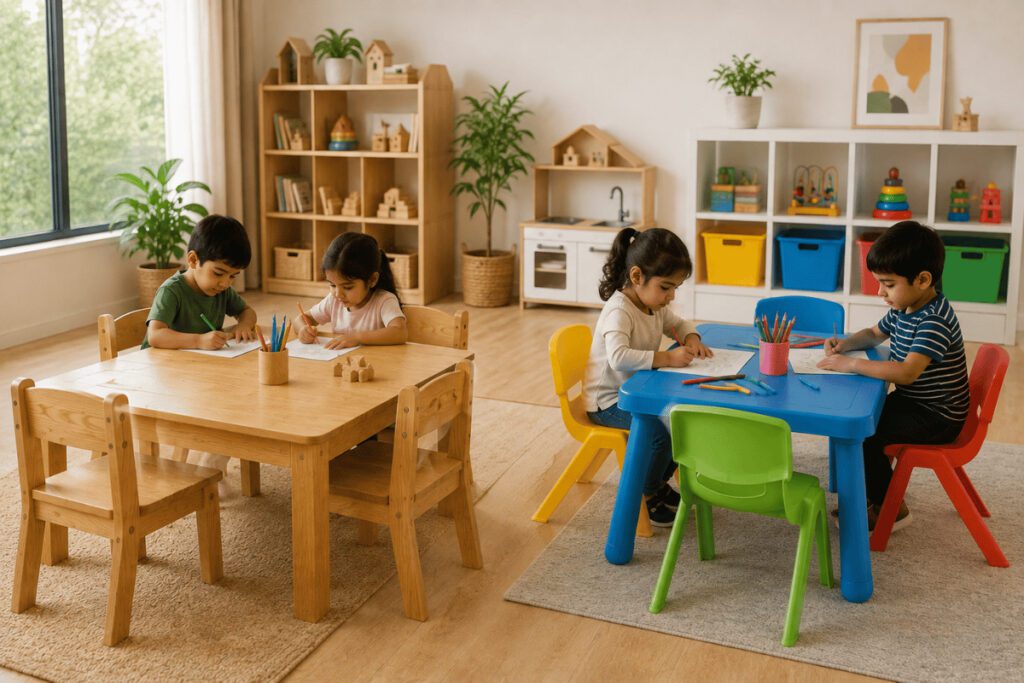
Wooden tables and chairs can work well for fixed classroom zones, reading areas, and structured learning activities. Plastic furniture may be more convenient where chairs and tables need to be moved, cleaned, stacked, or rearranged regularly.
Table design is also important. A Rectangle Shaped Table for Kids can work well for group activities, drawing, learning, and shared classroom tasks.
For more classroom-focused planning, see these modern classroom furniture ideas to understand how furniture choices can work together within a larger layout.
8. Choosing Furniture for Bedrooms and Playrooms
Home environments usually require a balance between appearance and function.
Wooden furniture can create a more permanent and coordinated look in a child’s bedroom or playroom. A wooden table, bench, bookshelf, or storage piece may stay useful as the room changes over time.
Plastic furniture can be a better fit when flexibility is more important. It can be moved easily, making it practical for growing children and changing activity areas.
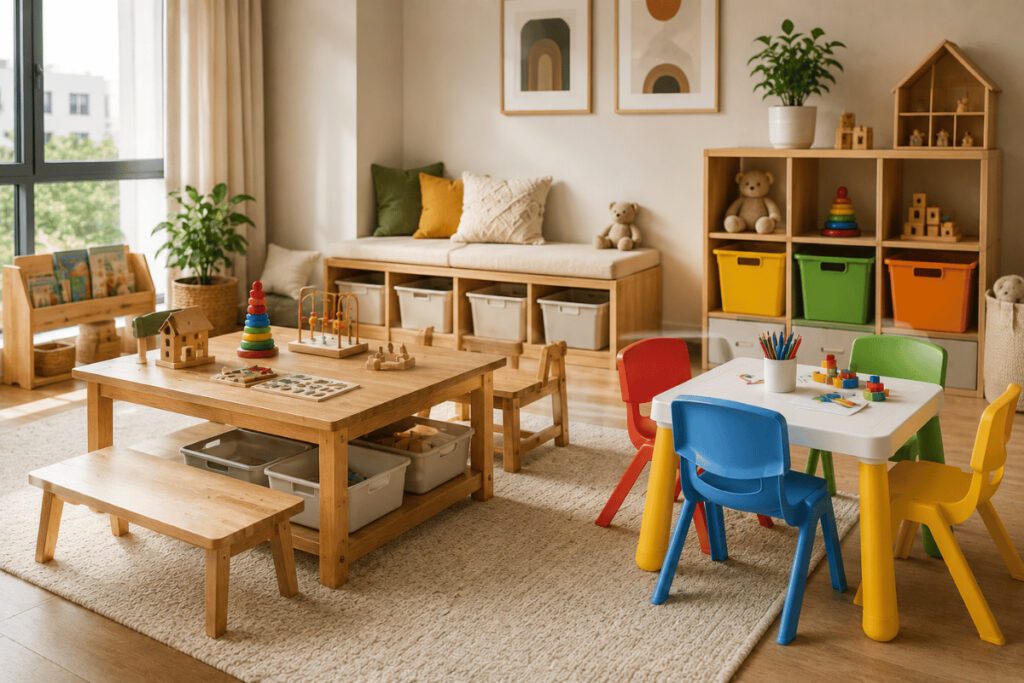
A combination of both materials can also work well. For example, a solid wooden table can provide a stable central workspace, while lightweight plastic seating can be moved around the room when needed.
A Wooden Bench for Kids can also be useful in reading corners, shared seating areas, or children’s activity spaces.
9. Indoor and Outdoor Furniture Needs Different Consideration
The location of the furniture can change the buying decision.
Plastic furniture is often considered for outdoor spaces because some products are designed to handle moisture and outdoor conditions. However, not every plastic product is intended for outdoor use, so product specifications should always be checked.
Wood can also be used outdoors, but the type of wood, finish, treatment, and maintenance requirements become especially important.
The safest approach is to follow the manufacturer’s intended-use recommendations rather than assuming that all wood or plastic products will perform the same way outdoors.
10. Cost and Overall Value
Budget is naturally important when buying furniture for children, especially when several chairs or tables are needed at once.
Plastic furniture often has a lower initial cost, which can make it attractive for families, nurseries, and larger activity areas.
Wooden furniture may require a higher upfront investment, but its overall value should be considered alongside durability, construction, expected lifespan, and maintenance.
The cheapest option is not always the best long-term choice. A better evaluation includes:
- Purchase price
- Expected lifespan
- Frequency of use
- Cleaning requirements
- Maintenance needs
- Replacement costs
- Portability
- Intended environment
For spaces that need seating and storage together, a Seating With Storage Box can be a practical option where space efficiency is important.
11. What About Montessori and Child-Led Spaces?
Material can also influence the overall feeling of a learning environment.
Wooden furniture is commonly chosen for calm, natural-looking interiors, particularly in spaces inspired by Montessori principles. Its natural appearance can fit well with simple furniture arrangements and child-focused room designs.
Plastic furniture can still be useful in these environments when flexibility, easy cleaning, or light weight is important.
The key is not to choose a material simply because it is associated with a particular style. Furniture should still be appropriately sized, stable, functional, and suited to the children using it.
12. Should You Choose Wood, Plastic, or Both?
In many cases, there is no reason to use only one material throughout the entire room.
A mixed approach can provide the best balance.
For example, a room could include:
- A wooden table for a stable activity area
- Plastic chairs for flexible seating
- Wooden storage for a permanent organization zone
- Lightweight plastic pieces for temporary activities
- A wooden bench for reading or group seating
This approach lets each material perform the role it is best suited for rather than forcing one material to meet every requirement.
Final Thoughts
The choice between wooden and plastic children’s furniture depends on the space, the users, and the way the furniture will be used.
Wooden furniture can be a strong option when stability, natural design, and long-term use are priorities. Plastic furniture can be especially practical when lightweight construction, easy cleaning, portability, and flexible layouts matter more.
The most important step is to look beyond the material itself. Check the furniture’s construction, dimensions, stability, finish, maintenance needs, and intended use before buying.
For many families, classrooms, and playrooms, the most practical solution may be a combination of wooden and plastic furniture. Choosing each piece based on its actual purpose can create a space that is comfortable, functional, attractive, and easier to manage every day.
Frequently Asked Questions
Is wooden furniture better than plastic furniture for children?
Not in every situation. Wooden furniture can offer greater weight and a natural appearance, while plastic can provide portability and easy cleaning. The better choice depends on the room, activity, age group, and expected use.
Is plastic furniture safe for kids?
Quality plastic furniture can be suitable for children when it is properly designed for its intended age group and use. Check stability, dimensions, construction, surfaces, and manufacturer guidance before purchasing.
Does wooden kids furniture last longer?
Good-quality wooden furniture can offer strong long-term value, particularly when it is well constructed and properly maintained. However, durability depends on the specific product rather than the material alone.
Is plastic furniture easier to clean?
Plastic furniture is often convenient to clean because many designs have smooth, wipeable surfaces. The exact maintenance requirements still depend on the product and finish.
Which is better for a classroom: wood or plastic?
Either can work well. Wooden furniture may suit permanent classroom areas where stability and long-term use are priorities, while plastic can be useful where furniture needs to be moved or cleaned frequently.
Can wooden and plastic furniture be used together?
Yes. Combining the two materials can create a flexible room where heavier wooden pieces provide stability and lighter plastic pieces make rearranging easier.
What should parents check before buying kids furniture?
Parents should check age suitability, dimensions, stability, construction quality, finish, cleaning requirements, intended environment, and the manufacturer’s recommendations.