If you’ve been scrolling through home gym setups for kids, you’ve probably landed on this exact question. Monkey bars and Swedish walls are the two most popular pieces of climbing equipment for UAE homes, and on the surface they seem to do the same job, get kids moving, build upper body strength, and burn off energy that would otherwise be spent bouncing off the sofa. But they’re built differently, they suit different spaces, and they develop different skills. Picking the wrong one for your home or your child’s age usually means it gets used for two weeks and then becomes a very expensive coat rack.
This guide breaks down the real differences so you can make a decision that actually gets used daily, not just admired in photos.
| Monkey Bars | Swedish Wall | |
|---|---|---|
| Movement type | Hanging, swinging across | Climbing up and down |
| Main muscles worked | Grip, forearms, shoulders | Legs, core, arms, balance |
| Floor space needed | 1.5–2m horizontal run | Roughly one doorframe width |
| Best starting age | 4–5 years | 3 years upward |
| Typical mount | Wall or ceiling | Flat against a wall |
| Grows with the child | Moderately | Very well |
What a monkey bar set actually does
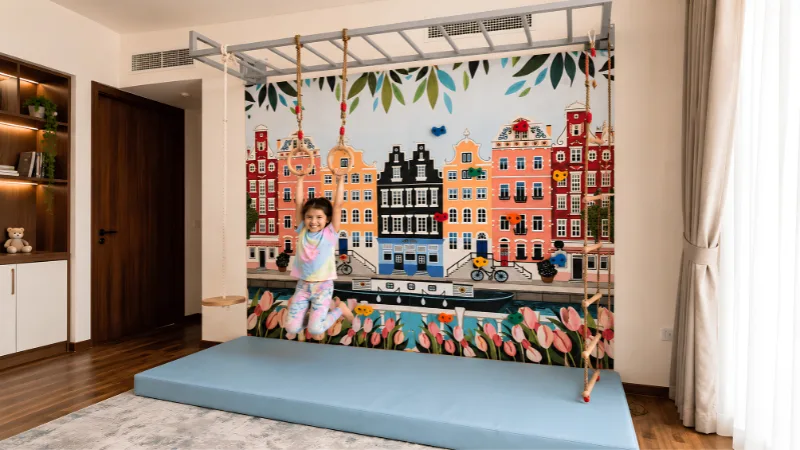
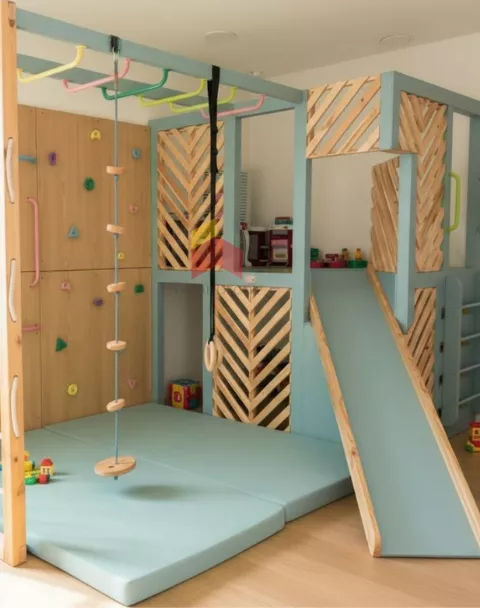
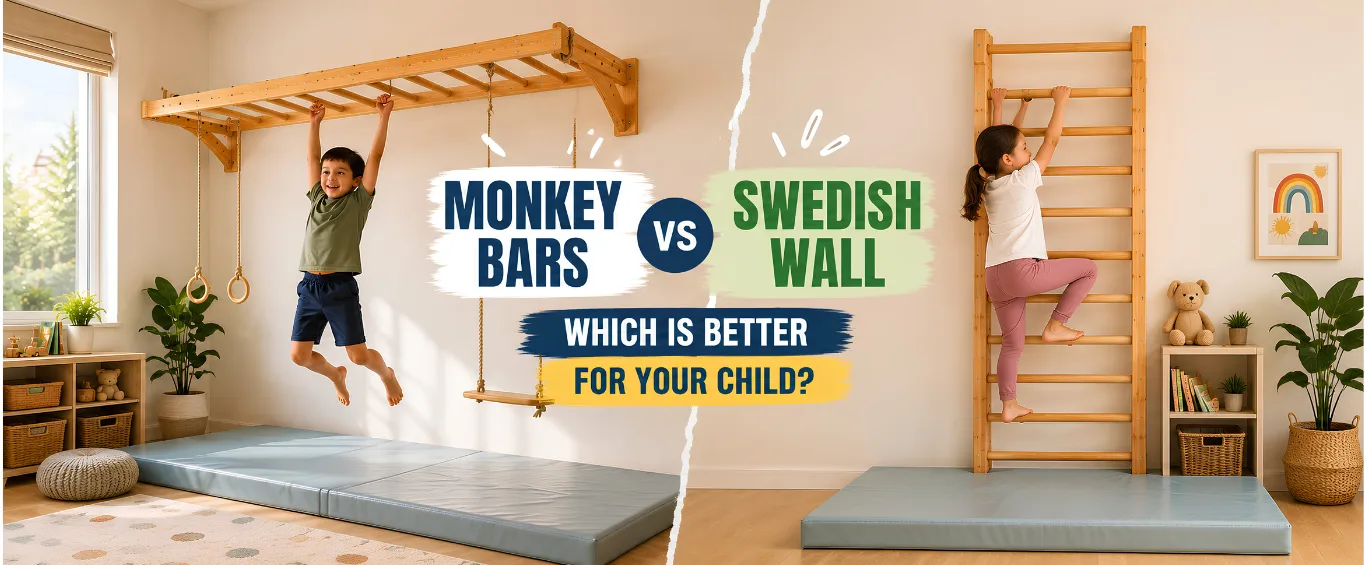
A monkey bar frame is a horizontal ladder your child swings across, hand over hand, usually mounted at a height where their feet clear the floor or a crash mat below. It’s almost entirely an upper body and grip exercise. Shoulders, forearms, core stability while swinging, this is where monkey bars shine.
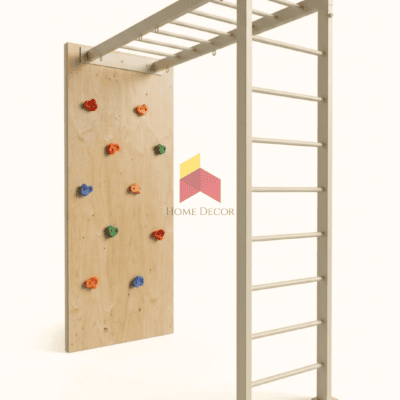
They also tend to be the more exciting option for kids who already have decent arm strength or are working on building it. There’s a clear sense of progress: today they manage three rungs, next month they cross the whole set. If you browse KidsHomeDecor’s monkey bars range, you’ll notice most sets are designed to be wall-mounted or ceiling-mounted, which keeps the floor footprint fairly small even though the equipment itself runs the length of a room.
What a Swedish wall actually does
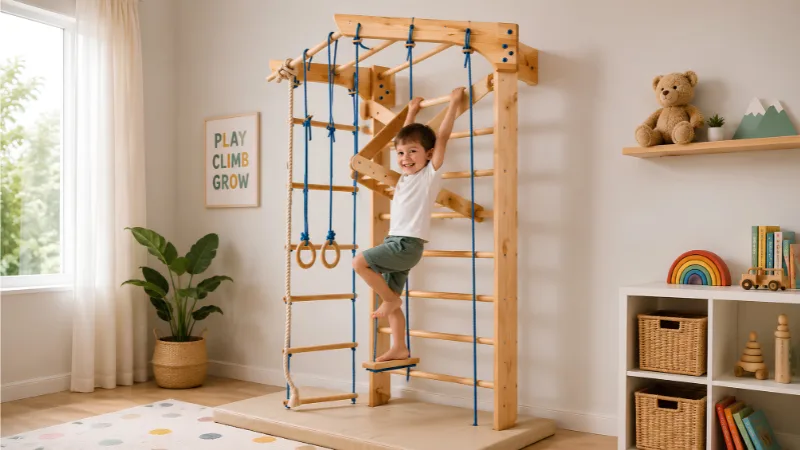
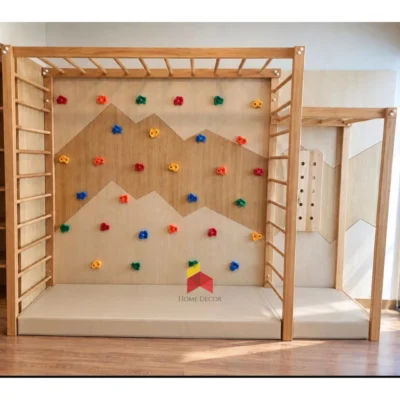
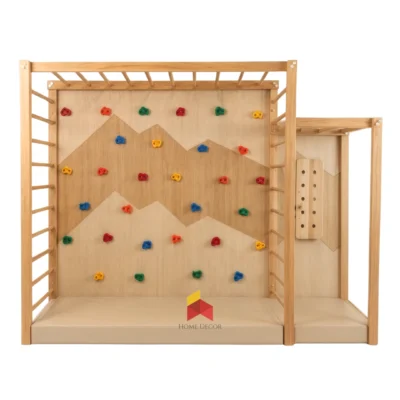
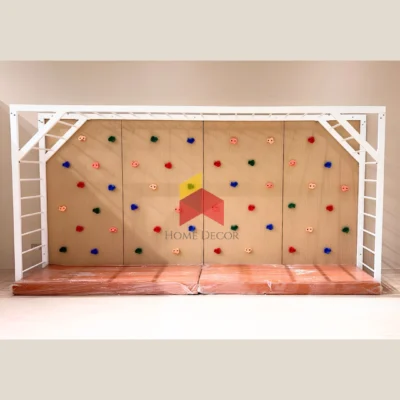
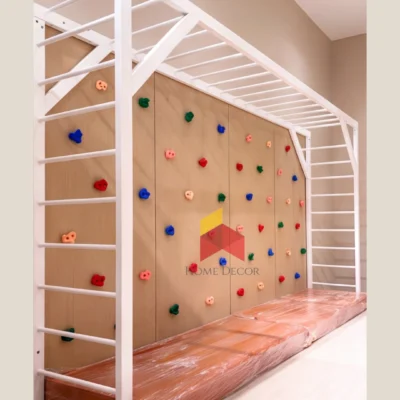
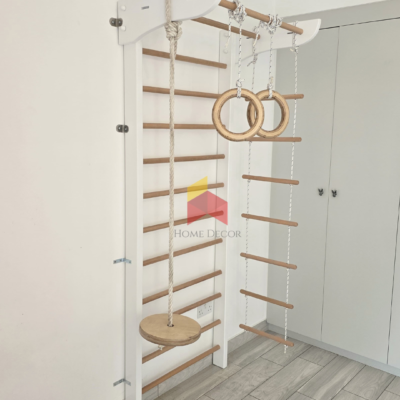
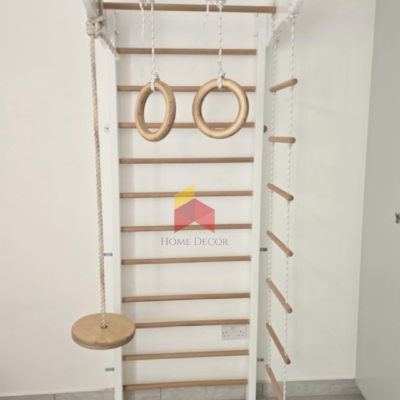
A Swedish wall (also called a Swedish ladder) is a vertical wooden ladder fixed flat against a wall, with evenly spaced rungs your child climbs up and down. Unlike monkey bars, this is a full-body movement, legs, core, arms and balance all work together, and it’s closer to how climbing frames at soft play centers are structured.
Because it’s mounted vertically and flush to the wall, a Swedish wall tends to take up far less floor space than a horizontal monkey bar run, which is one reason it’s popular in Dubai and Abu Dhabi apartments where a spare wall is easier to find than a spare stretch of open floor.
Space: the deciding factor for most UAE homes
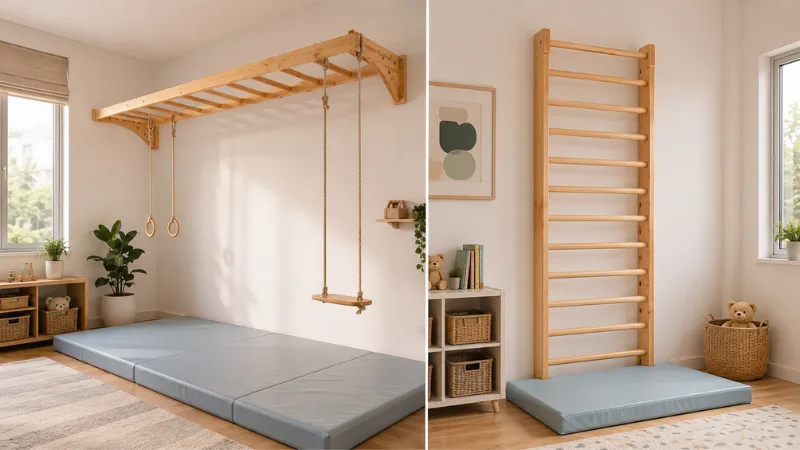
This is usually where the decision actually gets made, regardless of which equipment a parent originally had their heart set on.
The required length depends on the design, so check the product dimensions before planning the space. That’s workable in a villa playroom or a larger bedroom, but tight in a compact apartment.
A Swedish wall, being vertical, needs roughly the same width as a doorframe and very little depth. If you’re working with a small playroom, a corner of a bedroom, or a shared kids’ space, it’s usually the more realistic fit. Many parents furnishing a compact apartment start their layout with the indoor play equipment range specifically because it’s organized by how much floor space each piece needs.
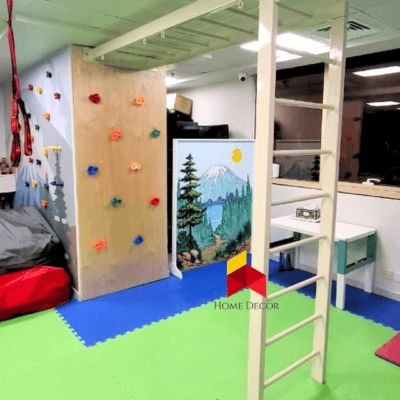
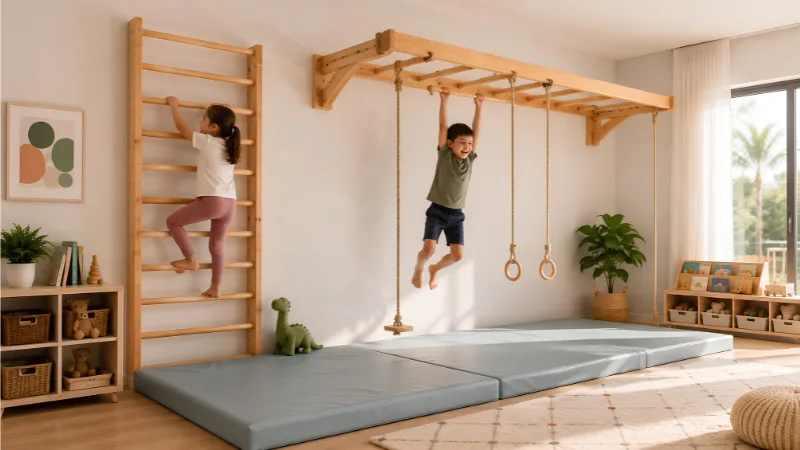
If you do have the room for both, they actually pair well together in one corner, a Swedish wall for climbing, monkey bars running off to the side for swinging, giving kids two distinct movement patterns in one small footprint.
Age suitability
Swedish walls tend to be more forgiving for younger climbers, from around age 3 upward, because a child can stop at whatever rung feels comfortable and climb down the same way, at their own pace. It grows with them, a toddler might manage the bottom three rungs, while the same wall challenges a 9-year-old to climb higher with control.
Monkey bars generally suit children from around age 4 to 5 upward, once they have the grip strength and shoulder stability to hang and swing safely. Younger children often start by simply hanging or swinging one rung at a time before working up to crossing the full set. If grip strength is the specific goal, our monkey bar exercises for kids guide has a simple progression that works well for beginners.
Safety considerations for both
Neither piece of equipment is “safer” than the other in isolation, safety comes down to how it’s installed and what’s underneath it.
For monkey bars, the fall height is usually the main concern since children are suspended above the floor. A shock-absorbing mat underneath is non-negotiable, and this is one area where it’s worth not cutting corners. Our crash mats are sized specifically for underneath climbing and swinging equipment.
For Swedish walls, the risk is more about slipping off a rung while descending rather than a swinging fall, so wall padding around the base and proper anchoring into a stud or solid wall matters most. Our wall padding for kids article covers what to look for if you’re padding a play corner.
Flooring underneath either setup should never be bare tile or marble, both surfaces get slippery fast and offer zero cushioning. If you’re setting up a dedicated play corner, it’s worth reading our guide on flooring for kids play areas before you install anything overhead, since getting the base right is easier before the equipment goes up, not after.
Which one builds better gross motor skills?
Both do, just differently. If you’re aiming for grip strength, shoulder endurance and the kind of upper body confidence useful for monkey bars at the park or school, go with monkey bars at home first, practice at home genuinely does translate to the playground. If you’re aiming for balance, coordination and full-body strength in a smaller space, the Swedish wall does more per square meter.
Parents managing a smaller apartment often start with a Swedish wall because it flexes with a child’s age and ability without needing to be moved or replaced, then add a climbing wall or monkey bar extension once there’s more space or the child is a little older.
Budget and long-term value
Swedish walls are generally the lower upfront cost of the two, given the smaller amount of hardware involved, and because one wall genuinely serves a child from toddler years into early school age, it tends to have a longer usable life before it’s “outgrown.” Monkey bars cost a bit more upfront due to the length of the frame and mounting hardware, but for a child who’s already active and confident on equipment, the engagement level is usually higher immediately.
Neither is the “better investment” outright, it depends on whether you’re setting up play equipment for a toddler who’ll grow into it over several years, or an older child who’s ready for a bigger physical challenge now.
Frequently asked questions
Is a Swedish ladder the same as a Swedish wall?
Yes, the two terms are used interchangeably for the same vertical ladder fixed flat against a wall.
Can monkey bars and a Swedish wall go in the same room?
Yes, and it’s a common setup in UAE homes with a bit of extra floor length. A Swedish wall in one corner and monkey bars running along an adjacent wall gives two different movement patterns without needing a dedicated playroom.
What age can a toddler start on a Swedish wall?
Most toddlers can start around age 3, climbing the lower rungs with supervision. They’ll naturally climb higher as their confidence and strength build.
Do monkey bars need a crash mat underneath?
A suitable impact-absorbing surface should be provided under and around monkey bars. The exact safety setup depends on the equipment, installation and manufacturer’s requirements.
Which is cheaper, monkey bars or a Swedish wall?
A Swedish wall is typically the lower upfront cost, given the smaller amount of hardware, and it tends to stay useful for longer as a child grows.
The bottom line
If your home has a spare wall and a younger child, start with a Swedish wall. If you have a bit more floor length and a child who’s already climbing everything in sight, monkey bars will hold their attention longer. And if space allows, running both along one wall gives kids the best of both movement types without needing a dedicated playroom.
Whichever you choose, get the flooring and padding sorted first, that’s the part that actually keeps the setup safe for years of daily use, not just the first month.