
How to Set Up a Montessori Bedroom at Home starts with a simple idea: make the room easier for the child to understand, use, and care for independently.
Instead of filling a bedroom with furniture and decorations, a Montessori-inspired space focuses on accessibility, simplicity, child-sized elements, and clearly defined areas for sleeping, dressing, reading, and quiet play. The American Montessori Society describes the prepared environment as a space designed around order, independence, appropriately sized furniture, accessible materials, and freedom to choose meaningful activities.
The goal is not to copy a classroom exactly. A home bedroom can use Montessori principles in a practical way while still reflecting your child’s personality and your family’s daily routine.
What Makes a Montessori Bedroom Different?\
A Montessori bedroom is designed from the child’s perspective.
Instead of asking only, “What furniture looks good here?”, consider:
- Can my child reach their clothes?
- Can they access books independently?
- Is the sleeping area appropriate for their stage?
- Can they move around the room comfortably?
- Are frequently used items easy to find?
- Can they help maintain the room?
This emphasis on accessibility and order is consistent with Montessori home guidance, which recommends adapting the environment to encourage independence and keeping materials at a child’s level.
1. Start With a Low and Accessible Sleeping Area
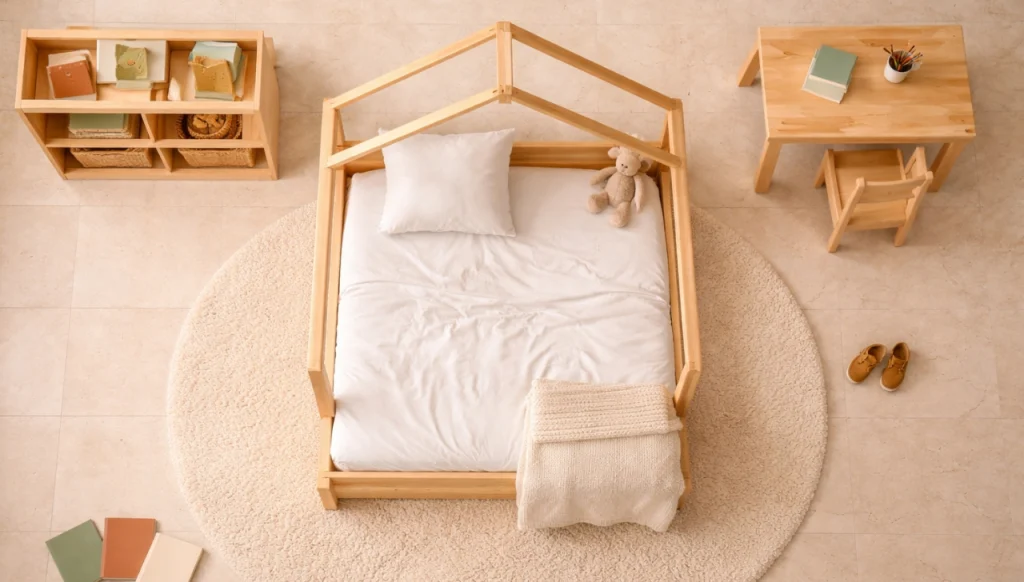
One of the most recognizable Montessori bedroom ideas is a low sleeping arrangement.
Rather than using a very high bed, the setup can make it easier for a child to get in and out independently when developmentally appropriate.
A low bed also keeps the visual environment open and can make a small bedroom feel less crowded.
For families exploring children’s beds, the Rimal’s Bed can be considered as part of a child-friendly bedroom setup.
The right sleeping arrangement will depend on the child’s age, development, family preferences, and safety considerations. For children transitioning from a crib, the American Academy of Pediatrics recommends making the bedroom hazard-free and addressing furniture tip-over risks as children become able to climb.
2. Keep the Bedroom Simple and Clutter-Free
Montessori-inspired spaces generally work best when children can easily see what is available without being overwhelmed by too many objects.
A simple room can have:
- One sleeping area
- A small clothing area
- A low bookshelf
- A reading corner
- A limited selection of toys
- Open floor space
The American Montessori Society recommends simplifying the home, limiting toy choices, using open shelves at a child’s eye level, and rotating extra toys to maintain interest.
Instead of keeping every toy in the bedroom, display only the activities your child currently uses most.
3. Add Open Shelving at Child Height
Storage should be easy for the child to reach and simple enough to maintain.
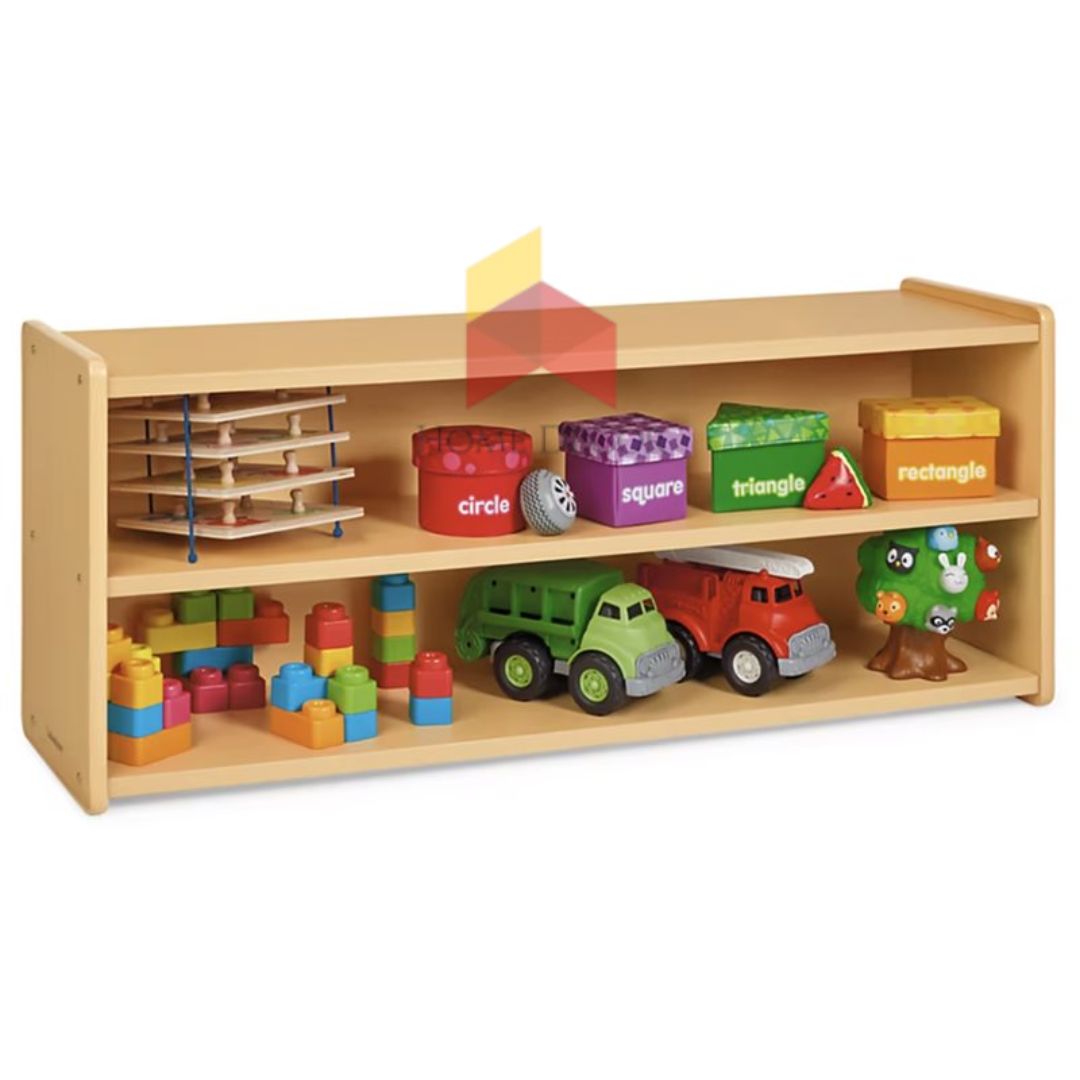
An open shelf can hold a small number of books, puzzles, toys, or activity materials. When everything has a visible place, children can gradually learn where items belong.
The Wooden Montessori Bookshelf can fit this type of accessible storage approach, particularly when books are displayed at a comfortable height for the child.
Another option is the Wooden Montessori Book Shelf for families looking for a dedicated children’s book-storage solution.
Keep heavier items on lower levels and secure freestanding furniture appropriately. The American Academy of Pediatrics recommends anchoring bookcases, dressers, and other furniture that could tip when climbed on or pulled.
4. Create a Low Clothing and Dressing Area
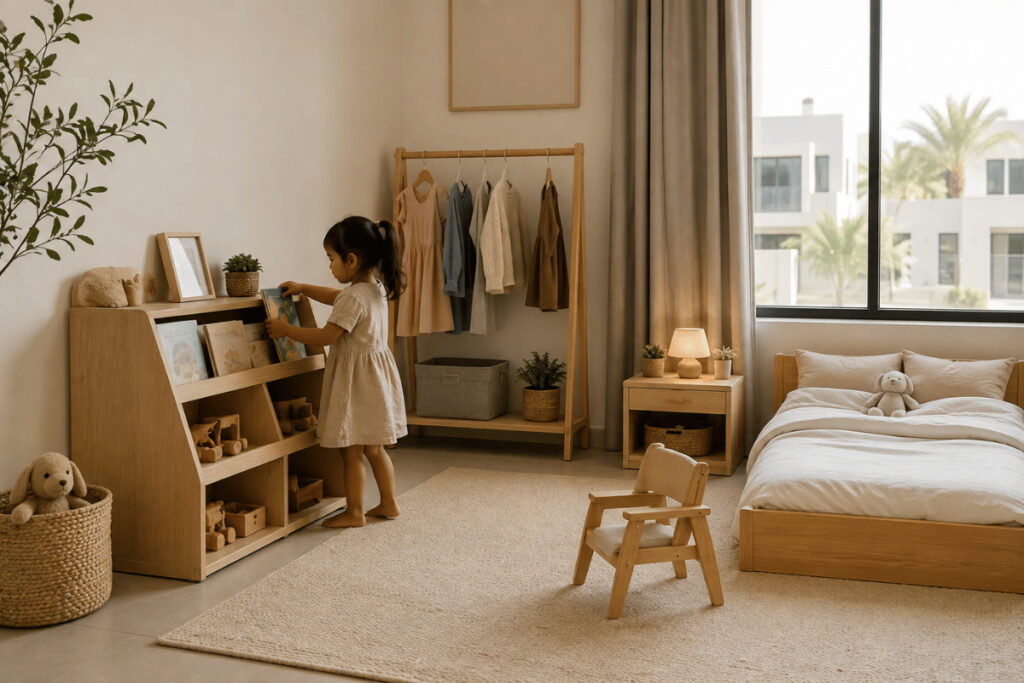
A Montessori bedroom can make dressing easier by giving children access to a small selection of appropriate clothes.
A low hanging rail or accessible drawers can let children choose between a few prepared options.
You can organize the area with:
Everyday clothes → low and easy to reach
Special outfits → stored higher up
Shoes → placed together near the dressing area
Laundry → a simple basket within reach
The objective is not to give a young child unlimited choices. Instead, offer a manageable selection that allows them to practice making decisions.
The American Montessori Society specifically recommends low-hanging clothes and child-sized furniture in the bedroom to encourage independence in dressing and tidying.
5. Create a Cozy Reading Corner
A Montessori bedroom does not need a large reading room.
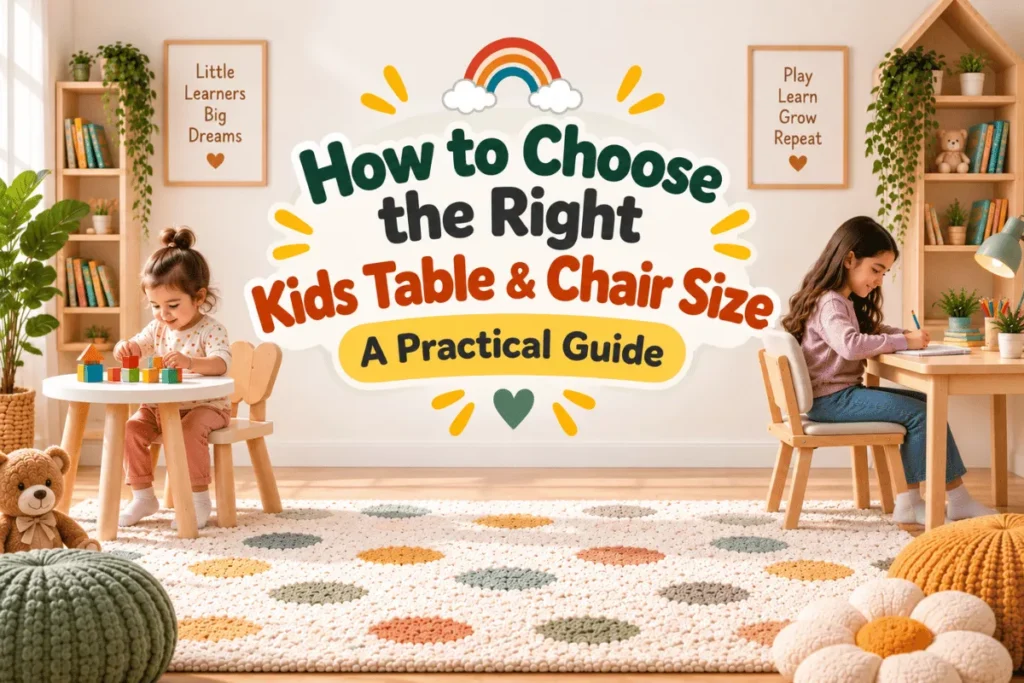
A small floor cushion, child-sized chair, soft rug, and forward-facing book display can create a comfortable reading space.
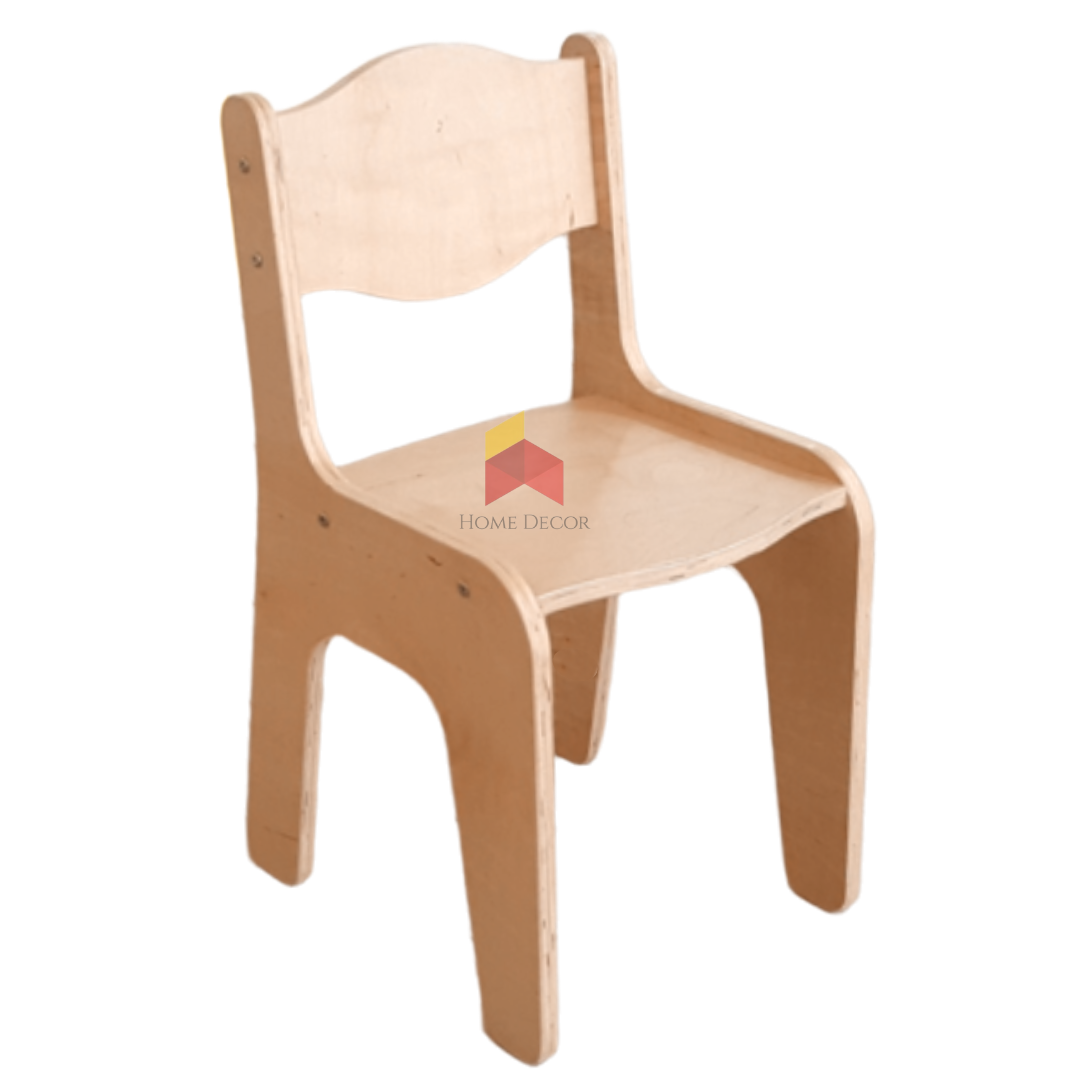
A Simple Montessori Chair for Kids can be used to create a dedicated child-sized seating area.
Books should be displayed so children can recognize and choose them easily. Rotating a few books every week can also keep the selection interesting without filling the room.
For more children’s bedroom inspiration, see Kids Beds Buying Guide UAE.
6. Leave Open Floor Space for Movement and Play
A child’s bedroom should not be packed with furniture.
Leaving some clear floor space gives children room to stretch, play with simple toys, build structures, or move between different areas.
This is especially useful for younger children who are still developing coordination and spatial awareness.
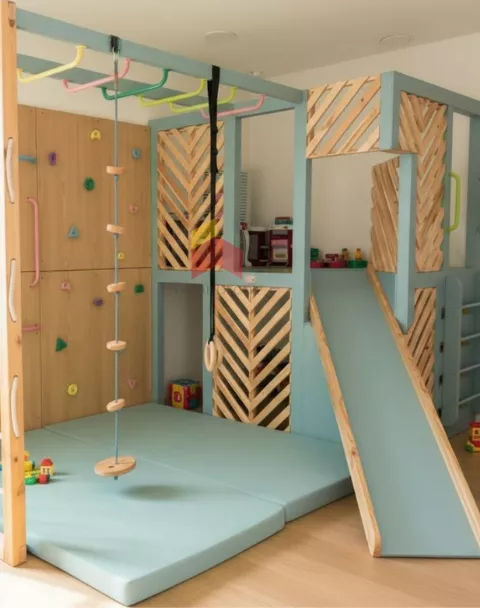
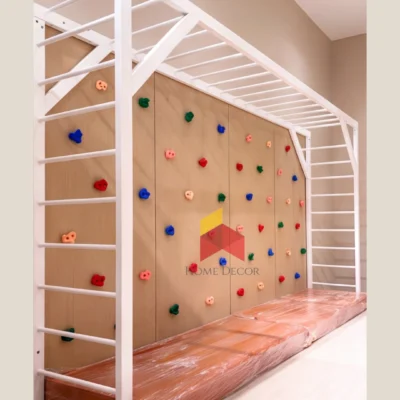
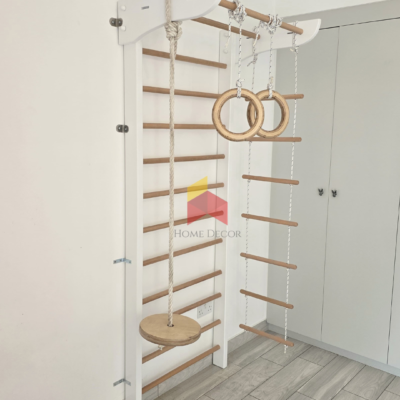
You can create a small movement zone using a simple rug or floor mat rather than adding another large piece of furniture.
For families combining bedroom and play functions, Multi-Functional Kids Room Design UAE offers ideas for making one children’s room serve several purposes.
7. Choose Child-Sized Furniture
Furniture should feel comfortable and usable from the child’s perspective.
A small chair or table can make everyday tasks more accessible, whether the child is drawing, looking at books, doing a puzzle, or simply sitting for a quiet activity.
A Primary Chair can be considered when creating a dedicated seating area for children.
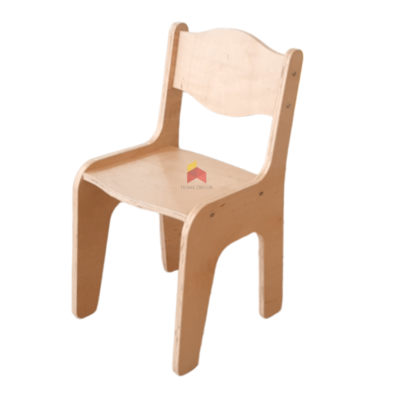
For younger children, a Toddler Chair provides another child-sized seating option.
The principle is simple: furniture should support the activities you expect your child to perform independently.
8. Childproof the Bedroom Before Encouraging Independence
Independence only works when the environment is appropriately safe.
Before finalizing the room, check the bedroom at your child’s eye level.
Look for:
- Unsecured shelves
- Uncovered electrical outlets
- Accessible cords
- Sharp furniture corners
- Small objects
- Window-access risks
- Unstable furniture
- Heavy items placed high
The American Academy of Pediatrics recommends checking furniture for tip-over risks, anchoring bookcases and dressers, securing electrical outlets, keeping cords away from children, and checking the floor for small objects that could create hazards.
For additional home-safety guidance, parents can review the American Academy of Pediatrics’ home safety recommendations.
9. Create Separate Areas for Rest, Self-Care, and Quiet Activity
A simple Montessori bedroom can become easier to use when each area has a clear purpose.
| Bedroom Area | Main Purpose | Helpful Elements |
|---|---|---|
| Sleep Zone | Rest and bedtime | Low bed, simple bedding |
| Dressing Zone | Clothing choices | Low rail, accessible storage |
| Reading Zone | Quiet activity | Bookshelf, small chair |
| Play Zone | Independent play | Open floor, limited toys |
| Self-Care Zone | Everyday routines | Child-accessible personal items |
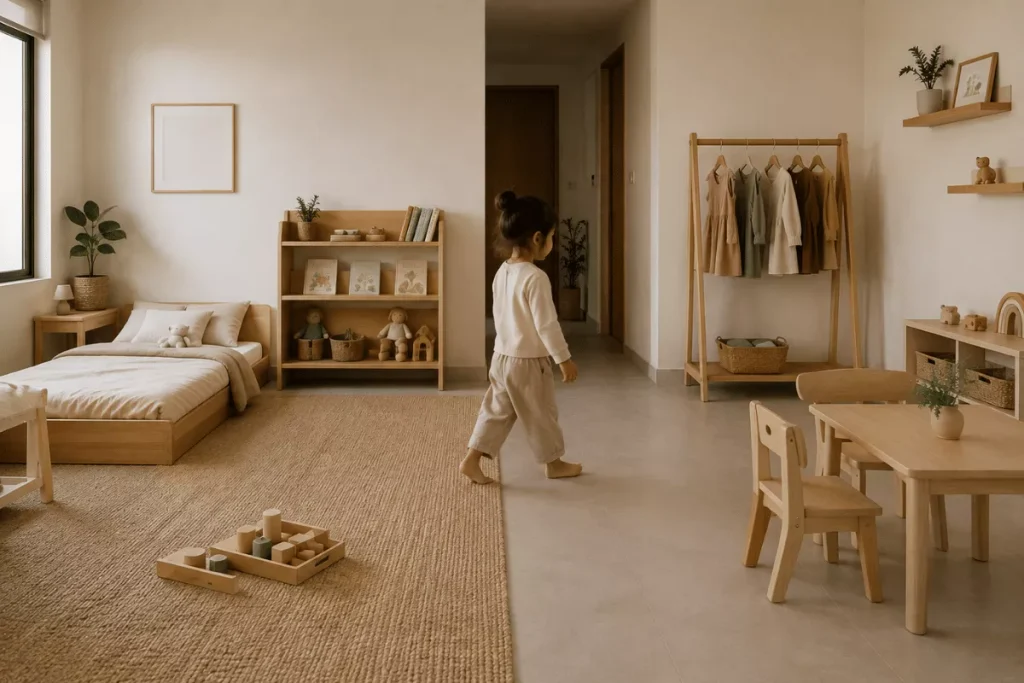
These zones do not need physical walls. A change in furniture placement, rug, shelf, or lighting can visually separate them.
This idea follows the broader Montessori principle of creating an ordered environment where children know where things belong and can participate in caring for the space.
How to Set Up a Montessori Bedroom at Home for Different Ages
A Montessori bedroom should change as your child grows.
For Toddlers
Focus on:
- Low sleeping arrangements
- Limited clothing choices
- Accessible books
- Simple toys
- Open movement space
- Secure furniture
For Preschoolers
You can gradually add:
- More independent dressing
- A larger book selection
- Simple creative activities
- More structured storage
- A small table and chair
For Older Children
The room can develop further to include:
- A more personalized study area
- Larger clothing storage
- More books
- Organized hobbies
- Child-selected decorations
The American Montessori Society recommends adapting the environment to the child’s developmental stage rather than keeping it unchanged.
What Should You Avoid in a Montessori Bedroom?
Creating a Montessori-inspired bedroom does not mean removing everything fun from the room.
The bigger issue is unnecessary clutter and inaccessible design.
Try to avoid:
- Too many toys displayed at once
- Tall furniture blocking the child’s access
- Unsecured shelves
- Heavy decorations within reach
- Furniture that limits movement
- Excessive visual stimulation
- Too many choices at one time
A simpler environment can make it easier for children to focus, move around, and participate in tidying.
How Often Should You Change the Bedroom Setup?
You do not need to redesign the bedroom every few weeks.
Instead, observe how your child uses the space.
If books are no longer being chosen, rotate them.
If clothing has become difficult to reach, adjust the arrangement.
If a toy is consistently ignored, store it and introduce something else later.
This observation-and-adjustment approach is consistent with the American Montessori Society’s recommendation to observe children at home and modify the environment to improve interest, ease of use, and independence.
Keep Storage Simple and Organized
Storage should support the child rather than simply hide clutter.
For bedrooms containing many toys and learning materials, the Wooden Toy Storage Unit for Kids UAE can provide dedicated storage.
A Nine Compartment Open Shelf can also help divide materials into clearly visible sections.
Use only a few compartments for everyday choices and keep less frequently used items elsewhere.
Add Personal Touches Without Overcrowding
A Montessori bedroom can still be beautiful and personal.
Allow your child to have some involvement in choosing:
- A favorite artwork
- A few books
- Bedding
- Room colors
- Decorative objects
- Which activities remain on the shelf
The room should feel like the child’s space, not like a showroom.
Personal choice can also reinforce responsibility because children are more likely to care for an environment that feels meaningful to them.
Simple Montessori Bedroom Checklist
Before finishing the room, ask:
☐ Is the sleeping area appropriate for my child’s stage?
☐ Can my child reach everyday books?
☐ Are clothing choices accessible?
☐ Is there enough open floor space?
☐ Are shelves and furniture secure?
☐ Are electrical outlets and cords addressed?
☐ Are toys limited and organized?
☐ Is there a quiet reading area?
☐ Can my child participate in tidying?
☐ Does the room feel calm rather than overcrowded
Frequently Asked Questions
What is a Montessori bedroom?
A Montessori bedroom is a child-centered bedroom arranged to support independence, accessibility, order, and safe exploration. It typically uses child-appropriate furniture, accessible storage, open floor space, and clearly defined areas for rest and everyday activities.
Is a floor bed necessary for a Montessori bedroom?
A floor bed is commonly associated with Montessori environments, but it is not the only element that makes a bedroom Montessori-inspired. The overall setup should be adapted to the child’s developmental stage and safety needs.
What furniture should be in a Montessori bedroom?
Useful furniture can include a suitable bed, low bookshelf, accessible clothing storage, child-sized seating, and simple storage for toys and activities. The exact selection depends on the child’s age and the room’s size.
How do I make a Montessori bedroom safe?
Secure furniture against tipping, address electrical outlets and cords, remove small hazards, check windows and doors, avoid sharp edges where possible, and ensure the room is appropriate for the child’s developmental abilities.
How many toys should be in a Montessori bedroom?
There is no fixed number. A useful approach is to display a limited selection that the child can access easily and rotate other toys periodically. The American Montessori Society recommends limiting choices and rotating materials to maintain interest and reduce clutter.
Can a Montessori bedroom work in a small room?
Yes. A small room can work well when furniture is scaled appropriately and unnecessary items are removed. Using vertical storage, a low bookshelf, multifunctional furniture, and clear floor space can help make the room more functional.
Should children help design their Montessori bedroom?
Children can be involved in age-appropriate choices, such as selecting books, clothes, artwork, or where certain accessible items belong. The American Montessori Society recommends involving children in decisions and adapting the home environment to foster independence.
Final Thoughts
How to Set Up a Montessori Bedroom at Home is ultimately about creating an environment that allows children to do more for themselves while keeping the space safe, simple, and manageable.
You do not need expensive furniture or a perfectly themed room. Start with the basics: an appropriate sleeping area, accessible storage, child-sized furniture, a small selection of books and toys, open floor space, and careful childproofing.
As your child grows, observe what they can do independently and adapt the room accordingly. A well-prepared bedroom can become more than a place to sleep—it can support daily routines, confidence, organization, and growing independence.