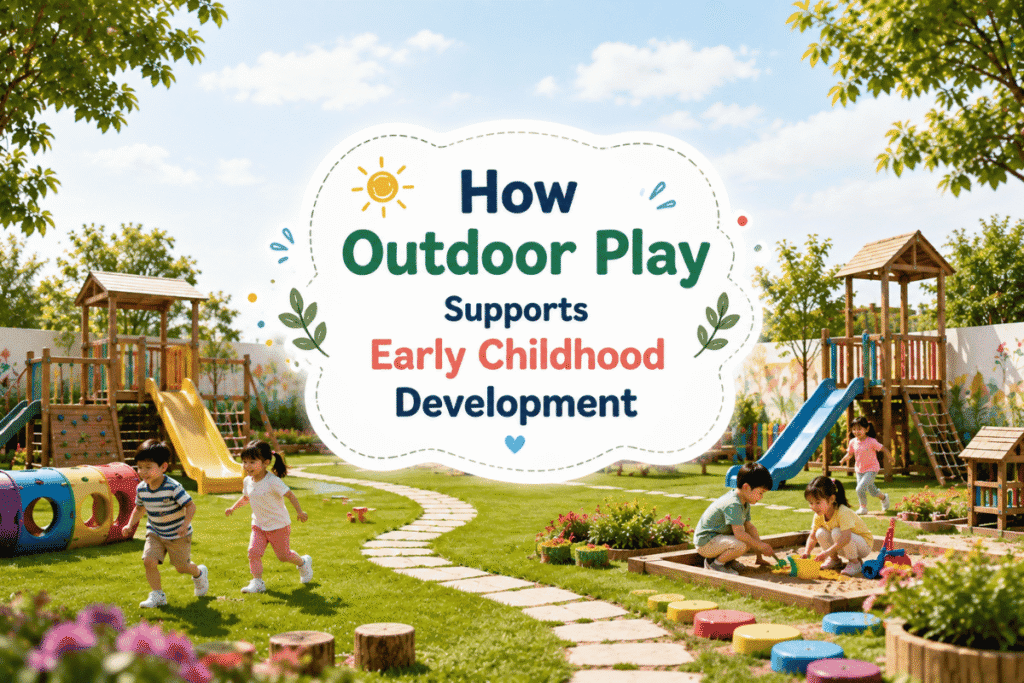
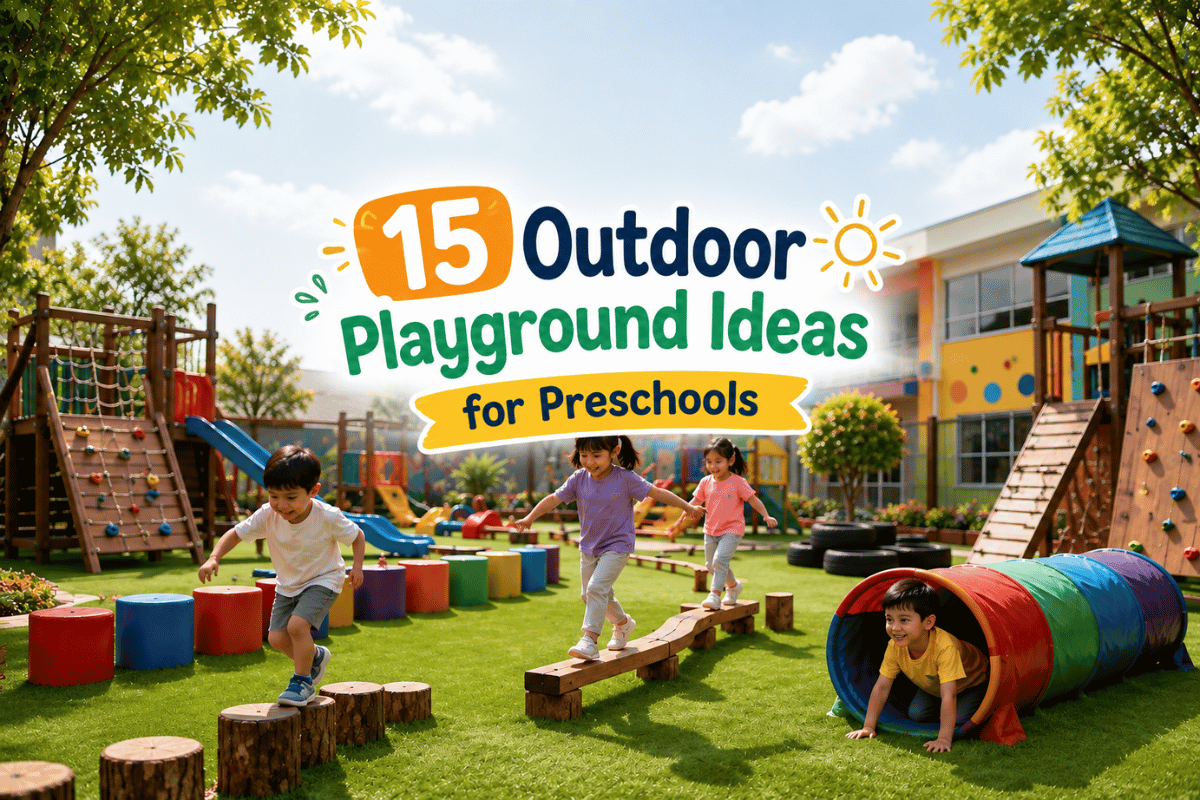
15 Outdoor Playground Ideas for Preschools can help turn an ordinary outdoor area into a space where children can run, climb, balance, explore, imagine, and learn through play.
A good preschool playground does not need to be filled with large equipment. The best spaces usually combine different types of movement and play so children with different interests can find something they enjoy. A climbing structure can support physical development, while a sand area encourages sensory play and a nature corner gives children opportunities to observe and explore.
Outdoor play also gives preschoolers more room to move than they usually have indoors. The World Health Organization recommends that children aged 3 to 4 spend at least 180 minutes in physical activity throughout the day, including at least 60 minutes of moderate to vigorous activity.
For preschools, the goal is not simply to create a playground that looks attractive. It should be a practical environment where children can move safely, play independently, interact with others, and discover new skills.
What Makes a Good Preschool Outdoor Playground?
Before choosing equipment, think about how children will actually use the space.
A well-planned playground should offer a mix of:
- Climbing and balancing
- Running and active movement
- Imaginative play
- Sensory activities
- Quiet exploration
- Social and group activities
- Age-appropriate challenges
The layout should also leave enough open space between activities so children can move without constantly crossing through another activity zone.
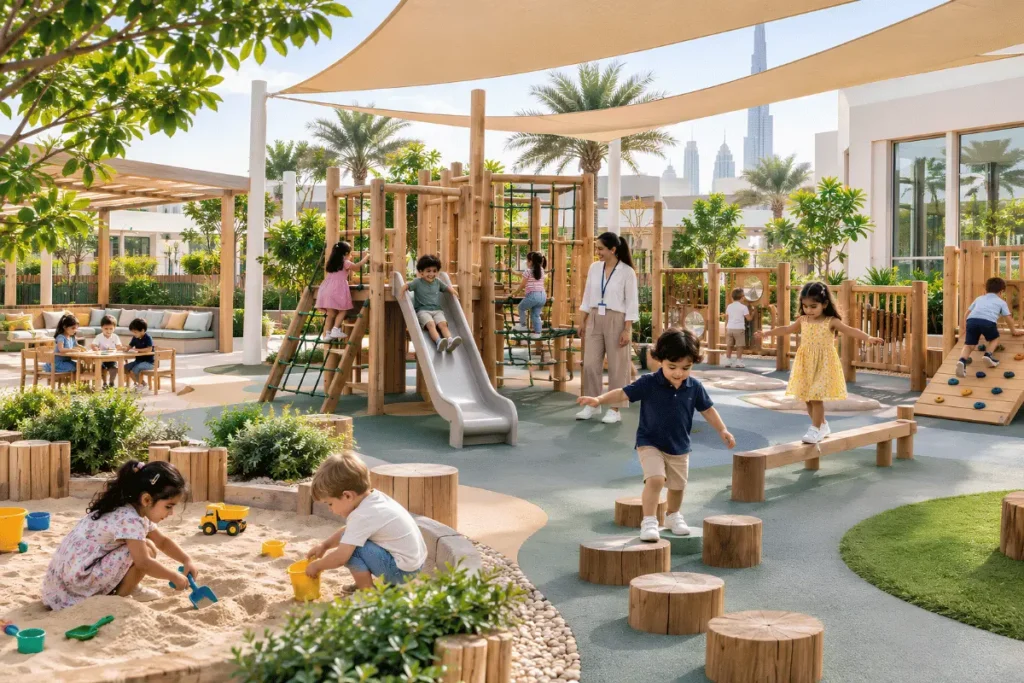
15 Outdoor Playground Ideas for Preschools
1. Natural Climbing Area
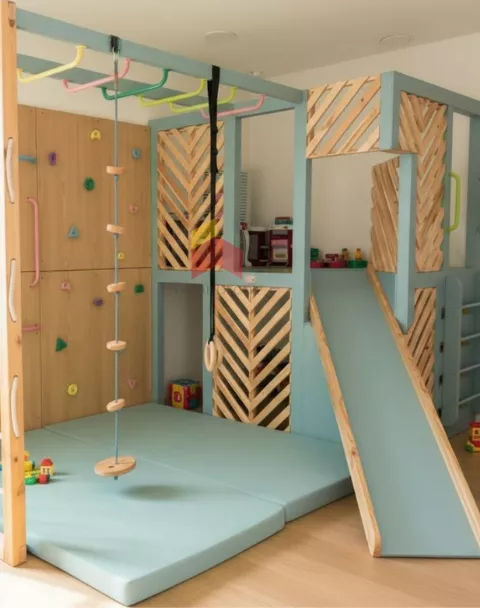
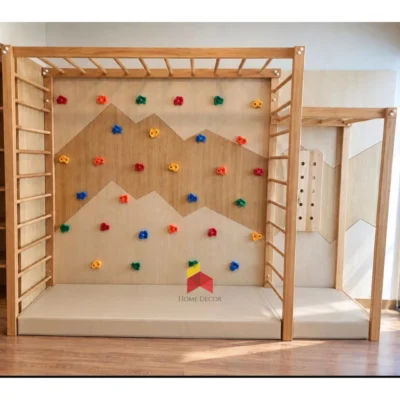
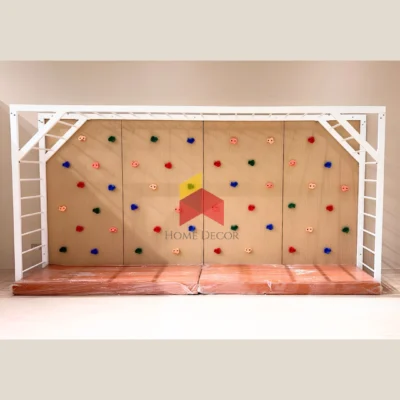
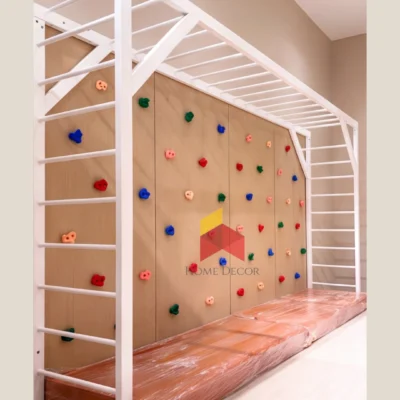
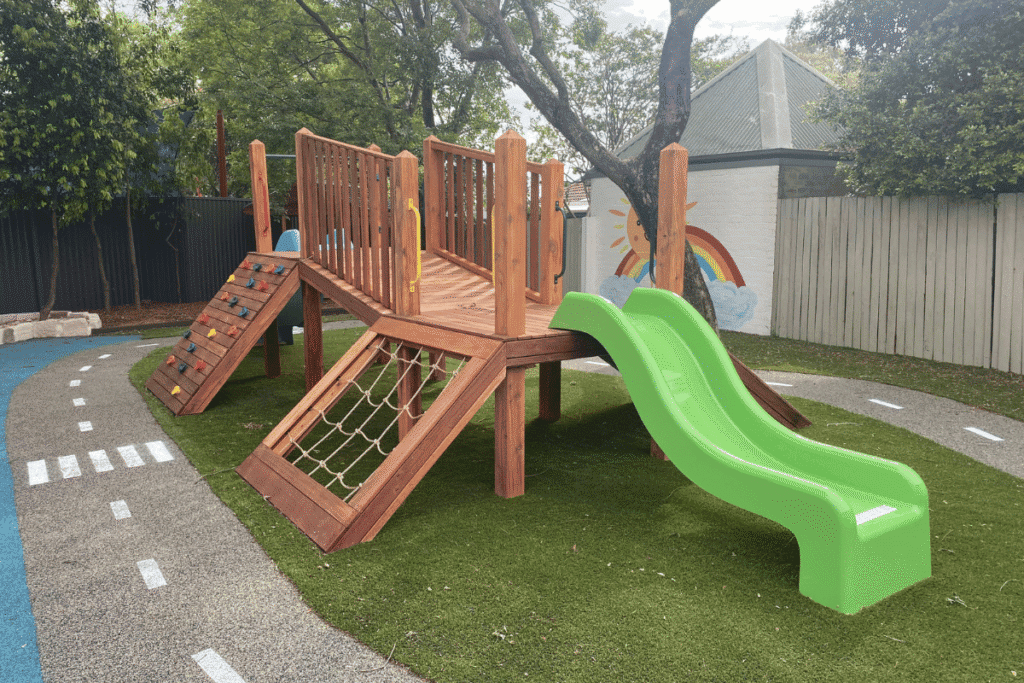
Create a dedicated climbing zone using age-appropriate climbing structures, low platforms, ramps, and handholds.
Climbing gives children a chance to practise balance, coordination, grip, and body control. The equipment should be selected according to the children’s age and abilities rather than simply choosing the tallest or most challenging structure.
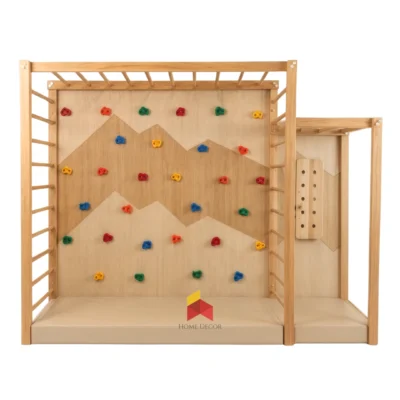
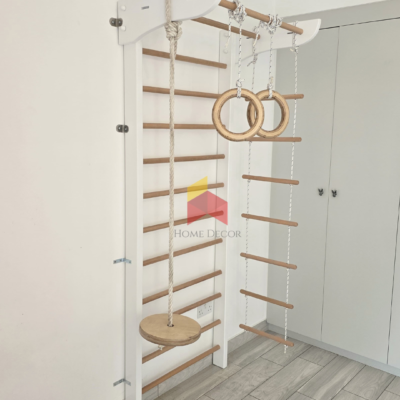
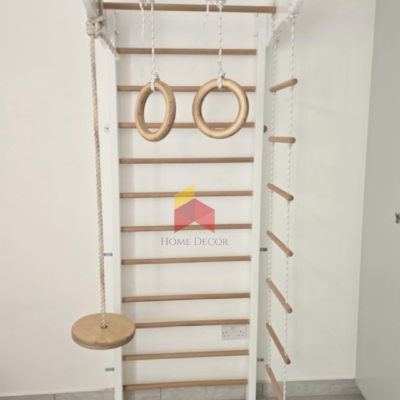
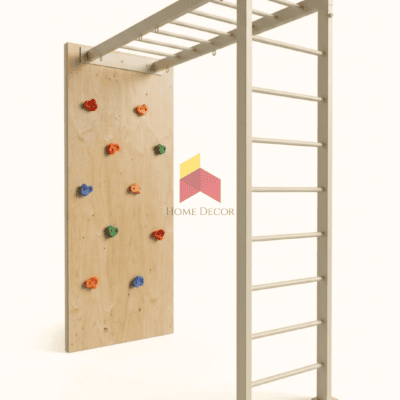
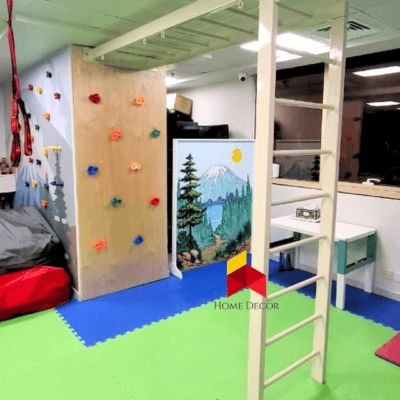
If you want to expand the climbing experience, a climbing wall for kids can also become part of a larger activity area. Climbing Walls for Kids
2. Balance Beam Trail
A balance beam does not have to be complicated. Several low beams arranged in a simple pathway can create an enjoyable movement challenge.
Children can walk across them, step between sections, or try different ways of reaching the other side.
Skills supported: balance, coordination, concentration, and body awareness.
3. Outdoor Sensory Garden
A sensory garden can introduce children to different textures, smells, colours, and natural materials.
Consider adding:
- Herbs
- Safe flowers
- Smooth stones
- Natural wood
- Sand
- Leaves
- Water-play elements
Teachers can turn the area into a learning activity by asking children to identify different plants, textures, or sounds.
4. Outdoor Sand Play Area
A dedicated sand area is one of the simplest ways to encourage creative outdoor play.
Children can dig, scoop, build, measure, and create their own small worlds. Add child-sized buckets, moulds, shovels, and containers to make the activity more interactive.
A shaded section is especially useful in warmer climates.
5. Stepping Stone Path
Create a pathway using sturdy, age-appropriate stepping elements.
The route can include different shapes and distances, allowing children to practise stepping, balancing, and planning their next movement.
For younger children, keep the elements low and close together. Older preschoolers can handle slightly more varied layouts when they have developed the necessary balance and confidence.
6. Mini Obstacle Course
A preschool obstacle course can combine several simple activities instead of relying on one large piece of equipment.
For example:
Start → Stepping Stones → Crawl Tunnel → Balance Beam → Climbing Section → Finish
The course can be changed regularly so children do not become bored with the same route.
It can also become part of a group activity where children take turns completing each section.
7. Outdoor Music Corner
Not every playground activity needs to involve climbing or running.
Install outdoor musical elements such as drums, bells, chimes, or child-friendly percussion instruments in a separate area.
Children can experiment with rhythm and sound while developing listening skills and creative expression.
8. Mud Kitchen
A mud kitchen can turn outdoor play into imaginative roleplay.
Provide simple child-sized counters, bowls, spoons, pots, and containers. Children can pretend to cook, run a restaurant, prepare food, or experiment with natural materials.
The area should be easy to clean and positioned away from the main running route.
9. Outdoor Reading Corner
Create a quieter area where children can sit with books after active play.
A shaded structure, weather-resistant seating, cushions, and low bookshelves can make the space comfortable without taking up much room.
This gives the playground a useful balance between high-energy movement and quieter activities.
10. Mini Gardening Area
A small garden can become a hands-on learning zone.
Children can help plant seeds, water plants, observe growth, and learn how food and flowers develop.
Use raised beds or child-friendly planters that are easy for preschoolers to reach. Teachers can also use the area for simple lessons about nature and responsibility.
11. Outdoor Roleplay House
A small playhouse can become almost anything in a child’s imagination.
One day it can be a home, another day a shop, classroom, restaurant, or doctor’s office.
This type of open-ended equipment supports pretend play and gives children opportunities to communicate and cooperate with classmates.
12. Tricycle and Ride-On Track
If the preschool has enough space, create a clearly marked route for tricycles and other suitable ride-on equipment.
Add simple road markings, stop points, pedestrian crossings, or signs to make the activity more engaging.
This can also introduce basic concepts such as taking turns, following directions, and recognising signs.
Keep the riding zone separate from climbing and running areas to reduce collisions.
13. Water Play Station
A supervised water-play station can be an excellent addition to a preschool playground.
Children can pour, transfer, measure, splash, and experiment with different containers.
The area needs careful planning because water can quickly create slippery surfaces. Use suitable flooring and make sure children are closely supervised whenever water is present. The CDC specifically recommends close supervision around water and attention to safe outdoor play environments in early care settings.
14. Shaded Outdoor Classroom
Turn part of the playground into an outdoor learning area with small tables, chairs, boards, and storage.
Teachers can use the space for:
- Drawing
- Storytelling
- Nature lessons
- Group discussions
- Simple crafts
- Counting activities
This makes the playground useful beyond free-play periods.
15. Multi-Activity Play Zone
If space and budget allow, create one larger zone that combines several movement activities.
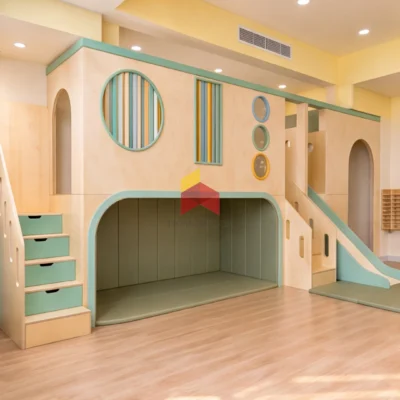
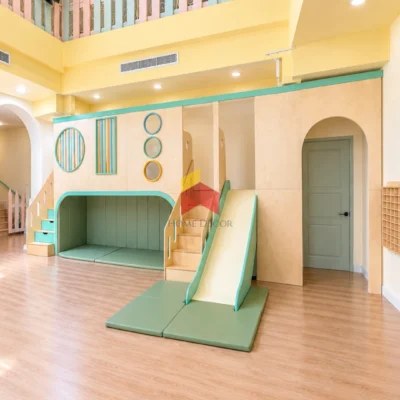
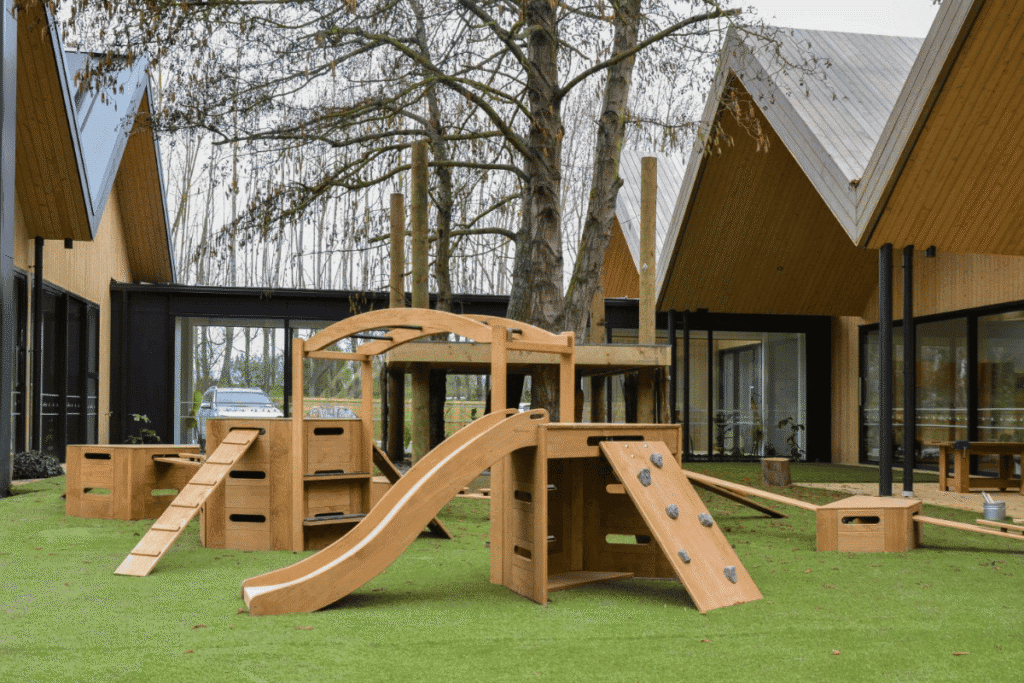
A well-designed setup could include a climbing structure, slide, balance elements, tunnel, stepping stones, and open space.
How to Organise a Preschool Playground
The equipment is only one part of the design. How everything is positioned can make a major difference to how children use the space.
A simple layout can divide the playground into four zones:
| Playground Zone | Suitable Activities | Main Purpose |
|---|---|---|
| Active Zone | Climbing, slides, running | Physical movement |
| Creative Zone | Sand, mud kitchen, roleplay | Imagination |
| Nature Zone | Gardening, sensory garden | Exploration |
| Quiet Zone | Reading, drawing, outdoor classroom | Calm activities |
This type of zoning helps prevent the entire playground from becoming one busy area.
For preschools with limited outdoor space, vertical equipment can also help make better use of the available area. You can explore ideas for an outdoor play area that use different equipment combinations without overcrowding the space. Outdoor Play Area Ideas
Choosing Safe Equipment for Preschoolers
Safety should be considered before appearance or the number of activities you can fit into the playground.
The CDC recommends age-appropriate playground equipment, soft material underneath equipment, guardrails where needed, and attention to hazards such as rocks or other objects that could cause trips.
Before opening the playground each day, staff can check:
- Are there loose screws or bolts?
- Are any surfaces damaged?
- Are there sharp edges?
- Is the safety flooring in good condition?
- Are climbing structures stable?
- Is the play area free from obstacles?
- Are children using equipment suitable for their age?
- Is there enough space around moving equipment?
Regular inspection is especially important in preschools because equipment can receive heavy use every day.
For additional protection, consider appropriate kids play area flooring beneath active equipment. Best Flooring for Kids Play Areas
How to Make a Small Preschool Playground Feel Bigger
Limited outdoor space does not mean children need fewer opportunities to play.
Use the available area carefully by combining equipment with multiple uses.
For example, a climbing structure can include a small platform and slide. A garden can double as a science-learning area. A shaded corner can work as both a reading space and an outdoor classroom.
Try to keep pathways clear and avoid filling every empty section with equipment.
Create a Playground That Supports Different Types of Play
One child may want to climb while another prefers building with sand. Another may spend most of the outdoor session pretending to run a shop in the playhouse.
That is why a strong preschool playground should not be designed around only one activity.
A balanced space gives children choices.
For example:
Move: climbing, balancing, running
Create: sand, mud kitchen, art
Explore: garden, nature corner, water
Imagine: playhouse, roleplay
Relax: reading, quiet seating
This approach can make outdoor time more enjoyable for children with different personalities and abilities.
If you are planning a complete indoor and outdoor environment, you can also explore ideas for an indoor play area for kids to create a consistent movement and learning experience throughout the preschool. Indoor Play Area for Kids
Outdoor Playground Ideas for Preschools: A Simple Planning Checklist
Before purchasing equipment, review these points:
| Planning Point | What to Check |
|---|---|
| Age group | Is the equipment suitable for preschool children? |
| Available space | Can children move comfortably between activities? |
| Safety | Are impact surfaces and barriers suitable? |
| Shade | Are children protected from excessive sun exposure? |
| Supervision | Can staff easily see all activity zones? |
| Maintenance | Can equipment be inspected and cleaned regularly? |
| Variety | Does the space support physical, creative, sensory, and social play? |
| Future use | Can the playground adapt as children’s skills develop? |
A playground that passes this checklist will usually be more practical than one chosen only because it looks impressive.
Final Thoughts
The best 15 Outdoor Playground Ideas for Preschools are not necessarily the most expensive ones. A successful preschool playground is a thoughtful combination of movement, creativity, nature, social interaction, and quiet activities.
A climbing area can build physical confidence. A sensory garden can encourage exploration. A mud kitchen can support pretend play. A balance trail can challenge coordination, while an outdoor classroom can bring learning into the fresh air.
The most important thing is to create a space where children have room to move and enough choices to explore at their own pace.
If you are planning a complete preschool play area, Kids Home Decor offers different solutions for indoor and outdoor children’s spaces. You can explore Outdoor Play Equipments for larger playground planning and combine them with suitable flooring, climbing equipment, storage, and classroom solutions. Outdoor Play Equipment
A thoughtfully designed playground can become much more than a place for children to spend recess. It can become an everyday environment for movement, discovery, imagination, and learning.
Frequently Asked Questions
What makes a good preschool playground?
A good preschool playground combines age-appropriate physical equipment with creative, sensory, social, and quiet activities. It should also provide clear visibility for teachers, suitable safety surfaces, and enough space for children to move between different areas.
What equipment is best for preschool children?
Climbing structures, low slides, balance beams, stepping stones, tunnels, sand areas, sensory stations, and imaginative play equipment are useful options. Equipment should always match the children’s age and developmental abilities.
How can I design a preschool playground in a small space?
Use vertical and multi-purpose equipment, divide the playground into activity zones, and keep pathways open. A wall-mounted or compact climbing feature can provide physical activity without using as much floor area as a large structure.
How important is safety flooring in a preschool playground?
Safety flooring or another suitable impact-absorbing surface is important beneath equipment where children may fall. The exact surface should depend on the equipment, fall height, installation, and applicable safety requirements. The CDC recommends soft material below playground equipment in early care settings.
How can outdoor play support preschool learning?
Outdoor play can combine physical movement with problem-solving, communication, imagination, sensory exploration, and social interaction. WHO guidance for children under 5 also emphasises the importance of active play and reducing prolonged sedentary time.
How often should preschool playground equipment be checked?
Playground equipment should be inspected regularly, especially in a busy preschool environment. Staff should look for loose components, damaged surfaces, sharp edges, unstable equipment, and hazards in the surrounding area before children begin outdoor play.